LEADER 01981naaaa2200289aa 4500
001 604624
003 TR_AnAIT
005 20250627102027
006 a||||e |||| 001 0
007 ta
008 240123s xxu||||e |||| 001 0 eng c
020 |a9780674292420|q(paperback)
041 |aeng
049 |aTürk Tarih Kurumu Kütüphanesi
090 |aA.IX/7344
100 1 |aKidder, Kathleen.
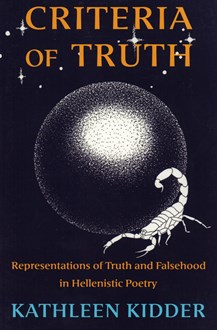
245 10|aCriteria of truth :|brepresentations of truth and falsehood in Hellenistic poetry /|cKathleen Kidder.
260 |aWashington, D.C. :|bCenter for Hellenic Studies,|c2023.
300 |aviii, 256 sayfa ;|c23 cm
490 0 |aHellenic studies series ;|v100
500 |aEser, yazarın 2018 yılında sunduğu doktora tezine dayanmaktadır.
500 |aİndeks s. [229]-256.
504 |aBibliyografya s. [201]-227.
520 |a“Amidst conflicting information and personal experiences, how can someone distinguish between truth and falsehood? Criteria of Truth: Representations of Truth and Falsehood in Hellenistic Poetry tackles this fundamental question through a study of five Hellenistic poems dated to the third and second centuries BCE: Aratus's Phaenomena, Nicander's Theriaca, Callimachus's Aetia, Apollonius of Rhodes's Argonautica, and Lycophron's Alexandra. Situating these poetic works in their intellectual and literary milieu, Kathleen Kidder applies the philosophic concept of the criterion of truth, arguing that each poetic persona represents a different criterion for interrogating truth and falsehood. Moreover, by analyzing the poems' allusions, myths, and poetic language, Kidder demonstrates how this poetry can encapsulate the tensions not only between truth and falsehood, but also between order and chaos, certainty and doubt, clarity and obscurity, seen and unseen, and being and seeming“ --|cArka kapak.
650 4|aYunan şiiri, Helenistik.
650 4|aYunan şiiri, Helenistik|xTarih ve kritik.
650 4|aDoğruluk ve yanlışlık, edebiyatta.