LEADER 02901naaaa2200337aa54500
001 604633
003 TR_AnAIT
005 20250627101941
006 aobede |||| 001 0d
007 ta
008 231201s2017 pauobede |||| 001 0deng c
020 |a9780812249088
040 |aTTK
041 |aeng
049 |aTürk Tarih Kurumu Kütüphanesi
090 |aB.II/0020
100 1 |aMartin, S. Rebecca.
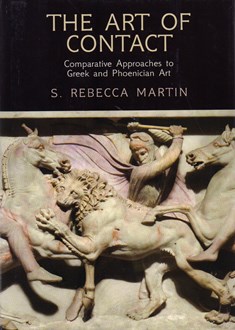
245 14|aThe art of contact :|bcomparative approaches to Greek and Phoenician art /|cS. Rebecca Martin.
260 |aPhiladelphia :|bUniversity of Pennsylvania Press,|c©2017.
300 |avii, 282 sayfa, [22] sayfa resim :|bresim (çoğu renkli), harita, plan, tablo ;|c26 cm
500 |aİndeks s. [273]-282.
504 |aBibliyografya s. [225]-271.
504 |aBibliyografik notlar s. [183]-224.
505 |tIntroduction --|tCulture, Contact, and Art History : Framing the Theoretical Landscape --|tArts of Contact --|tExceptional Greeks and Phantom Phoenicians --|tThe Rise of Phoenicianism --|tHybridity, the Middle Ground, and the “Conundrum of ‘Mixing’” --|tConclusion.
520 |a“The proem to Herodotus's history of the Greek-Persian wars relates the long-standing conflict between Europe and Asia from the points of view of the Greeks' chief antagonists, the Persians and Phoenicians. However humorous or fantastical these accounts may be, their stories, as voiced by a Greek, reveal a great deal about the perceived differences between Greeks and others. The conflict is framed in political, not absolute, terms correlative to historical events, not in terms of innate qualities of the participants. Becky Martin reconsiders works of art produced by, or thought to be produced by, Greeks and Phoenicians during the first millennium B.C., when they were in prolonged contact with one another. Although primordial narratives that emphasize an essential quality of Greek and Phoenician identities have been critiqued for decades, Martin contends that the study of ancient history has not yet effectively challenged the idea of the inevitability of the political and cultural triumph of Greece. She aims to show how the methods used to study ancient history shape perceptions of it and argues that art is especially positioned to revise conventional accountings of the history of Greek-Phoenician interaction. Examining Athenian and Tyrian coins, kouros statues and wall mosaics, as well as the familiar Alexander Sarcophagus and the sculpture known as the “Slipper Slapper,” Martin questions what constituted “Greek” and “Phoenician” art and, by extension, Greek and Phoenician identity.” --|cYayıncı.
650 4|aSanat, Antik Yunan|xTarih.
650 4|aSanat, Fenike|xTarih.
650 4|aSanat|xTarih|xTarih yazıcılığı.
651 4|aAntik Yunan|xMedeniyet|xFenike etkileri.
651 4|aFenike|xMedeniyet|xAntik Yunan etkileri.