LEADER 02935naaaa2200349aa54500
001 604646
003 TR_AnAIT
005 20250627101845
006 aobe|e |||| 001 0d
007 ta
008 240130s2015 enkobe|e |||| 001 0deng c
020 |a9780521854986|q(Hardback)
020 |a9781107610781|q(Paperback)
040 |aTTK
041 |aeng
049 |aTürk Tarih Kurumu Kütüphanesi
090 |aB.II/0047
100 1 |aDillon, Sheila.
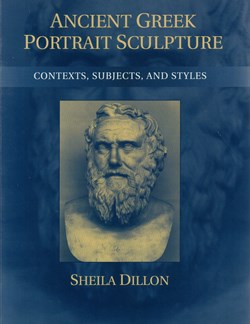
245 10|aAncient Greek portrait sculpture :|bcontexts, subjects, and styles /|cSheila Dillon.
250 |aReprinted.
260 |aCambridge ;|aNew York :|bCambridge University Press,|c2015.
300 |axx, 217 sayfa :|bresim, harita, plan ;|c29 cm
500 |aİndeks s. 215-217.
504 |aSeçilmiş bibliyografya s. 209-214.
504 |aBibliyografik notlar s. 173-208.
505 |tFacing up to anonymity --|tFacing the past : Greek portraits in Roman contexts.|tMaking portraits of the Greeks --|tDisplaying portraits of the Greeks --|tFacing the subject : interpreting identity in Greek portraiture.|tThe appearance of Greek portraits --|tGreek portraits in practice --|tConclusion --|gAppendix I.|tMuseum index --|gAppendix II.|tPortrait catalogue --|tNotes --|tBibliography --|tIndex.
520 |a“This book offers a new approach to the history of Greek portraiture by focusing on portraits without names. Comprehensively illustrated, it brings together a wide range of evidence that has never before been studied as a group. Sheila Dillon considers the few original bronze and marble portrait statues preserved from the Classical and Hellenistic periods together with the large number of Greek portraits known only through Roman 'copies'. In focusing on a series of images that have previously been ignored, Dillon investigates the range of strategies and modes utilized in these portraits to construct their subject's identity. Her methods undermine two basic tenets of Greek portraiture: first, that is was only in the late Hellenistic period, under Roman influence, that Greek portraits exhibited a wide range of styles, including descriptive realism; and second, that in most cases, one can easily tell a subject's public role - that is, whether he is a philosopher of an orator - from the visual traits used in this portrait. The sculptures studied here instead show that the proliferation of portrait styles takes place much earlier, in the late Classical period; and that the identity encoded in these portraits is much more complex and layered than has previously been realized. Despite the fact that these portraits lack the one feature most prized by scholars of ancient portraiture - a name - they are evidence of utmost importance for the history of Greek portraiture.” --|cArka kapak.
546 |aTürkçe özet içerir.
650 4|aPortre heykeli, Grek.
650 4|aPortre heykeli, antik|zYunanistan.