LEADER 02065naaaa2200337aa54500
001 604659
003 TR_AnAIT
005 20250627101807
006 aal||e |||| 001 0d
007 ta
008 231201s2022 enkoej|e |||| 001 0deng c
020 |a9781108460354|q(Paperback)
020 |a9781108472838|q(Hardback)
040 |aTTK
041 |aeng
049 |aTürk Tarih Kurumu Kütüphanesi
090 |aA.IX/7186
100 |aBorg, Barbara.
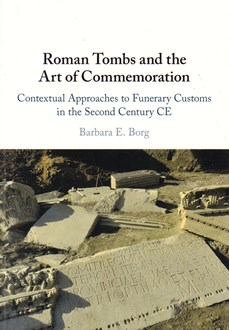
245 |aRoman tombs and the art of commemoration :|bcontextual approaches to funerary customs in the second century CE /|cBarbara Borg.
250 |aFirst paperback edition.
260 |aCambridge :|bCambridge University Press,|c2022.
300 |axxviii, 341 sayfa :|bresim, plan, soyağacı ;|c24 cm
500 |aİndeks s. 335-341.
504 |aBibliyografya s. 291-334.
520 |a“The history of funerary customs in Rome contains many unanswered questions and controversial debates, especially concerning the significant developments of the second century CE. In this book, distinguished historian Barbara E. Borg employs the full range of material and written evidence to explore four key questions that change our view of Roman society and its values. For the first time, senatorial burial practices can be reconstructed and contrasted with those of other classes. Borg then explains the change from incineration to inhumation as a revival of old Roman mores that accelerated after the example set by Hadrian. In the third chapter, she argues that tombs became prime locations for promoting and displaying long family lines among the elite, which then inspired freedmen to undertake similar commemorative practices. Finally she explores the association of deceased persons with the divine and apotheosis through portraits on divine body shapes and temple tombs.” --|cArka kapak.
650 4|aCenaze töreni ve seremoniler|zRoma.
650 4|aDefin gelenekleri|zRoma.
650 4|aMezarlar|zRoma.
650 4|aAnıt mezarlar|zRoma.
651 4|aRoma|xTarih|xAntoninler, 96-192.