LEADER 02718naaaa2200361aa54500
001 604664
003 TR_AnAIT
005 20250627101750
006 aoabee |||| 001 0d
007 ta
008 231201s2021 enkoabee |||| 001 0deng c
020 |a9781108835640|q(hardback)
020 |a9781108812986|q(paperback)
020 |a9781108891165|q(ebook)
040 |aTTK
041 |aeng
049 |aTürk Tarih Kurumu Kütüphanesi
090 |aB.II/0023
100 1 |aPratt, Catherine E.
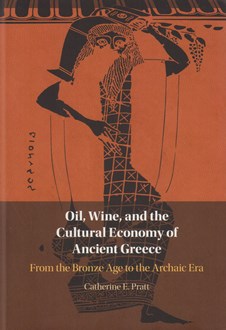
245 10|aOil, wine, and the cultural economy of ancient Greece :|bfrom the Bronze age to the Archaic era /|cCatherine E. Pratt, University of western Ontario.
250 |aFirst published.
260 |aCambridge, United Kingdom :|bCambridge University Press,|c2021.
300 |axiv, 409 sayfa :|bresim, çizim, harita, plan, grafik, tablo ;|c26 cm
500 |aİndeks s. 396-409.
504 |aBibliyografya s. 332-395.
504 |aBibliyografik notlar s. 315-331.
520 |a“Chapter 1 Introduction “There are two liquids most pleasing to human bodies: inside-wine, outside-oil.“--Pliny (23-79 CE), Natural History XIV, 29.150 “It is evident that the country now called Hellas had in ancient times no settled population ... without commerce, without freedom of communication either by land or sea, cultivating no more of their territory than the exigencies of life required, destitute of capital, never planting their land ...“ -Thucydides (c. 460-400 BCE), History of the Peloponnesian War, 1.2.1-2 Oil, Wine, and Cultural History in Pre-Classical Greece This book aims to explore the centrality of olive oil and wine in various realms of ancient Greek life and how this interdependence came to exist and persist. Indeed, this book argues that oil and wine can be regarded not just as economic commodities, but cultural commodities that actively shaped the paths of ancient Greek history. Cultural commodities can be defined as things that have become deeply entangled with humans through increasing ties of dependency that are reinforced by a high value constructed within multiple contexts of exchange. On the one hand, expansions and contractions of dependencies between people and oil/wine can be seen by tracing shifting emphases in exchange modes-such as commensal, gift, and commercial exchange-within their social and environmental contexts over the long-term.” --|cYayıncı.
650 4|aTarım, Antik|zYunanistan.
650 4|aZeytinyağı|zYunanistan|xTarih|y1500’e kadar.
650 4|aŞarap ve şarap yapımı|zYunanistan|xTarih|y1500’e kadar.
651 4|aYunanistan|xMedeniyet|yMÖ 146’ya kadar.
651 4|aYunanistan|xEkonomik durum|yMÖ 146’ya kadar.