LEADER 02590naaaa2200385aa54500
001 604665
003 TR_AnAIT
005 20250627101748
006 aoed|e |||| 001 0d
007 ta
008 231201s2021 enkoed|e |||| 001 0deng c
020 |a9781108845687|q(hardback)
020 |a9781108964852|q(paperback)
020 |a9781108990516|q(ebook)
040 |aTTK
041 |aeng
049 |aTürk Tarih Kurumu Kütüphanesi
090 |aB.II/0022
100 1 |aMogetta, Marcello.
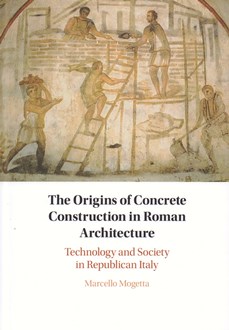
245 10|aThe origins of concrete construction in Roman architecture :|btechnology and society in Republican Italy /|cMarcello Mogetta, University of Missouri, Columbia.
250 |aFirst published.
260 |aCambridge ;|aNew York :|bCambridge University Press,|c2021.
300 |axiv, [8], 311 sayfa :|bresim (kimi renkli), plan, tablo ;|c26 cm
500 |aSözlük s. 252-259.
500 |aİndeks s. 304-311.
504 |aBibliyografya s. 260-303.
505 |tIntroduction --|tDeonstructing Roman concrete --|tA new date for concrete in Rome --|tA view from the suburbium --|tBuilding Samnite Pompeii --|tColonial networks --|tConclusion.
520 |a“Concrete construction represents Rome's major contribution to the history of ancient architecture and engineering. Scholars have touted the modern character of this man-made material, which gave planners the ability to cast structures wherever they were needed, emphasizing the inextricable link between building medium and building forms. Observation of the durability and longevity of concrete features, and particularly their survival in hostile environments such as seawater, has stimulated the scientific study of the material in order to identify the constituent elements and to describe the mechanical, chemical and physical characteristics for possible reproduction. As a result, the systematic testing of ancient samples has greatly improved our understanding of how Roman builders of the Late Republican and Imperial periods exploited raw materials. Moreover, the approach has shifted to concentrate on the step-by-step examination of the construction process, and standardized procedures have been developed to quantify the costs of construction, thus allowing for a contextualization of the building industry within the broader Roman economy.” --|cYayıncı.
650 4|aMimarlık, Roma.
650 4|aBinalar|zRoma.
650 4|aBeton yapı|zRoma.
650 4|aMimarlık ve toplum|zRoma.
651 4|aRoma İmparatorluğu|xBeton yapı.
651 4|aRoma, Geç Cumhuriyet|xBeton yapı.