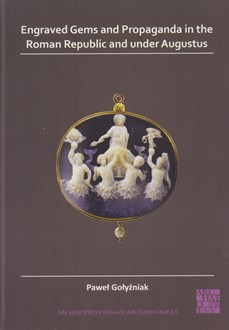
Engraved gems and propaganda in the Roman Republic and under Augustus / Paweł Gołyźniak.
Yer Numarası
B.I/9987
ISBN
9781789695397
9781789695403 (e-Pdf)
Dil Kodu
İngilizce
Kütüphane
Türk Tarih Kurumu Kütüphanesi
Yazar
Yayın Bilgisi
Oxford : Archaeopress Archaeology, 2020.
Fiziksel Niteleme
viii, 606 sayfa : resim (çoğu renkli), harita, grafik ; 30 cm.
Dizi
Archaeopress Roman archaeology ; 65
Genel Not
İndeks s. 602-606.
Bibliyografi, vb. Notu
Bibliyografya s. 587-601.
İçindekiler Notu
Foreword and acknowledgments -- Part I. Introduction -- Preface -- State of research -- Aims, methodology and structure -- Part II. Theory -- Self-presentation and propaganda - definitions and characteristics -- Roman propaganda on engraved gems - general introduction -- Part III. Evidence -- Beginnings (3rd-2nd centuries BC) -- Early 1st century BC -- Civil War : Pompey the Great, Julius Caesar and contemporaries -- Post-Caesarian and Liberators’ Civil Wars (from death of Caesar to Octavian’s sole rule: 44-27 BC) -- Augustus (27 BC-AD 14) -- Part IV. Summary and conclusions -- Provenance, provenience, production and distribution of propaganda gems -- Statistics -- Summary and conclusions -- Part V. Catalogue, figures, bibliography and indices -- Catalogue -- Figures -- Figure credits -- Bibliography -- Index.
Özet, vb.
“This book studies small but highly captivating artworks from antiquity – engraved gemstones. These objects had multiple applications, and the images upon them captured snapshots of people's beliefs, ideologies, and everyday occupations. They provide a unique perspective on the propaganda of Roman political leaders, especially Octavian/Augustus. Engraved Gems and Propaganda in the Roman Republic and under Augustus deals with small, but highly captivating and stimulating artwork – engraved gemstones. Although in antiquity intaglios and cameos had multiple applications (seals, jewellery or amulets), the images engraved upon them are snapshots of people's beliefs, ideologies, and everyday occupations. They cast light on the self-advertising and propaganda actions performed by Roman political leaders, especially Octavian/Augustus, their factions and other people engaged in the politics and social life of the past. Gems can show both general trends (the specific showpieces like State Cameos) as well as the individual and private acts of being involved in politics and social affairs, mainly through a subtle display of political allegiances, since they were objects of strictly personal use. They enable us to analyse and learn about Roman propaganda and various social behaviours from a completely different angle than coins, sculpture or literature. The miniaturism of ancient gems is in inverse proportion to their cultural significance. This book presents an evolutionary model of the use of engraved gems from self-presentation (3rd-2nd century BC) to personal branding and propaganda purposes in the Roman Republic and under Augustus (until 14 AD). The specific characteristics of engraved gems, their strictly private character and the whole array of devices appearing on them are examined in respect to their potential propagandistic value and usefulness in social life. The wide scope of this analysis provides a comprehensive picture covering many aspects of Roman propaganda and a critical survey of the overinterpretations of this term in regard to the glyptic art. The aim is the incorporation of this class of archaeological artefacts into the well-established studies of Roman propaganda, as well as the Roman society in general, brought about by discussion of the interconnections with ancient literary sources as well as other categories of Roman art and craftsmanship, notably coins but also sculpture and relief.” -- Yayıncı.

Eseri Alıntıla
Referansları kullanmadan önce gözden geçirmeniz ve varsa gerekli düzeltmeleri yapmanız önerilir.
Dijital Kaynak
MARC Görünümü
LEADER 04443naaaa2200349aa54500
001 604709
003 TR_AnAIT
005 20250627101526
006 aob||e |||| 001 0d
007 ta
008 231130s2020 enkob||e |||| 001 0deng c
020 |a9781789695397
020 |a9781789695403|q(e-Pdf)
040 |aTTK
041 |aeng
049 |aTürk Tarih Kurumu Kütüphanesi
090 |aB.I/9987
100 1 |aGołyźniak, Paweł.
245 10|aEngraved gems and propaganda in the Roman Republic and under Augustus /|cPaweł Gołyźniak.
260 |aOxford :|bArchaeopress Archaeology,|c2020.
300 |aviii, 606 sayfa :|bresim (çoğu renkli), harita, grafik ;|c30 cm.
490 0 |aArchaeopress Roman archaeology ;|v65
500 |aİndeks s. 602-606.
504 |aBibliyografya s. 587-601.
505 |tForeword and acknowledgments --|gPart I.|tIntroduction --|tPreface --|tState of research --|tAims, methodology and structure --|gPart II.|tTheory --|tSelf-presentation and propaganda - definitions and characteristics --|tRoman propaganda on engraved gems - general introduction --|gPart III.|tEvidence --|tBeginnings (3rd-2nd centuries BC) --|tEarly 1st century BC --|tCivil War : Pompey the Great, Julius Caesar and contemporaries --|tPost-Caesarian and Liberators’ Civil Wars (from death of Caesar to Octavian’s sole rule: 44-27 BC) --|tAugustus (27 BC-AD 14) --|gPart IV.|tSummary and conclusions --|tProvenance, provenience, production and distribution of propaganda gems --|tStatistics --|tSummary and conclusions --|gPart V.|tCatalogue, figures, bibliography and indices --|tCatalogue --|tFigures --|tFigure credits --|tBibliography --|tIndex.
520 |a“This book studies small but highly captivating artworks from antiquity – engraved gemstones. These objects had multiple applications, and the images upon them captured snapshots of people's beliefs, ideologies, and everyday occupations. They provide a unique perspective on the propaganda of Roman political leaders, especially Octavian/Augustus. Engraved Gems and Propaganda in the Roman Republic and under Augustus deals with small, but highly captivating and stimulating artwork – engraved gemstones. Although in antiquity intaglios and cameos had multiple applications (seals, jewellery or amulets), the images engraved upon them are snapshots of people's beliefs, ideologies, and everyday occupations. They cast light on the self-advertising and propaganda actions performed by Roman political leaders, especially Octavian/Augustus, their factions and other people engaged in the politics and social life of the past. Gems can show both general trends (the specific showpieces like State Cameos) as well as the individual and private acts of being involved in politics and social affairs, mainly through a subtle display of political allegiances, since they were objects of strictly personal use. They enable us to analyse and learn about Roman propaganda and various social behaviours from a completely different angle than coins, sculpture or literature. The miniaturism of ancient gems is in inverse proportion to their cultural significance. This book presents an evolutionary model of the use of engraved gems from self-presentation (3rd-2nd century BC) to personal branding and propaganda purposes in the Roman Republic and under Augustus (until 14 AD). The specific characteristics of engraved gems, their strictly private character and the whole array of devices appearing on them are examined in respect to their potential propagandistic value and usefulness in social life. The wide scope of this analysis provides a comprehensive picture covering many aspects of Roman propaganda and a critical survey of the overinterpretations of this term in regard to the glyptic art. The aim is the incorporation of this class of archaeological artefacts into the well-established studies of Roman propaganda, as well as the Roman society in general, brought about by discussion of the interconnections with ancient literary sources as well as other categories of Roman art and craftsmanship, notably coins but also sculpture and relief.” --|cYayıncı.
650 4|aDeğerli taşlar, oyma|zRoma.
650 4|aPropaganda|zRoma İmparatorluğu, MÖ 30-MS 14.
651 4|aRoma|xTarih|xAugustus, MÖ 30-MS 14.
651 4|aRoma Cumhuriyeti, MÖ 256-30|xTarih.
651 4|aRoma İmparatorluğu|xTarih|xAugustus, MÖ 30-MS 14.
001 604709
003 TR_AnAIT
005 20250627101526
006 aob||e |||| 001 0d
007 ta
008 231130s2020 enkob||e |||| 001 0deng c
020 |a9781789695397
020 |a9781789695403|q(e-Pdf)
040 |aTTK
041 |aeng
049 |aTürk Tarih Kurumu Kütüphanesi
090 |aB.I/9987
100 1 |aGołyźniak, Paweł.
245 10|aEngraved gems and propaganda in the Roman Republic and under Augustus /|cPaweł Gołyźniak.
260 |aOxford :|bArchaeopress Archaeology,|c2020.
300 |aviii, 606 sayfa :|bresim (çoğu renkli), harita, grafik ;|c30 cm.
490 0 |aArchaeopress Roman archaeology ;|v65
500 |aİndeks s. 602-606.
504 |aBibliyografya s. 587-601.
505 |tForeword and acknowledgments --|gPart I.|tIntroduction --|tPreface --|tState of research --|tAims, methodology and structure --|gPart II.|tTheory --|tSelf-presentation and propaganda - definitions and characteristics --|tRoman propaganda on engraved gems - general introduction --|gPart III.|tEvidence --|tBeginnings (3rd-2nd centuries BC) --|tEarly 1st century BC --|tCivil War : Pompey the Great, Julius Caesar and contemporaries --|tPost-Caesarian and Liberators’ Civil Wars (from death of Caesar to Octavian’s sole rule: 44-27 BC) --|tAugustus (27 BC-AD 14) --|gPart IV.|tSummary and conclusions --|tProvenance, provenience, production and distribution of propaganda gems --|tStatistics --|tSummary and conclusions --|gPart V.|tCatalogue, figures, bibliography and indices --|tCatalogue --|tFigures --|tFigure credits --|tBibliography --|tIndex.
520 |a“This book studies small but highly captivating artworks from antiquity – engraved gemstones. These objects had multiple applications, and the images upon them captured snapshots of people's beliefs, ideologies, and everyday occupations. They provide a unique perspective on the propaganda of Roman political leaders, especially Octavian/Augustus. Engraved Gems and Propaganda in the Roman Republic and under Augustus deals with small, but highly captivating and stimulating artwork – engraved gemstones. Although in antiquity intaglios and cameos had multiple applications (seals, jewellery or amulets), the images engraved upon them are snapshots of people's beliefs, ideologies, and everyday occupations. They cast light on the self-advertising and propaganda actions performed by Roman political leaders, especially Octavian/Augustus, their factions and other people engaged in the politics and social life of the past. Gems can show both general trends (the specific showpieces like State Cameos) as well as the individual and private acts of being involved in politics and social affairs, mainly through a subtle display of political allegiances, since they were objects of strictly personal use. They enable us to analyse and learn about Roman propaganda and various social behaviours from a completely different angle than coins, sculpture or literature. The miniaturism of ancient gems is in inverse proportion to their cultural significance. This book presents an evolutionary model of the use of engraved gems from self-presentation (3rd-2nd century BC) to personal branding and propaganda purposes in the Roman Republic and under Augustus (until 14 AD). The specific characteristics of engraved gems, their strictly private character and the whole array of devices appearing on them are examined in respect to their potential propagandistic value and usefulness in social life. The wide scope of this analysis provides a comprehensive picture covering many aspects of Roman propaganda and a critical survey of the overinterpretations of this term in regard to the glyptic art. The aim is the incorporation of this class of archaeological artefacts into the well-established studies of Roman propaganda, as well as the Roman society in general, brought about by discussion of the interconnections with ancient literary sources as well as other categories of Roman art and craftsmanship, notably coins but also sculpture and relief.” --|cYayıncı.
650 4|aDeğerli taşlar, oyma|zRoma.
650 4|aPropaganda|zRoma İmparatorluğu, MÖ 30-MS 14.
651 4|aRoma|xTarih|xAugustus, MÖ 30-MS 14.
651 4|aRoma Cumhuriyeti, MÖ 256-30|xTarih.
651 4|aRoma İmparatorluğu|xTarih|xAugustus, MÖ 30-MS 14.
Materyaller
Depodan talep edilen materyal sadece kütüphane içerisinde kullanılmaktadır.
Materyal dışarıya ödünç verilmemektedir.
