LEADER 03059naaaa2200361aa54500
001 604710
003 TR_AnAIT
005 20250627101524
006 aoab|e |||| 000 0d
007 ta
008 240201s2020 enkoab|e |||| 000 0deng c
020 |a9781789696592
020 |a9781789696608|q(e-Pdf)
040 |aTTK
041 |aeng
049 |aTürk Tarih Kurumu Kütüphanesi
090 |aB.II/0057
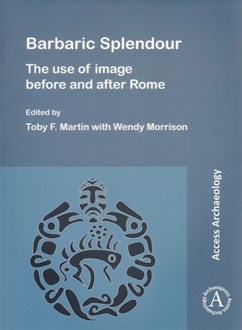
245 00|aBarbaric splendour :|bthe use of image before and after Rome /|cedited by Toby F. Martin with Wendy Morrison.
260 |aOxford :|bArchaeopress,|c2020.
300 |aviii, 139 sayfa :|bresim (çoğu renkli), çizim, harita ;|c28 cm.
490 0 |aAccess archaeology
504 |aBibliyografya makale sonlarındadır.
505 |tPreface --|tBarbaric tendencies? Iron Age and early medieval art in comparison /|rToby F. Martin --|tIn the eye of the dragon : how the ancient Celts viewed the world /|rLaurent Olivier --|tVariations on a theme? Examining the repetition of patterns on British Iron Age art /|rJody Joy --|tChanging perspectives in southwest Norwegian Style I /|rElna Siv Kristoffersen, Unn Pedersen --|tHelmets and headaches : thoughts on the Staffordshire Hoard helmet /|rGeorge Speake --|t‘Magnificent was the cross of victory’: the great gold cross from the Staffordshire Hoard /|rChris Fern --|tThe materiality of faces /|rCharlotte Behr --|tInsular numismatics : the relationship between ancient British and early Anglo-Saxon coins /|rAnna Gannon.
520 |a“Barbaric Splendour : the use of image before and after Rome comprises a collection of essays comparing late Iron Age and Early Medieval art. Though this is an unconventional approach, there are obvious grounds for comparison. Images from both periods revel in complex compositions in which it is hard to distinguish figural elements from geometric patterns. Moreover, in both periods, images rarely stood alone and for their own sake. Instead, they decorated other forms of material culture, particularly items of personal adornment and weaponry. The key comparison, however, is the relationship of these images to those of Rome. Fundamentally, the book asks what making images meant on the fringe of an expanding or contracting empire, particularly as the art from both periods drew heavily from – but radically transformed – imperial imagery. This book comprises a collection of essays comparing late Iron Age and Early Medieval art. Fundamentally, the book asks what making images meant on the fringe of the expanding or contracting Roman empire, particularly as the art from both periods drew heavily from - but radically transformed - imperial imagery.” --|cYayıncı.
650 4|aGeç Demir Çağı|xSanat.
650 4|aErken Orta Çağ|xSanat.
650 4|aNümismatik.
650 4|aSikkeler, İngiliz|xİlişkiler|xSikkeler, Anglo-Sakson.
650 4|aStaffordshire Hazinesi.
650 4|aİngiliz sanatı|xDesen|yDemir Çağı.
700 1 |aMartin, Toby F.,|eeditör.
700 1 |aMorrison, Wendy A.,|eeditör.