LEADER 02875naaaa2200325aa54500
001 604713
003 TR_AnAIT
005 20250627101514
006 aoabde |||| 000 0d
007 ta
008 231213s2022 enkoabde |||| 000 0deng c
020 |a9781803270241
020 |a9781803270258|q(e-Pdf)
040 |aTTK
041 |aeng
049 |aTürk Tarih Kurumu Kütüphanesi
090 |aB.II/0007
100 1 |aLópez, Coral Montero.
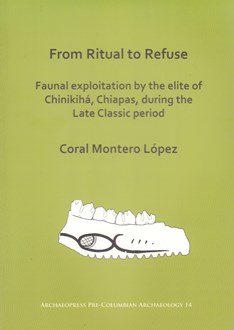
245 10|aFrom ritual to refuse faunal exploitation by the elite of Chinikiha, Chiapas, during the late classic period /|cCoral Montero López.
260 |aOxford :|bArchaeopress,|c©2022.
300 |aviii, 230 sayfa :|bresim (çoğu renkli), çizim, harita, grafik, tablo ;|c29 cm.
490 0 |aArchaeopress pre-Columbian archaeology ;|v14
504 |aBibliyografya s. 187-208.
505 |tPreface --|tIntroduction --|tTheoretical background to feasting : Activities in archaeology --|tThe presence of faunal remains in different contexts : the Maya case --|tChinikihá and the sociopolitical situation during the maya classic period --|tDescription of the Chinikihá assemblages --|tZooarchaeological methodology --|tTheoretical background to isotope analysis --|tResults of the zooarchaeological analysis --|tDetailed analysis of Operación 114 --|tResults of the isotope analysis --|tDiscussion --|tConclusion --|tReferences --|tAppendix a : list of isolated teeth by operación --|tAppendix b : list of material identified by operación --|tAppendix c : List of modified bone and shell studied --|tAppendix d : List of human remains studied.
520 |a“From Ritual to Refuse explores the faunal exploitation by the Maya elite at the site of Chinikihá, Chiapas, during the end of the Late Classic period (AD 700-850) by applying zooarchaeological and statistical analyses to a faunal assemblage located in a basurero or midden behind a palatial structure at the core of the site. This deposit has been interpreted as the result of one or various feasting events. The aim is to investigate temporal changes of function, more specifically during periods of increasing political competitiveness. Moreover, these analyses suggest that there is a change in the use of faunal resources, from a ritual pattern to a more general refuse deposit. The results from the zooarchaeological analysis are supported by a dietary analysis using ?13C and ?15N stable isotopes conducted on human and faunal samples. The results from the faunal assemblage suggest that there was a constant supply of animals for ritual and non-ritual uses, and that these animals were mostly obtained in the wild.” --|cYayıncı.
650 4|aArkeozooloji|zMeksika|zChiapas.
650 4|aHayvan kemikler (arkeoloji)|zMeksika|zChiapas.
651 4|aChiapas (Meksika)|xTarih|xEski eserler.
651 4|aChiapas (Meksika)|xEski eserler.