

The archaeology of Phrygian Gordion, royal city of Midas / C. Brian Rose, editor.
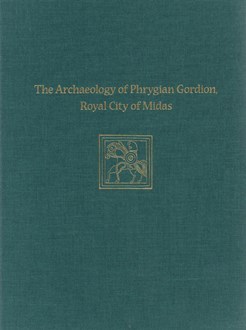
Yer Numarası
B.II/0045
ISBN
9781934536483 (hardcover : acid-free paper)
1934536482 (hardcover : acid-free paper)
1934536482 (hardcover : acid-free paper)
Dil Kodu
İngilizce
Kütüphane
Türk Tarih Kurumu Kütüphanesi
Yayın Bilgisi
Philadelphia : University of Pennsylvania Museum of Archaeology and Anthropology, 2012.
Fiziksel Niteleme
xvii, 329 sayfa, [8] sayfa resim : resim (kimi renkli), çizim, harita, plan, grafik ; 29 cm + 1 katlı plan.
Dizi
Museum monograph ; 136. Gordion special studies ; VII
Genel Not
İndeks s. [311]-329.
Bibliyografi, vb. Notu
Bibliyografya s. [277]-300.
İçindekiler Notu
List of figures -- List of tables -- Acknowledgments -- Introduction : The archaeology of Phrygian Gordion / C. Brian Rose -- Mapping and the landscape. Mapping Gordion / Gabriel H. Pizzorno, Gareth Darbyshire -- Reading Gordion settlement history from stream sedimentation / Ben Marsh -- Reconstructing the functional use of wood at Phrygian Gordion through charcoal analysis / John M. Marston -- The Early Phrygian citadel. The new chronology for Gordion and Phrygian pottery / G. Kenneth Sams -- The Unfinished Project of the Gordion Early Phrygian destruction level / Mary M. Voigt -- Pictures in stone : Incised drawings on Early Phrygian architecture / Lynn E. Roller -- Early Bronze fibulae and belts from the Gordion City Mound / Maya Vassileva -- Midas and tumulus MM. Phrygian tomb architecture : Some observations on the 50th anniversary of the excavations of tumulus MM / Richard F. Liebhart -- Royal Phrygian furniture and fine wooden artifacts from Gordion / Elizabeth Simpson -- King Midas’ textiles and His Golden Touch / Mary W. Ballard -- In the shadow of tumulus MM : The common cemetery and Middle Phrygian Houses at Gordion / Gunlög E. Anderson -- The throne of Midas? Delphi and the power politics of Phrygia, Lydia, and Greece / Keith DeVries and C. Brian Rose -- The Middle and Late Phrygian citadel. The rebuilt citadel at Gordion : Building A and the mosaic building complex / Brendan Burke -- Pontic inhabitants at Gordion? Pots, people, and plans of houses at Middle Phrygian through Early Hellenistic Gordion / Mark L. Lawall -- Conservation management at Gordion. Resurrecting Gordion : Conservation as interpretation and display of a Phrygian Capital / Frank Matero -- Working with nature to preserve site and landscape at Gordion / Naomi F. Miller -- Gordion through Lydian eyes / Crawford H. Greenewalt, Jr. -- Bibliography -- Contributors -- Turkish Summary -- Index.
Özet, vb.
“Some of the most dramatic new discoveries in Asia Minor have been made at Gordion, the Phrygian capital that controlled much of central Asia Minor for close to two centuries. The most famous ruler of the kingdom was Midas, who regularly negotiated with Greeks in the west and Assyrians in the east during his reign. Excavations have been conducted at Gordion over the course of the last 60 years, all under the auspices of the University of Pennsylvania Museum of Archaeology and Anthropology.In spite of the economic and political importance of Gordion and the Phrygians, the site is consistently omitted from courses in Old World archaeology, primarily because Gordion lies too far to the west for many Near Eastern archaeologists, and too far to the east for classical archaeologists. Moreover, there is no book that offers a comprehensive and up-to-date assessment of the material culture of Gordion during the Phrygian period, a gap that will be filled by this volume. The chapters cover all aspects of Gordion's Phrygian settlement topography from the arrival of the Phrygians in the tenth century B.C. through the arrival of Alexander the Great in 333 B.C., focusing on the site's changing topography and the consistently fluctuating interaction between the inhabitants and the landscape. A reexamination of the material culture of Phrygian Gordion is particularly timely, given the dramatic recent changes in the site's chronology, wherein the dates of many discoveries have changed by as much as a century. The authors are among the leading experts in Near Eastern archaeology, historic preservation, paleobotany, and ancient furniture, and their articles highlight the interdisciplinary nature of the Gordion project. A significant component of the book is a new color phase plan of the site that succinctly presents the topography in diachronic perspective.” -- Yayıncı.
Dil Notu
Türkçe özet içerir (s. [305]-310).
Konu
Emeği Geçenler
Rose, Charles Brian, editör.
Dizi Ek Girişi- Tek Biçim Başlık
Museum monograph ; 136.
Museum monograph. Gordion special studies ; 7.
Museum monograph. Gordion special studies ; 7.
Eseri Alıntıla
Referansları kullanmadan önce gözden geçirmeniz ve varsa gerekli düzeltmeleri yapmanız önerilir.
Dijital Kaynak
MARC Görünümü
LEADER 05294naaaa2200385aa54500
001 604722
003 TR_AnAIT
005 20250627101451
006 aoabee |||| 001 0d
007 ta
008 240130s2012 pauoabee |||| 001 0deng c
020 |a9781934536483|q(hardcover : acid-free paper)
020 |a1934536482|q(hardcover : acid-free paper)
040 |aTTK
041 |aeng
049 |aTürk Tarih Kurumu Kütüphanesi
090 |aB.II/0045
245 04|aThe archaeology of Phrygian Gordion, royal city of Midas /|cC. Brian Rose, editor.
260 |aPhiladelphia :|bUniversity of Pennsylvania Museum of Archaeology and Anthropology,|c2012.
300 |axvii, 329 sayfa, [8] sayfa resim :|bresim (kimi renkli), çizim, harita, plan, grafik ;|c29 cm +|e1 katlı plan.
490 1 |aMuseum monograph ;|v136.|aGordion special studies ;|vVII
500 |aİndeks s. [311]-329.
504 |aBibliyografya s. [277]-300.
505 |tList of figures --|tList of tables --|tAcknowledgments --|tIntroduction : The archaeology of Phrygian Gordion /|rC. Brian Rose --|tMapping and the landscape.|tMapping Gordion /|rGabriel H. Pizzorno, Gareth Darbyshire --|tReading Gordion settlement history from stream sedimentation /|rBen Marsh --|tReconstructing the functional use of wood at Phrygian Gordion through charcoal analysis /|rJohn M. Marston --|tThe Early Phrygian citadel.|tThe new chronology for Gordion and Phrygian pottery /|rG. Kenneth Sams --|tThe Unfinished Project of the Gordion Early Phrygian destruction level /|rMary M. Voigt --|tPictures in stone : Incised drawings on Early Phrygian architecture /|rLynn E. Roller --|tEarly Bronze fibulae and belts from the Gordion City Mound /|rMaya Vassileva --|tMidas and tumulus MM.|tPhrygian tomb architecture : Some observations on the 50th anniversary of the excavations of tumulus MM /|rRichard F. Liebhart --|tRoyal Phrygian furniture and fine wooden artifacts from Gordion /|rElizabeth Simpson --|tKing Midas’ textiles and His Golden Touch /|rMary W. Ballard --|tIn the shadow of tumulus MM : The common cemetery and Middle Phrygian Houses at Gordion /|rGunlög E. Anderson --|tThe throne of Midas? Delphi and the power politics of Phrygia, Lydia, and Greece /|rKeith DeVries and C. Brian Rose --|tThe Middle and Late Phrygian citadel.|tThe rebuilt citadel at Gordion : Building A and the mosaic building complex /|rBrendan Burke --|tPontic inhabitants at Gordion? Pots, people, and plans of houses at Middle Phrygian through Early Hellenistic Gordion /|rMark L. Lawall --|tConservation management at Gordion.|tResurrecting Gordion : Conservation as interpretation and display of a Phrygian Capital /|rFrank Matero --|tWorking with nature to preserve site and landscape at Gordion /|rNaomi F. Miller --|tGordion through Lydian eyes /|rCrawford H. Greenewalt, Jr. --|tBibliography --|tContributors --|tTurkish Summary --|tIndex.
520 |a“Some of the most dramatic new discoveries in Asia Minor have been made at Gordion, the Phrygian capital that controlled much of central Asia Minor for close to two centuries. The most famous ruler of the kingdom was Midas, who regularly negotiated with Greeks in the west and Assyrians in the east during his reign. Excavations have been conducted at Gordion over the course of the last 60 years, all under the auspices of the University of Pennsylvania Museum of Archaeology and Anthropology.In spite of the economic and political importance of Gordion and the Phrygians, the site is consistently omitted from courses in Old World archaeology, primarily because Gordion lies too far to the west for many Near Eastern archaeologists, and too far to the east for classical archaeologists. Moreover, there is no book that offers a comprehensive and up-to-date assessment of the material culture of Gordion during the Phrygian period, a gap that will be filled by this volume. The chapters cover all aspects of Gordion's Phrygian settlement topography from the arrival of the Phrygians in the tenth century B.C. through the arrival of Alexander the Great in 333 B.C., focusing on the site's changing topography and the consistently fluctuating interaction between the inhabitants and the landscape. A reexamination of the material culture of Phrygian Gordion is particularly timely, given the dramatic recent changes in the site's chronology, wherein the dates of many discoveries have changed by as much as a century. The authors are among the leading experts in Near Eastern archaeology, historic preservation, paleobotany, and ancient furniture, and their articles highlight the interdisciplinary nature of the Gordion project. A significant component of the book is a new color phase plan of the site that succinctly presents the topography in diachronic perspective.” --|cYayıncı.
546 |aTürkçe özet içerir (s. [305]-310).
650 4|aFrigler|xEski eserler.
650 4|aArkeolojik kazılar|zTürkiye|zGordion (antik kent)
650 4|aTarihi yapılar|zTürkiye|zGordion (antik kent)
650 4|aMaddi kültür|zTürkiye|zGordion (antik kent)
651 4|aGordion (antik kent)|xEski eserler.
700 1 |aRose, Charles Brian,|eeditör.
830 0|aMuseum monograph ;|v136.
830 0|aMuseum monograph.|pGordion special studies ;|v7.
001 604722
003 TR_AnAIT
005 20250627101451
006 aoabee |||| 001 0d
007 ta
008 240130s2012 pauoabee |||| 001 0deng c
020 |a9781934536483|q(hardcover : acid-free paper)
020 |a1934536482|q(hardcover : acid-free paper)
040 |aTTK
041 |aeng
049 |aTürk Tarih Kurumu Kütüphanesi
090 |aB.II/0045
245 04|aThe archaeology of Phrygian Gordion, royal city of Midas /|cC. Brian Rose, editor.
260 |aPhiladelphia :|bUniversity of Pennsylvania Museum of Archaeology and Anthropology,|c2012.
300 |axvii, 329 sayfa, [8] sayfa resim :|bresim (kimi renkli), çizim, harita, plan, grafik ;|c29 cm +|e1 katlı plan.
490 1 |aMuseum monograph ;|v136.|aGordion special studies ;|vVII
500 |aİndeks s. [311]-329.
504 |aBibliyografya s. [277]-300.
505 |tList of figures --|tList of tables --|tAcknowledgments --|tIntroduction : The archaeology of Phrygian Gordion /|rC. Brian Rose --|tMapping and the landscape.|tMapping Gordion /|rGabriel H. Pizzorno, Gareth Darbyshire --|tReading Gordion settlement history from stream sedimentation /|rBen Marsh --|tReconstructing the functional use of wood at Phrygian Gordion through charcoal analysis /|rJohn M. Marston --|tThe Early Phrygian citadel.|tThe new chronology for Gordion and Phrygian pottery /|rG. Kenneth Sams --|tThe Unfinished Project of the Gordion Early Phrygian destruction level /|rMary M. Voigt --|tPictures in stone : Incised drawings on Early Phrygian architecture /|rLynn E. Roller --|tEarly Bronze fibulae and belts from the Gordion City Mound /|rMaya Vassileva --|tMidas and tumulus MM.|tPhrygian tomb architecture : Some observations on the 50th anniversary of the excavations of tumulus MM /|rRichard F. Liebhart --|tRoyal Phrygian furniture and fine wooden artifacts from Gordion /|rElizabeth Simpson --|tKing Midas’ textiles and His Golden Touch /|rMary W. Ballard --|tIn the shadow of tumulus MM : The common cemetery and Middle Phrygian Houses at Gordion /|rGunlög E. Anderson --|tThe throne of Midas? Delphi and the power politics of Phrygia, Lydia, and Greece /|rKeith DeVries and C. Brian Rose --|tThe Middle and Late Phrygian citadel.|tThe rebuilt citadel at Gordion : Building A and the mosaic building complex /|rBrendan Burke --|tPontic inhabitants at Gordion? Pots, people, and plans of houses at Middle Phrygian through Early Hellenistic Gordion /|rMark L. Lawall --|tConservation management at Gordion.|tResurrecting Gordion : Conservation as interpretation and display of a Phrygian Capital /|rFrank Matero --|tWorking with nature to preserve site and landscape at Gordion /|rNaomi F. Miller --|tGordion through Lydian eyes /|rCrawford H. Greenewalt, Jr. --|tBibliography --|tContributors --|tTurkish Summary --|tIndex.
520 |a“Some of the most dramatic new discoveries in Asia Minor have been made at Gordion, the Phrygian capital that controlled much of central Asia Minor for close to two centuries. The most famous ruler of the kingdom was Midas, who regularly negotiated with Greeks in the west and Assyrians in the east during his reign. Excavations have been conducted at Gordion over the course of the last 60 years, all under the auspices of the University of Pennsylvania Museum of Archaeology and Anthropology.In spite of the economic and political importance of Gordion and the Phrygians, the site is consistently omitted from courses in Old World archaeology, primarily because Gordion lies too far to the west for many Near Eastern archaeologists, and too far to the east for classical archaeologists. Moreover, there is no book that offers a comprehensive and up-to-date assessment of the material culture of Gordion during the Phrygian period, a gap that will be filled by this volume. The chapters cover all aspects of Gordion's Phrygian settlement topography from the arrival of the Phrygians in the tenth century B.C. through the arrival of Alexander the Great in 333 B.C., focusing on the site's changing topography and the consistently fluctuating interaction between the inhabitants and the landscape. A reexamination of the material culture of Phrygian Gordion is particularly timely, given the dramatic recent changes in the site's chronology, wherein the dates of many discoveries have changed by as much as a century. The authors are among the leading experts in Near Eastern archaeology, historic preservation, paleobotany, and ancient furniture, and their articles highlight the interdisciplinary nature of the Gordion project. A significant component of the book is a new color phase plan of the site that succinctly presents the topography in diachronic perspective.” --|cYayıncı.
546 |aTürkçe özet içerir (s. [305]-310).
650 4|aFrigler|xEski eserler.
650 4|aArkeolojik kazılar|zTürkiye|zGordion (antik kent)
650 4|aTarihi yapılar|zTürkiye|zGordion (antik kent)
650 4|aMaddi kültür|zTürkiye|zGordion (antik kent)
651 4|aGordion (antik kent)|xEski eserler.
700 1 |aRose, Charles Brian,|eeditör.
830 0|aMuseum monograph ;|v136.
830 0|aMuseum monograph.|pGordion special studies ;|v7.
Materyaller
Depodan talep edilen materyal sadece kütüphane içerisinde kullanılmaktadır.
Materyal dışarıya ödünç verilmemektedir.
Materyal dışarıya ödünç verilmemektedir.
