LEADER 03019naaaa2200313aa54500
001 604761
003 TR_AnAIT
005 20250627101142
006 aocabe |||| 001 0d
007 ta
008 240306s2021 be ocabe |||| 001 0deng c
020 |a9782960202953
040 |aTTK
041 |aeng
049 |aTürk Tarih Kurumu Kütüphanesi
090 |aB.II/0095
100 1 |aKourou, Nota.
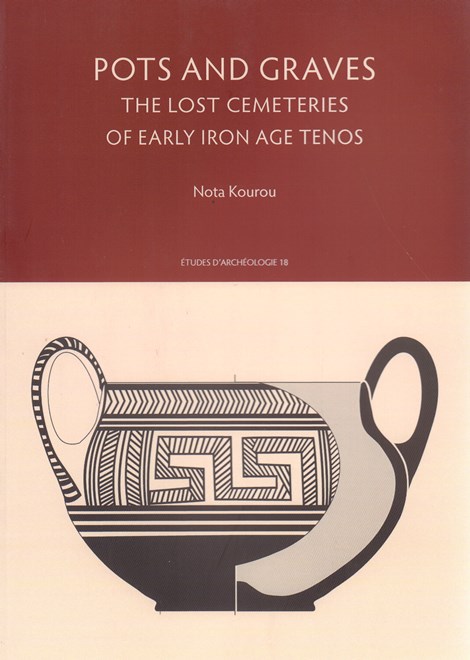
245 10|aPots and graves :|bthe lost cemeteries of Early Iron Age Tenos /|cNota Kourou.
260 |aBruxelles :|bCentre de Recherches en Archéologie et Patrimoine,|c2021.
300 |a173 sayfa :|bresim (kimi renkli), portre, çizim, harita, tablo ;|c30 cm.
490 1 |aÉtudes d'archéologie ;|v18
504 |aBibliyografya s. 162-173.
520 |a“Despite their apparently small populations, Early Iron Age Cycladic communities managed to gradually develop distinctive and wide-ranging cultures, as is reflected in the variety of Late Geometric and Archaic pottery styles. But consecutive and comprehensible contexts of the Protogeometric and earlier Geometric periods are limited and incompletely preserved. With only few exceptions the evidence is basically confined to sporadic and chance finds. Graves of this period are known only from a few islands and Tenos is one of them. A small number of tombs excavated at the beginning of the 20th century and a number of pots from destroyed and lost graves formed for a long time the nucleus of Early Iron Age evidence for the island. Later, further chance finds improved the evidence, but still the Early Iron Age funerary horizon remained poorly known. This study investigates the Early Iron Age funerary record of the island, bringing together all the known material from Tenos and then setting it against its contemporary Aegean background. A detailed catalogue of excavated and lost graves and their finds is presented and discussed from a range of viewpoints. A brief chronological outline of mortuary assemblages and the chance vases is given, to better order the investigation in time. By analyzing the burial record and its contextual background conclusions are drawn on the burial topography and in turn the social and historical implications that emerge for the island. Emphasis is given to the ceramic record and the identification of local pottery workshops and imports. A short review of the history of each shape gives the contemporary ceramic background for each in the Aegean; this is followed by a discussion of pottery styles, networks and intercultural relationships. Pottery analysis demonstrates two successive ceramic phases with different cultural orientations. Thus, we may enhance our knowledge of Tenian culture in the Early Iron Age on the basis of the existing funerary evidence.” --|cArka kapak.
650 4|aArkeolojik kazılar|zYunanistan|zTinos.
650 4|aMezarlar|zYunanistan|zTinos.
650 4|aÖlü gömme adetleri|zYunanistan|zTinos.
651 4|aTinos (Yunanistan)|xEski eserler.
830 0|aEA ;|v18.