

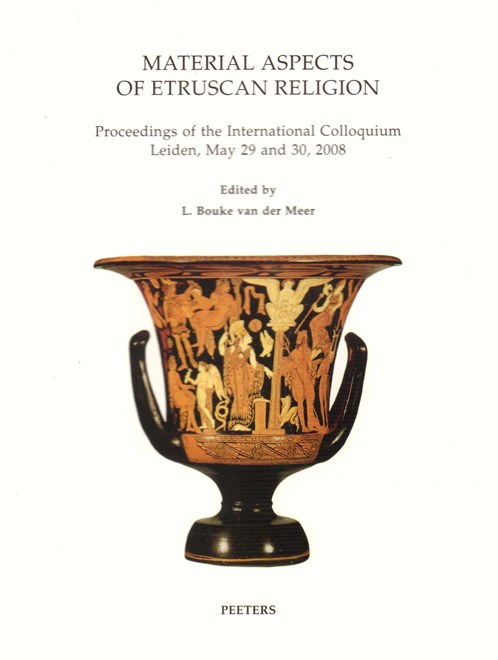
Material aspects of Etruscan religion : proceedings of the international colloquium Leiden, May 29 and 30, 2008 / edited by L. Bouke van der Meer.
Yer Numarası
B.II/0061
ISBN
9789042923669
Dil Kodu
İngilizce, İtalyanca
Kütüphane
Türk Tarih Kurumu Kütüphanesi
Yayın Bilgisi
Leuven ; Paris ; Walpole : Peeters, 2010.
Fiziksel Niteleme
vii, 164 sayfa : resim (kimi renkli), çizim, plan, grafik ; 28 cm.
Dizi
Babesch. Supplement, 0165-9367 ; 16
Bibliyografi, vb. Notu
Bibliyografya bildiri sonlarındadır.
İçindekiler Notu
Preface -- Material Aspects of Etruscan religion : An introduction / L. Bouke van der Meer -- Tarquinia. Types of offerings, Etruscan divinities and attributes in the archaeological record / Maria Bonghi Jovino -- Cults and Foundation Rites in the Etruscan City of Marzabotto / Giuseppe Sassatelli, Elisabetta Govi -- Quarant’anni di ricerche a Gravisca / Lucio Fiorino, Mario Torelli -- Etruscan Altars in sanctuaries and necropoleis of the orientalizing, Archaic and Classical Period / Stephan Steingräber and Silva Menichelli -- The tomb as altar / Friedhelm Prayon -- The imagery of the Etrusco-Faliscan Pantheon between architectural sculpture and vase-painting / Maurizio Harari -- A Journey to Hades with Turms Aitas / Fernando Gilotta -- Between Divination and Magic : role, gesture and instruments of the Etruscan Haruspex / Francesco Roncalli -- The curved staff in the Near East as a predecessor of the Etruscan lituus / Claus Ambos, Ingrid Krauskopf -- II teatro etrusco secondo le fonti scritte : spettacolo, ritualità, religione / Giovannangelo Camporeale.
Özet, vb.
“The articles in this publication are presentations given during and offered to the Colloquium Material Aspects of Etruscan Religion, organised by the Faculty of Archaeology of Leiden University on 29 and 30 May 2008. They shed much new light upon religious aspects of sanctuaries, cities, settlements, necropoles, and tombs in Etruria, in the Po valley and in Campania. Also several, hitherto unpublished artefacts with ritual representations are commented on. A new analysis of the role, gestures and instruments of haruspices (divination experts) suggests that Etruscan divination is of Near Eastern origin. Interdisciplinary research on the function of litui proves that this curved staff of priests (but not of seers) probably originates also from the Near East. Finally, the religious background of Etruscan theatrical plays, always related to historical events in Roman history, is analysed. This BABESCH Supplement casts light on Etruscan gods, the process of anthropomorphisation, the cults, votive deposits, the cult places, also in necropoles, architectural decoration of temples and the relationship with representations on vases in the Faliscan border area of Etruria, rituals, and attributes of seers and priests. Further a new typology of altars is included. Extremely important are the results of very recent excavations in Tarquinia, at Gravisca, a multicultural harbour sanctuary near Tarquinia, at Marzabotto and several other places. The introduction sketches the main lines of the development of Etruscan religion with references to the contents of the colloquium papers.” -- Yayıncı.
Emeği Geçenler
Meer, Lammert Bouke van der, editör.
Dizi Ek Girişi- Tek Biçim Başlık
Babesch. Supplement ; 16.
Eseri Alıntıla
Referansları kullanmadan önce gözden geçirmeniz ve varsa gerekli düzeltmeleri yapmanız önerilir.
Dijital Kaynak
MARC Görünümü
LEADER 03813naaaa2200313aa54500
001 604789
003 TR_AnAIT
005 20250627100951
006 aoae|e |||| 100 0d
007 ta
008 240201s2010 be oae|e |||| 100 0dmul c
020 |a9789042923669
040 |aTTK
041 |aeng|aita
049 |aTürk Tarih Kurumu Kütüphanesi
090 |aB.II/0061
111 2 |aInternational colloquium “Material aspects of etruscan religion”|d(2008 :|cLeiden, Hollanda)
245 10|aMaterial aspects of Etruscan religion :|bproceedings of the international colloquium Leiden, May 29 and 30, 2008 /|cedited by L. Bouke van der Meer.
260 |aLeuven ;|aParis ;|aWalpole :|bPeeters,|c2010.
300 |avii, 164 sayfa :|bresim (kimi renkli), çizim, plan, grafik ;|c28 cm.
490 1 |aBabesch.|aSupplement,|x0165-9367 ;|v16
504 |aBibliyografya bildiri sonlarındadır.
505 |tPreface --|tMaterial Aspects of Etruscan religion : An introduction /|rL. Bouke van der Meer --|tTarquinia. Types of offerings, Etruscan divinities and attributes in the archaeological record /|rMaria Bonghi Jovino --|tCults and Foundation Rites in the Etruscan City of Marzabotto /|rGiuseppe Sassatelli, Elisabetta Govi --|tQuarant’anni di ricerche a Gravisca /|rLucio Fiorino, Mario Torelli --|tEtruscan Altars in sanctuaries and necropoleis of the orientalizing, Archaic and Classical Period /|rStephan Steingräber and Silva Menichelli --|tThe tomb as altar /|rFriedhelm Prayon --|tThe imagery of the Etrusco-Faliscan Pantheon between architectural sculpture and vase-painting /|rMaurizio Harari --|tA Journey to Hades with Turms Aitas /|rFernando Gilotta --|tBetween Divination and Magic : role, gesture and instruments of the Etruscan Haruspex /|rFrancesco Roncalli --|tThe curved staff in the Near East as a predecessor of the Etruscan lituus /|rClaus Ambos, Ingrid Krauskopf --|tII teatro etrusco secondo le fonti scritte : spettacolo, ritualità, religione /|rGiovannangelo Camporeale.
520 |a“The articles in this publication are presentations given during and offered to the Colloquium Material Aspects of Etruscan Religion, organised by the Faculty of Archaeology of Leiden University on 29 and 30 May 2008. They shed much new light upon religious aspects of sanctuaries, cities, settlements, necropoles, and tombs in Etruria, in the Po valley and in Campania. Also several, hitherto unpublished artefacts with ritual representations are commented on. A new analysis of the role, gestures and instruments of haruspices (divination experts) suggests that Etruscan divination is of Near Eastern origin. Interdisciplinary research on the function of litui proves that this curved staff of priests (but not of seers) probably originates also from the Near East. Finally, the religious background of Etruscan theatrical plays, always related to historical events in Roman history, is analysed. This BABESCH Supplement casts light on Etruscan gods, the process of anthropomorphisation, the cults, votive deposits, the cult places, also in necropoles, architectural decoration of temples and the relationship with representations on vases in the Faliscan border area of Etruria, rituals, and attributes of seers and priests. Further a new typology of altars is included. Extremely important are the results of very recent excavations in Tarquinia, at Gravisca, a multicultural harbour sanctuary near Tarquinia, at Marzabotto and several other places. The introduction sketches the main lines of the development of Etruscan religion with references to the contents of the colloquium papers.” --|cYayıncı.
650 4|aEtrüskler|xDin|vKongreler.
650 4|aEtrüskler|vKongreler.
700 1 |aMeer, Lammert Bouke van der,|eeditör.
830 0|aBabesch.|pSupplement ;|v16.
001 604789
003 TR_AnAIT
005 20250627100951
006 aoae|e |||| 100 0d
007 ta
008 240201s2010 be oae|e |||| 100 0dmul c
020 |a9789042923669
040 |aTTK
041 |aeng|aita
049 |aTürk Tarih Kurumu Kütüphanesi
090 |aB.II/0061
111 2 |aInternational colloquium “Material aspects of etruscan religion”|d(2008 :|cLeiden, Hollanda)
245 10|aMaterial aspects of Etruscan religion :|bproceedings of the international colloquium Leiden, May 29 and 30, 2008 /|cedited by L. Bouke van der Meer.
260 |aLeuven ;|aParis ;|aWalpole :|bPeeters,|c2010.
300 |avii, 164 sayfa :|bresim (kimi renkli), çizim, plan, grafik ;|c28 cm.
490 1 |aBabesch.|aSupplement,|x0165-9367 ;|v16
504 |aBibliyografya bildiri sonlarındadır.
505 |tPreface --|tMaterial Aspects of Etruscan religion : An introduction /|rL. Bouke van der Meer --|tTarquinia. Types of offerings, Etruscan divinities and attributes in the archaeological record /|rMaria Bonghi Jovino --|tCults and Foundation Rites in the Etruscan City of Marzabotto /|rGiuseppe Sassatelli, Elisabetta Govi --|tQuarant’anni di ricerche a Gravisca /|rLucio Fiorino, Mario Torelli --|tEtruscan Altars in sanctuaries and necropoleis of the orientalizing, Archaic and Classical Period /|rStephan Steingräber and Silva Menichelli --|tThe tomb as altar /|rFriedhelm Prayon --|tThe imagery of the Etrusco-Faliscan Pantheon between architectural sculpture and vase-painting /|rMaurizio Harari --|tA Journey to Hades with Turms Aitas /|rFernando Gilotta --|tBetween Divination and Magic : role, gesture and instruments of the Etruscan Haruspex /|rFrancesco Roncalli --|tThe curved staff in the Near East as a predecessor of the Etruscan lituus /|rClaus Ambos, Ingrid Krauskopf --|tII teatro etrusco secondo le fonti scritte : spettacolo, ritualità, religione /|rGiovannangelo Camporeale.
520 |a“The articles in this publication are presentations given during and offered to the Colloquium Material Aspects of Etruscan Religion, organised by the Faculty of Archaeology of Leiden University on 29 and 30 May 2008. They shed much new light upon religious aspects of sanctuaries, cities, settlements, necropoles, and tombs in Etruria, in the Po valley and in Campania. Also several, hitherto unpublished artefacts with ritual representations are commented on. A new analysis of the role, gestures and instruments of haruspices (divination experts) suggests that Etruscan divination is of Near Eastern origin. Interdisciplinary research on the function of litui proves that this curved staff of priests (but not of seers) probably originates also from the Near East. Finally, the religious background of Etruscan theatrical plays, always related to historical events in Roman history, is analysed. This BABESCH Supplement casts light on Etruscan gods, the process of anthropomorphisation, the cults, votive deposits, the cult places, also in necropoles, architectural decoration of temples and the relationship with representations on vases in the Faliscan border area of Etruria, rituals, and attributes of seers and priests. Further a new typology of altars is included. Extremely important are the results of very recent excavations in Tarquinia, at Gravisca, a multicultural harbour sanctuary near Tarquinia, at Marzabotto and several other places. The introduction sketches the main lines of the development of Etruscan religion with references to the contents of the colloquium papers.” --|cYayıncı.
650 4|aEtrüskler|xDin|vKongreler.
650 4|aEtrüskler|vKongreler.
700 1 |aMeer, Lammert Bouke van der,|eeditör.
830 0|aBabesch.|pSupplement ;|v16.
Materyaller
Depodan talep edilen materyal sadece kütüphane içerisinde kullanılmaktadır.
Materyal dışarıya ödünç verilmemektedir.
Materyal dışarıya ödünç verilmemektedir.
