The birdcage of the muses : patronage of the arts and sciences at the Ptolemaic Imperial Court, 305-222 BCE / by Rolf Strootman.
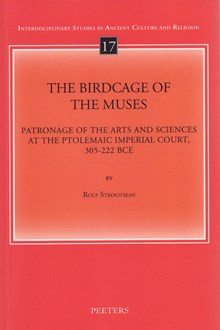
Yer Numarası
A.IX/7177
ISBN
9789042933507
Dil Kodu
İngilizce
Kütüphane
Türk Tarih Kurumu Kütüphanesi
Yazar
Yayın Bilgisi
Leuven ; Paris ; Bristol, CT : Peeters, 2017.
Fiziksel Niteleme
vii, 183, [3] sayfa ; 24 cm.
Dizi
Interdisciplinary studies in ancient culture and religion ; 17
Genel Not
İndeks s. [181-186].
Bibliyografi, vb. Notu
Bibliyografya s. [153]-179.
İçindekiler Notu
1. Introduction. The golden age of Ptolemaic Alexandria -- Patronage and court society -- Hellenistic poetry as l’artpour l’art -- Understanding Ptolemaic literary patronage -- Court and empire in the Ptolemaic World -- Understanding the role of the court -- How this book is structured -- 2. The historical background. The Argead royal court -- From Companions to Friends -- Cultural patronage before the Hellenistic Age -- Cultural patronage in the third century BCE -- The mouseion of Alexandria Conclusion -- 3. Royal courts in the Hellenistic World. What is a court? -- The Queen at Court -- Court and empire -- The Friends of the King -- The Royal Council -- Court titles -- The Royal Pages -- Proximity to the throne -- Conflict and competition -- Conclusion -- 4. The ties that bind : philia, xenia and gift exchange. Friendship and court society -- Guest-friendship -- Hierarchy -- Brokerage -- Gift Exchange -- Conclusion -- 5. Patrons and clients. Why court patronage? -- The usefulness of court patronage -- Prestige -- Competition -- Accumulation and appropriation -- Social Cohesion -- Conclusion -- 6. Poets are a king’s best friends: the Hellenistic poet as royal philos. Poets and scholars as courtiers -- Poetry and patron : the case of Theokritos and Hieron -- Reciprocity -- Competition and innovation -- Conclusion -- 7. Power Poetry : Images of empire in Alexandrian court poetry. Praising the king and queen -- World Empire and Golden Age -- From Zeus to Ptolemy -- Peace and prosperity -- Hellenism and empire -- Conclusion -- 8. From polis to oikoumene : The imperial world view in scholarship and philosophy -- Philosophy -- Astronomy -- Historiography, geography, ethnography -- Conclusion -- 9. Conclusion : Patronage, court and empire -- Bibliography -- Index.
Özet, vb.
“In the third century BCE, the Ptolemaic imperial court at Alexandria was the unchallenged center of culture and learning in the Hellenistic world. Backed by the vast wealth and prestige of the Ptolemies, the city of Alexandria became the symbolic capital of the world, the main hub of a dynamic imperial network that stretched from the Indian Ocean to the Black Sea. Many poets, philosophers, inventors, geographers, and other men of letters migrated to that center to enjoy the generous patronage of the Ptolemies. The Birdcage of the Muses is the first book-length historical study of the golden age of Ptolemaic cultural and scientific patronage. Working from new approaches to premodern imperialism, Rolf Strootman reconsiders the significance of Hellenistic court poetry from the perspective of current empire studies and the sociological study of the court, arguing that artistic, scholarly and scientific production contributed to processes of elite integration in the heterogeneous imperial world system controlled by the Ptolemies. Rejecting the modernist view that poets, scholars and technicians were autonomous outsiders to court society, the author is able to place these men in the social milieu of the court, showing how their professional behavior was ruled by the same mechanisms of gift exchange, etiquette and competition that determined court society as a whole. The Hellenistic Age was a period of intensified globalization, and it was through the royal court that writers and scientists were able to gain access to the extensive elite networks that connected communities throughout the Mediterranean and beyond. Literary authors in particular contributed themselves to the growth of interconnectivity by creating a common 'Hellenistic' imperial culture and language, and through the expression of imperial themes, notably the idea that the civilized world was, or ought to be, a single oikoumene of which Alexandria was the glorious, magnetic heart.” -- Yayıncı.
Konu
Ptolemaios Hanedanı, MÖ 305-30.
Ptolemaios Hanedanı, MÖ 305-222__Sanat.
Ptolemaios Hanedanı, MÖ 305-222__Bilim.
Saray ve saray mensupları__Mısır__İskenderiye Valiliği__MÖ 1. binyıl.
Helenistik sanat__Mısır__İskenderiye Valiliği__MÖ 1. binyıl.
Bilim__Mısır__İskenderiye Valiliği__MÖ 1. binyıl.
Mısır__Yönetim ve politikalar__MÖ 332-30.

Ptolemaios Hanedanı, MÖ 305-222__Sanat.
Ptolemaios Hanedanı, MÖ 305-222__Bilim.
Saray ve saray mensupları__Mısır__İskenderiye Valiliği__MÖ 1. binyıl.
Helenistik sanat__Mısır__İskenderiye Valiliği__MÖ 1. binyıl.
Bilim__Mısır__İskenderiye Valiliği__MÖ 1. binyıl.
Mısır__Yönetim ve politikalar__MÖ 332-30.
Eseri Alıntıla
Referansları kullanmadan önce gözden geçirmeniz ve varsa gerekli düzeltmeleri yapmanız önerilir.
Dijital Kaynak
MARC Görünümü
LEADER 05198naaaa2200373aa54500
001 604797
003 TR_AnAIT
005 20250627100909
006 a||||e |||| 001 0d
007 ta
008 231207s2017 be ||||e |||| 001 0deng c
020 |a9789042933507
040 |aTTK
041 |aeng
049 |aTürk Tarih Kurumu Kütüphanesi
090 |aA.IX/7177
100 1 |aStrootman, Rolf,|d1968-
245 14|aThe birdcage of the muses :|bpatronage of the arts and sciences at the Ptolemaic Imperial Court, 305-222 BCE /|cby Rolf Strootman.
260 |aLeuven ;|aParis ;|aBristol, CT :|bPeeters,|c2017.
300 |avii, 183, [3] sayfa ;|c24 cm.
490 0 |aInterdisciplinary studies in ancient culture and religion ;|v17
500 |aİndeks s. [181-186].
504 |aBibliyografya s. [153]-179.
505 |g1.|tIntroduction.|tThe golden age of Ptolemaic Alexandria --|tPatronage and court society --|tHellenistic poetry as l’artpour l’art --|tUnderstanding Ptolemaic literary patronage --|tCourt and empire in the Ptolemaic World --|tUnderstanding the role of the court --|tHow this book is structured --|g2.|tThe historical background.|tThe Argead royal court --|tFrom Companions to Friends --|tCultural patronage before the Hellenistic Age --|tCultural patronage in the third century BCE --|tThe mouseion of Alexandria Conclusion --|g3.|tRoyal courts in the Hellenistic World.|tWhat is a court? --|tThe Queen at Court --|tCourt and empire --|tThe Friends of the King --|tThe Royal Council --|tCourt titles --|tThe Royal Pages --|tProximity to the throne --|tConflict and competition --|tConclusion --|g4.|tThe ties that bind : philia, xenia and gift exchange.|tFriendship and court society --|tGuest-friendship --|tHierarchy --|tBrokerage --|tGift Exchange --|tConclusion --|g5.|tPatrons and clients.|tWhy court patronage? --|tThe usefulness of court patronage --|tPrestige --|tCompetition --|tAccumulation and appropriation --|tSocial Cohesion --|tConclusion --|g6.|tPoets are a king’s best friends: the Hellenistic poet as royal philos.|tPoets and scholars as courtiers --|tPoetry and patron : the case of Theokritos and Hieron --|tReciprocity --|tCompetition and innovation --|tConclusion --|g7.|tPower Poetry : Images of empire in Alexandrian court poetry.|tPraising the king and queen --|tWorld Empire and Golden Age --|tFrom Zeus to Ptolemy --|tPeace and prosperity --|tHellenism and empire --|tConclusion --|g8.|tFrom polis to oikoumene : The imperial world view in scholarship and philosophy --|tPhilosophy --|tAstronomy --|tHistoriography, geography, ethnography --|tConclusion --|g9.|tConclusion : Patronage, court and empire --|tBibliography --|tIndex.
520 |a“In the third century BCE, the Ptolemaic imperial court at Alexandria was the unchallenged center of culture and learning in the Hellenistic world. Backed by the vast wealth and prestige of the Ptolemies, the city of Alexandria became the symbolic capital of the world, the main hub of a dynamic imperial network that stretched from the Indian Ocean to the Black Sea. Many poets, philosophers, inventors, geographers, and other men of letters migrated to that center to enjoy the generous patronage of the Ptolemies. The Birdcage of the Muses is the first book-length historical study of the golden age of Ptolemaic cultural and scientific patronage. Working from new approaches to premodern imperialism, Rolf Strootman reconsiders the significance of Hellenistic court poetry from the perspective of current empire studies and the sociological study of the court, arguing that artistic, scholarly and scientific production contributed to processes of elite integration in the heterogeneous imperial world system controlled by the Ptolemies. Rejecting the modernist view that poets, scholars and technicians were autonomous outsiders to court society, the author is able to place these men in the social milieu of the court, showing how their professional behavior was ruled by the same mechanisms of gift exchange, etiquette and competition that determined court society as a whole. The Hellenistic Age was a period of intensified globalization, and it was through the royal court that writers and scientists were able to gain access to the extensive elite networks that connected communities throughout the Mediterranean and beyond. Literary authors in particular contributed themselves to the growth of interconnectivity by creating a common 'Hellenistic' imperial culture and language, and through the expression of imperial themes, notably the idea that the civilized world was, or ought to be, a single oikoumene of which Alexandria was the glorious, magnetic heart.” --|cYayıncı.
650 4|aPtolemaios Hanedanı, MÖ 305-30.
650 4|aPtolemaios Hanedanı, MÖ 305-222|xSanat.
650 4|aPtolemaios Hanedanı, MÖ 305-222|xBilim.
650 4|aSaray ve saray mensupları|zMısır|xİskenderiye Valiliği|yMÖ 1. binyıl.
650 4|aHelenistik sanat|zMısır|xİskenderiye Valiliği|yMÖ 1. binyıl.
650 4|aBilim|zMısır|xİskenderiye Valiliği|yMÖ 1. binyıl.
651 4|aMısır|xYönetim ve politikalar|zMÖ 332-30.
001 604797
003 TR_AnAIT
005 20250627100909
006 a||||e |||| 001 0d
007 ta
008 231207s2017 be ||||e |||| 001 0deng c
020 |a9789042933507
040 |aTTK
041 |aeng
049 |aTürk Tarih Kurumu Kütüphanesi
090 |aA.IX/7177
100 1 |aStrootman, Rolf,|d1968-
245 14|aThe birdcage of the muses :|bpatronage of the arts and sciences at the Ptolemaic Imperial Court, 305-222 BCE /|cby Rolf Strootman.
260 |aLeuven ;|aParis ;|aBristol, CT :|bPeeters,|c2017.
300 |avii, 183, [3] sayfa ;|c24 cm.
490 0 |aInterdisciplinary studies in ancient culture and religion ;|v17
500 |aİndeks s. [181-186].
504 |aBibliyografya s. [153]-179.
505 |g1.|tIntroduction.|tThe golden age of Ptolemaic Alexandria --|tPatronage and court society --|tHellenistic poetry as l’artpour l’art --|tUnderstanding Ptolemaic literary patronage --|tCourt and empire in the Ptolemaic World --|tUnderstanding the role of the court --|tHow this book is structured --|g2.|tThe historical background.|tThe Argead royal court --|tFrom Companions to Friends --|tCultural patronage before the Hellenistic Age --|tCultural patronage in the third century BCE --|tThe mouseion of Alexandria Conclusion --|g3.|tRoyal courts in the Hellenistic World.|tWhat is a court? --|tThe Queen at Court --|tCourt and empire --|tThe Friends of the King --|tThe Royal Council --|tCourt titles --|tThe Royal Pages --|tProximity to the throne --|tConflict and competition --|tConclusion --|g4.|tThe ties that bind : philia, xenia and gift exchange.|tFriendship and court society --|tGuest-friendship --|tHierarchy --|tBrokerage --|tGift Exchange --|tConclusion --|g5.|tPatrons and clients.|tWhy court patronage? --|tThe usefulness of court patronage --|tPrestige --|tCompetition --|tAccumulation and appropriation --|tSocial Cohesion --|tConclusion --|g6.|tPoets are a king’s best friends: the Hellenistic poet as royal philos.|tPoets and scholars as courtiers --|tPoetry and patron : the case of Theokritos and Hieron --|tReciprocity --|tCompetition and innovation --|tConclusion --|g7.|tPower Poetry : Images of empire in Alexandrian court poetry.|tPraising the king and queen --|tWorld Empire and Golden Age --|tFrom Zeus to Ptolemy --|tPeace and prosperity --|tHellenism and empire --|tConclusion --|g8.|tFrom polis to oikoumene : The imperial world view in scholarship and philosophy --|tPhilosophy --|tAstronomy --|tHistoriography, geography, ethnography --|tConclusion --|g9.|tConclusion : Patronage, court and empire --|tBibliography --|tIndex.
520 |a“In the third century BCE, the Ptolemaic imperial court at Alexandria was the unchallenged center of culture and learning in the Hellenistic world. Backed by the vast wealth and prestige of the Ptolemies, the city of Alexandria became the symbolic capital of the world, the main hub of a dynamic imperial network that stretched from the Indian Ocean to the Black Sea. Many poets, philosophers, inventors, geographers, and other men of letters migrated to that center to enjoy the generous patronage of the Ptolemies. The Birdcage of the Muses is the first book-length historical study of the golden age of Ptolemaic cultural and scientific patronage. Working from new approaches to premodern imperialism, Rolf Strootman reconsiders the significance of Hellenistic court poetry from the perspective of current empire studies and the sociological study of the court, arguing that artistic, scholarly and scientific production contributed to processes of elite integration in the heterogeneous imperial world system controlled by the Ptolemies. Rejecting the modernist view that poets, scholars and technicians were autonomous outsiders to court society, the author is able to place these men in the social milieu of the court, showing how their professional behavior was ruled by the same mechanisms of gift exchange, etiquette and competition that determined court society as a whole. The Hellenistic Age was a period of intensified globalization, and it was through the royal court that writers and scientists were able to gain access to the extensive elite networks that connected communities throughout the Mediterranean and beyond. Literary authors in particular contributed themselves to the growth of interconnectivity by creating a common 'Hellenistic' imperial culture and language, and through the expression of imperial themes, notably the idea that the civilized world was, or ought to be, a single oikoumene of which Alexandria was the glorious, magnetic heart.” --|cYayıncı.
650 4|aPtolemaios Hanedanı, MÖ 305-30.
650 4|aPtolemaios Hanedanı, MÖ 305-222|xSanat.
650 4|aPtolemaios Hanedanı, MÖ 305-222|xBilim.
650 4|aSaray ve saray mensupları|zMısır|xİskenderiye Valiliği|yMÖ 1. binyıl.
650 4|aHelenistik sanat|zMısır|xİskenderiye Valiliği|yMÖ 1. binyıl.
650 4|aBilim|zMısır|xİskenderiye Valiliği|yMÖ 1. binyıl.
651 4|aMısır|xYönetim ve politikalar|zMÖ 332-30.
Materyaller
Depodan talep edilen materyal sadece kütüphane içerisinde kullanılmaktadır.
Materyal dışarıya ödünç verilmemektedir.
