

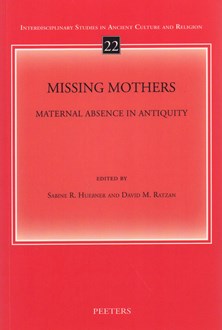
Missing mothers : maternal absence in Antiquity / edited by Sabine R. Huebner and David M. Ratzan.
Yer Numarası
A.IX/7178
ISBN
9789042943131
9789042943148 (eISBN)
9789042943148 (eISBN)
Dil Kodu
İngilizce
Kütüphane
Türk Tarih Kurumu Kütüphanesi
Yayın Bilgisi
Leuven ; Paris ; Bristol, CT : Peeters, 2021.
Fiziksel Niteleme
viii, 347 sayfa : resim (çoğu renkli), çizim ; 24 cm.
Dizi
Interdisciplinary studies in ancient culture and religion ; 22
Genel Not
Proceedings of a conference held in Basel, Switzerland in May 2016.
İndeks s. [327]-347.
İndeks s. [327]-347.
Bibliyografi, vb. Notu
Bibliyografya s. [287]-320.
İçindekiler Notu
Motherless antiquity : an introduction / Sabine R. Huebner and David M. Ratzan -- Part 1. Born motherless. Motherless infancy in the Roman and the late ancient world / Christian Laes -- Every woman counts : rethinking maternal mortality in the bioarchaeological context / Chryssi Bourbou -- Part 2. Growing up motherless. Was the Athenian State in the classical period indifferent to mother-absence? / Rosalia Hatzilambrou -- The risk of violence towards motherless children in ancient Greece / Fiona McHardy -- The last will of Alcestis : Motherless children and their widowed fathers in Roman Egypt / Sabine R. Huebner -- A long way from home : Motherless children in slave sale contracts / Judith Evans Grubbs -- Fact, fiction, and family : Stepmothers in the Valentinian-Theodosian dynasty / Geoffrey Nathan -- Part 3. Minding the gap : representing mother absence. Absent mothers by choice : Upper class women in classical Attic vase painting / Susanne Moraw -- Motherly absence in Euripides reunion plays / Angeliki Tzanetou -- Growing up motherless, growing up to be a hero : Motherless children in Virgils Aeneid / Elina Pyy -- Missing motherhood : Envisioning the childless empress of the Trajanic-Hadrianic era / Margaret Woodhull -- Part 4. Filling the void : mother absence and memory. Moses : Motherless with two mothers / René Bloch -- Ascetic absentees : Late ancient reading strategies in pursuit of the maternal ideal / Maria Doerfler -- Topographies of mother loss and mother absence in late antique Palestine : A view from rabbinic and liturgical sources / Sarit Kattan Gribetz.
Özet, vb.
“The last forty years of research have cast new light on the lives of ancient Mediterranean women in the penumbra of our patriarchal sources, including the pervasive risks they faced in becoming mothers. Current demographic models suggest that perhaps as many as one in five children would have lost their mothers by age ten. The inescapable conclusion is that the absence of ancient mothers is not merely an artifact of bias in our sources, but also a fundamental condition of antiquity, with profound implications for ancient family life and the experience of childhood. 'Missing Mothers: Maternal Absence in Antiquity is the first volume dedicated to studying mother absence as an integrated phenomenon in the ancient Mediterranean, from its obvious manifestation as total absence in the wake of maternal death, to the partial absences of maternal separation brought about by economic necessity, divorce, slavery, social conventions, and occasionally choice. The fifteen essays collected here explore the gaps left by absent mothers and how individuals, families, and societies in the ancient Mediterranean conceptualized, represented, and responded to those gaps, practically, psychologically, artistically, and politically between the 5th century BCE and late antiquity.” -- Arka kapak.
Konu
Emeği Geçenler
Huebner, Sabine R., 1976- editör, önsözü yazan.
Ratzan, David M., editör.
Ratzan, David M., editör.
Eseri Alıntıla
Referansları kullanmadan önce gözden geçirmeniz ve varsa gerekli düzeltmeleri yapmanız önerilir.
Dijital Kaynak
MARC Görünümü
LEADER 04194naaaa2200361aa54500
001 604810
003 TR_AnAIT
005 20250627100828
006 aoa||e |||| 001 0d
007 ta
008 231207s2021 be oa||e |||| 001 0deng c
020 |a9789042943131
020 |a9789042943148|q(eISBN)
040 |aTTK
041 |aeng
049 |aTürk Tarih Kurumu Kütüphanesi
090 |aA.IX/7178
245 00|aMissing mothers :|bmaternal absence in Antiquity /|cedited by Sabine R. Huebner and David M. Ratzan.
260 |aLeuven ;|aParis ;|aBristol, CT :|bPeeters,|c2021.
300 |aviii, 347 sayfa :|bresim (çoğu renkli), çizim ;|c24 cm.
490 0 |aInterdisciplinary studies in ancient culture and religion ;|v22
500 |aProceedings of a conference held in Basel, Switzerland in May 2016.
500 |aİndeks s. [327]-347.
504 |aBibliyografya s. [287]-320.
505 |tMotherless antiquity : an introduction /|rSabine R. Huebner and David M. Ratzan --|gPart 1.|tBorn motherless.|tMotherless infancy in the Roman and the late ancient world /|rChristian Laes --|tEvery woman counts : rethinking maternal mortality in the bioarchaeological context /|rChryssi Bourbou --|gPart 2.|tGrowing up motherless.|tWas the Athenian State in the classical period indifferent to mother-absence? /|rRosalia Hatzilambrou --|tThe risk of violence towards motherless children in ancient Greece /|rFiona McHardy --|tThe last will of Alcestis : Motherless children and their widowed fathers in Roman Egypt /|rSabine R. Huebner --|tA long way from home : Motherless children in slave sale contracts /|rJudith Evans Grubbs --|tFact, fiction, and family : Stepmothers in the Valentinian-Theodosian dynasty /|rGeoffrey Nathan --|gPart 3.|tMinding the gap : representing mother absence.|tAbsent mothers by choice : Upper class women in classical Attic vase painting /|rSusanne Moraw --|tMotherly absence in Euripides reunion plays /|rAngeliki Tzanetou --|tGrowing up motherless, growing up to be a hero : Motherless children in Virgils Aeneid /|rElina Pyy --|tMissing motherhood : Envisioning the childless empress of the Trajanic-Hadrianic era /|rMargaret Woodhull --|gPart 4.|tFilling the void : mother absence and memory.|tMoses : Motherless with two mothers /|rRené Bloch --|tAscetic absentees : Late ancient reading strategies in pursuit of the maternal ideal /|rMaria Doerfler --|tTopographies of mother loss and mother absence in late antique Palestine : A view from rabbinic and liturgical sources /|rSarit Kattan Gribetz.
520 |a“The last forty years of research have cast new light on the lives of ancient Mediterranean women in the penumbra of our patriarchal sources, including the pervasive risks they faced in becoming mothers. Current demographic models suggest that perhaps as many as one in five children would have lost their mothers by age ten. The inescapable conclusion is that the absence of ancient mothers is not merely an artifact of bias in our sources, but also a fundamental condition of antiquity, with profound implications for ancient family life and the experience of childhood. 'Missing Mothers: Maternal Absence in Antiquity is the first volume dedicated to studying mother absence as an integrated phenomenon in the ancient Mediterranean, from its obvious manifestation as total absence in the wake of maternal death, to the partial absences of maternal separation brought about by economic necessity, divorce, slavery, social conventions, and occasionally choice. The fifteen essays collected here explore the gaps left by absent mothers and how individuals, families, and societies in the ancient Mediterranean conceptualized, represented, and responded to those gaps, practically, psychologically, artistically, and politically between the 5th century BCE and late antiquity.” --|cArka kapak.
650 4|aYetimler|zAkdeniz Bölgesi|xTarih|vKongreler.
650 4|aAnneler|zAkdeniz Bölgesi|xTarih|vKongreler.
650 4|aYetimler|zRoma|xTarih|vKongreler.
650 4|aAnneler|zRoma|xTarih|vKongreler.
700 1 |aHuebner, Sabine R.,|d1976-|eeditör,|eönsözü yazan.
700 1 |aRatzan, David M.,|eeditör.
001 604810
003 TR_AnAIT
005 20250627100828
006 aoa||e |||| 001 0d
007 ta
008 231207s2021 be oa||e |||| 001 0deng c
020 |a9789042943131
020 |a9789042943148|q(eISBN)
040 |aTTK
041 |aeng
049 |aTürk Tarih Kurumu Kütüphanesi
090 |aA.IX/7178
245 00|aMissing mothers :|bmaternal absence in Antiquity /|cedited by Sabine R. Huebner and David M. Ratzan.
260 |aLeuven ;|aParis ;|aBristol, CT :|bPeeters,|c2021.
300 |aviii, 347 sayfa :|bresim (çoğu renkli), çizim ;|c24 cm.
490 0 |aInterdisciplinary studies in ancient culture and religion ;|v22
500 |aProceedings of a conference held in Basel, Switzerland in May 2016.
500 |aİndeks s. [327]-347.
504 |aBibliyografya s. [287]-320.
505 |tMotherless antiquity : an introduction /|rSabine R. Huebner and David M. Ratzan --|gPart 1.|tBorn motherless.|tMotherless infancy in the Roman and the late ancient world /|rChristian Laes --|tEvery woman counts : rethinking maternal mortality in the bioarchaeological context /|rChryssi Bourbou --|gPart 2.|tGrowing up motherless.|tWas the Athenian State in the classical period indifferent to mother-absence? /|rRosalia Hatzilambrou --|tThe risk of violence towards motherless children in ancient Greece /|rFiona McHardy --|tThe last will of Alcestis : Motherless children and their widowed fathers in Roman Egypt /|rSabine R. Huebner --|tA long way from home : Motherless children in slave sale contracts /|rJudith Evans Grubbs --|tFact, fiction, and family : Stepmothers in the Valentinian-Theodosian dynasty /|rGeoffrey Nathan --|gPart 3.|tMinding the gap : representing mother absence.|tAbsent mothers by choice : Upper class women in classical Attic vase painting /|rSusanne Moraw --|tMotherly absence in Euripides reunion plays /|rAngeliki Tzanetou --|tGrowing up motherless, growing up to be a hero : Motherless children in Virgils Aeneid /|rElina Pyy --|tMissing motherhood : Envisioning the childless empress of the Trajanic-Hadrianic era /|rMargaret Woodhull --|gPart 4.|tFilling the void : mother absence and memory.|tMoses : Motherless with two mothers /|rRené Bloch --|tAscetic absentees : Late ancient reading strategies in pursuit of the maternal ideal /|rMaria Doerfler --|tTopographies of mother loss and mother absence in late antique Palestine : A view from rabbinic and liturgical sources /|rSarit Kattan Gribetz.
520 |a“The last forty years of research have cast new light on the lives of ancient Mediterranean women in the penumbra of our patriarchal sources, including the pervasive risks they faced in becoming mothers. Current demographic models suggest that perhaps as many as one in five children would have lost their mothers by age ten. The inescapable conclusion is that the absence of ancient mothers is not merely an artifact of bias in our sources, but also a fundamental condition of antiquity, with profound implications for ancient family life and the experience of childhood. 'Missing Mothers: Maternal Absence in Antiquity is the first volume dedicated to studying mother absence as an integrated phenomenon in the ancient Mediterranean, from its obvious manifestation as total absence in the wake of maternal death, to the partial absences of maternal separation brought about by economic necessity, divorce, slavery, social conventions, and occasionally choice. The fifteen essays collected here explore the gaps left by absent mothers and how individuals, families, and societies in the ancient Mediterranean conceptualized, represented, and responded to those gaps, practically, psychologically, artistically, and politically between the 5th century BCE and late antiquity.” --|cArka kapak.
650 4|aYetimler|zAkdeniz Bölgesi|xTarih|vKongreler.
650 4|aAnneler|zAkdeniz Bölgesi|xTarih|vKongreler.
650 4|aYetimler|zRoma|xTarih|vKongreler.
650 4|aAnneler|zRoma|xTarih|vKongreler.
700 1 |aHuebner, Sabine R.,|d1976-|eeditör,|eönsözü yazan.
700 1 |aRatzan, David M.,|eeditör.
Materyaller
Depodan talep edilen materyal sadece kütüphane içerisinde kullanılmaktadır.
Materyal dışarıya ödünç verilmemektedir.
Materyal dışarıya ödünç verilmemektedir.
