

Composition in Athenian black-figure vase-painting : the ‘Chariot in profile’' type scene / Geralda Jurriaans-Helle.
Yer Numarası
B.II/0064
ISBN
9789042945555
9789042945562 (eISBN)
9789042945562 (eISBN)
Dil Kodu
İngilizce
Kütüphane
Türk Tarih Kurumu Kütüphanesi
Yayın Bilgisi
Leuven ; Paris ; Bristol : Peeters, 2021.
Fiziksel Niteleme
xii, 316 sayfa : resim (çoğu renkli), çizim, tablo ; 28 cm.
Dizi
Babesch. Supplement ; 41
Genel Not
İndeks s. 299-316.
Bibliyografi, vb. Notu
Bibliyografya s. 293-298.
Özet, vb.
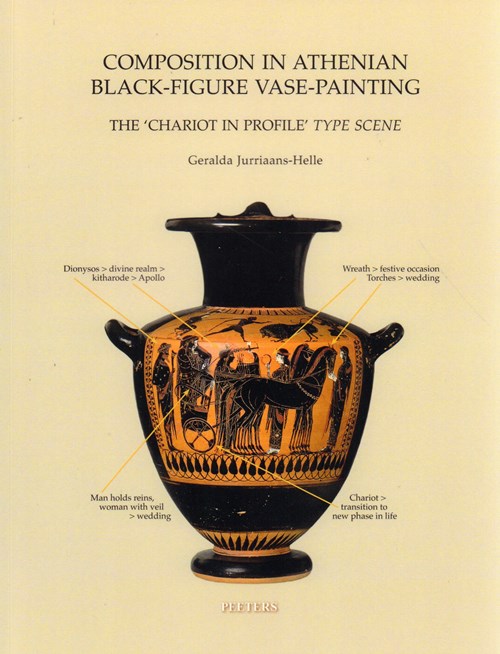
“All Athenian black-figure vases – unique masterpieces as well as mass-produced vases – reflect the conventions of Athenian pictorial language. The starting point for this study is that knowledge of this pictorial language provides a better comprehension of the meaning of the representations. Athenians in the 6th century BCE knew its conventions intimately, and one can assume they could easily understand vase-paintings because a few elements or a specific combination of elements were sufficient for them to identify the whole picture. The modern viewer, however, can only approach the intuitive knowledge of the ancient viewer by studying and analysing the surviving images. This study focuses on mass-produced vases, because large numbers provide vital statistical evidence for understanding the meaning of gestures, attributes, and other details, which makes it possible to deduce the rules of Athenian pictorial language and to recognise what is usual and normal, or unusual and exceptional. The methodology is demonstrated in an introductory case study of the type scene ‘Fighting men separated’. Since the visual artists’ use of pictorial language resembles the way in which in oral poetry a singer tells the story by using type scenes, formulaic verses, and epitheta ornantia while adding, omitting, or varying details and names, in this study terms are used that are borrowed from literary studies of Homer’s oral poetry like type scene (the compositional schema or general arrangement of a depiction), subtypes, and typical elements (e.g., figure types, attributes, gestures, and other details). In this study the imagery of more than 1,200 Athenian black-figure vase-paintings of the type scene ‘Chariot in profile’ is examined. Three subtypes are distinguished: ‘Hoplites and other men leaving’ (with a hoplite and charioteer in or near the chariot, and representations with an unarmed man instead of the hoplite in or near the chariot), ‘Wedding procession’ (with a woman as passenger in the chariot and a man holding the reins), and ‘Apotheosis of Herakles and divine departures’ (with Herakles and Athena in or near the chariot, and related representations of gods driving chariots). The conclusions of this investigation are that Athenian vase-painters composed their paintings according to a commonly understood system of pictorial language; that they were free to make variations, additions, and omissions, but stayed within the boundaries of the system and did not randomly add or omit figures; that innovative compositions were based upon existing compositions with a related meaning, since new images had to be easily and quickly understandable by the public; and that typical elements could have different meanings depending on their context. Since the painters composed the paintings according to a commonly understood system of pictorial language, knowledge of this system will help the modern viewer to understand the deeper meanings of paintings that at first sight are hard to grasp.” -- Yayıncı.
Konu
Dizi Ek Girişi- Tek Biçim Başlık
Babesch. Supplement ; 41.
Eseri Alıntıla
Referansları kullanmadan önce gözden geçirmeniz ve varsa gerekli düzeltmeleri yapmanız önerilir.
Dijital Kaynak
MARC Görünümü
LEADER 04126naaaa2200325aa54500
001 604816
003 TR_AnAIT
005 20250627100811
006 aoad|e |||| 001 0d
007 ta
008 240201s2021 be oad|e |||| 001 0deng c
020 |a9789042945555
020 |a9789042945562|q(eISBN)
040 |aTTK
041 |aeng
049 |aTürk Tarih Kurumu Kütüphanesi
090 |aB.II/0064
100 1 |aJurriaans-Helle, Geralda,|d1955-
245 10|aComposition in Athenian black-figure vase-painting :|bthe ‘Chariot in profile’' type scene /|cGeralda Jurriaans-Helle.
260 |aLeuven ;|aParis ;|aBristol :|bPeeters,|c2021.
300 |axii, 316 sayfa :|bresim (çoğu renkli), çizim, tablo ;|c28 cm.
490 1 |aBabesch.|aSupplement ;|v41
500 |aİndeks s. 299-316.
504 |aBibliyografya s. 293-298.
520 |a“All Athenian black-figure vases – unique masterpieces as well as mass-produced vases – reflect the conventions of Athenian pictorial language. The starting point for this study is that knowledge of this pictorial language provides a better comprehension of the meaning of the representations. Athenians in the 6th century BCE knew its conventions intimately, and one can assume they could easily understand vase-paintings because a few elements or a specific combination of elements were sufficient for them to identify the whole picture. The modern viewer, however, can only approach the intuitive knowledge of the ancient viewer by studying and analysing the surviving images. This study focuses on mass-produced vases, because large numbers provide vital statistical evidence for understanding the meaning of gestures, attributes, and other details, which makes it possible to deduce the rules of Athenian pictorial language and to recognise what is usual and normal, or unusual and exceptional. The methodology is demonstrated in an introductory case study of the type scene ‘Fighting men separated’. Since the visual artists’ use of pictorial language resembles the way in which in oral poetry a singer tells the story by using type scenes, formulaic verses, and epitheta ornantia while adding, omitting, or varying details and names, in this study terms are used that are borrowed from literary studies of Homer’s oral poetry like type scene (the compositional schema or general arrangement of a depiction), subtypes, and typical elements (e.g., figure types, attributes, gestures, and other details). In this study the imagery of more than 1,200 Athenian black-figure vase-paintings of the type scene ‘Chariot in profile’ is examined. Three subtypes are distinguished: ‘Hoplites and other men leaving’ (with a hoplite and charioteer in or near the chariot, and representations with an unarmed man instead of the hoplite in or near the chariot), ‘Wedding procession’ (with a woman as passenger in the chariot and a man holding the reins), and ‘Apotheosis of Herakles and divine departures’ (with Herakles and Athena in or near the chariot, and related representations of gods driving chariots). The conclusions of this investigation are that Athenian vase-painters composed their paintings according to a commonly understood system of pictorial language; that they were free to make variations, additions, and omissions, but stayed within the boundaries of the system and did not randomly add or omit figures; that innovative compositions were based upon existing compositions with a related meaning, since new images had to be easily and quickly understandable by the public; and that typical elements could have different meanings depending on their context. Since the painters composed the paintings according to a commonly understood system of pictorial language, knowledge of this system will help the modern viewer to understand the deeper meanings of paintings that at first sight are hard to grasp.” --|cYayıncı.
650 4|aVazolar, siyah figürlü|zYunanistan|zAtina.
650 4|aVazo boyama, Grek|xTemalar, motifler.
651 4|aAtina (Yunanistan)|xEski eserler.
830 0|aBabesch.|pSupplement ;|v41.
001 604816
003 TR_AnAIT
005 20250627100811
006 aoad|e |||| 001 0d
007 ta
008 240201s2021 be oad|e |||| 001 0deng c
020 |a9789042945555
020 |a9789042945562|q(eISBN)
040 |aTTK
041 |aeng
049 |aTürk Tarih Kurumu Kütüphanesi
090 |aB.II/0064
100 1 |aJurriaans-Helle, Geralda,|d1955-
245 10|aComposition in Athenian black-figure vase-painting :|bthe ‘Chariot in profile’' type scene /|cGeralda Jurriaans-Helle.
260 |aLeuven ;|aParis ;|aBristol :|bPeeters,|c2021.
300 |axii, 316 sayfa :|bresim (çoğu renkli), çizim, tablo ;|c28 cm.
490 1 |aBabesch.|aSupplement ;|v41
500 |aİndeks s. 299-316.
504 |aBibliyografya s. 293-298.
520 |a“All Athenian black-figure vases – unique masterpieces as well as mass-produced vases – reflect the conventions of Athenian pictorial language. The starting point for this study is that knowledge of this pictorial language provides a better comprehension of the meaning of the representations. Athenians in the 6th century BCE knew its conventions intimately, and one can assume they could easily understand vase-paintings because a few elements or a specific combination of elements were sufficient for them to identify the whole picture. The modern viewer, however, can only approach the intuitive knowledge of the ancient viewer by studying and analysing the surviving images. This study focuses on mass-produced vases, because large numbers provide vital statistical evidence for understanding the meaning of gestures, attributes, and other details, which makes it possible to deduce the rules of Athenian pictorial language and to recognise what is usual and normal, or unusual and exceptional. The methodology is demonstrated in an introductory case study of the type scene ‘Fighting men separated’. Since the visual artists’ use of pictorial language resembles the way in which in oral poetry a singer tells the story by using type scenes, formulaic verses, and epitheta ornantia while adding, omitting, or varying details and names, in this study terms are used that are borrowed from literary studies of Homer’s oral poetry like type scene (the compositional schema or general arrangement of a depiction), subtypes, and typical elements (e.g., figure types, attributes, gestures, and other details). In this study the imagery of more than 1,200 Athenian black-figure vase-paintings of the type scene ‘Chariot in profile’ is examined. Three subtypes are distinguished: ‘Hoplites and other men leaving’ (with a hoplite and charioteer in or near the chariot, and representations with an unarmed man instead of the hoplite in or near the chariot), ‘Wedding procession’ (with a woman as passenger in the chariot and a man holding the reins), and ‘Apotheosis of Herakles and divine departures’ (with Herakles and Athena in or near the chariot, and related representations of gods driving chariots). The conclusions of this investigation are that Athenian vase-painters composed their paintings according to a commonly understood system of pictorial language; that they were free to make variations, additions, and omissions, but stayed within the boundaries of the system and did not randomly add or omit figures; that innovative compositions were based upon existing compositions with a related meaning, since new images had to be easily and quickly understandable by the public; and that typical elements could have different meanings depending on their context. Since the painters composed the paintings according to a commonly understood system of pictorial language, knowledge of this system will help the modern viewer to understand the deeper meanings of paintings that at first sight are hard to grasp.” --|cYayıncı.
650 4|aVazolar, siyah figürlü|zYunanistan|zAtina.
650 4|aVazo boyama, Grek|xTemalar, motifler.
651 4|aAtina (Yunanistan)|xEski eserler.
830 0|aBabesch.|pSupplement ;|v41.
Materyaller
Depodan talep edilen materyal sadece kütüphane içerisinde kullanılmaktadır.
Materyal dışarıya ödünç verilmemektedir.
Materyal dışarıya ödünç verilmemektedir.
