

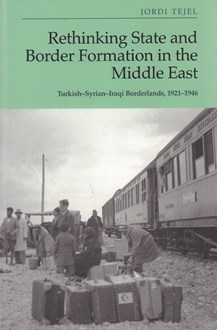
Rethinking state and border formation in the Middle East : Turkish-Syrian-Iraqi borderlands, 1921-1946 / Jordi Tejel.
Yer Numarası
A.IX/7223
ISBN
9781399503655 (hardback)
9781399503679 (webready PDF)
9781399503686 (epub)
9781399503679 (webready PDF)
9781399503686 (epub)
Dil Kodu
İngilizce
Kütüphane
Türk Tarih Kurumu Kütüphanesi
Yazar
Yayın Bilgisi
Edinburgh : Edinburgh University Press, 2023.
Fiziksel Niteleme
viii, 381 sayfa : şekil, harita, tıpkıbasım ; 24 cm
Genel Not
İndeks s. 368-381.
Bibliyografi, vb. Notu
Bibliyografya s. 328-367.
İçindekiler Notu
List of figures -- Acknowledgements -- Introduction -- Networks of violence in the Shatter-zones of the Post-Ottoman Middle East -- Refugees, borders and identity boundaries -- Cross-border infringements : Smugglers, criminals and fugitives -- Interstate cooperation against diseases and plagues and its limits -- Railroads, uneven mobilities and frail states -- Irredentism in a context of global uncertainty -- De-bordering and re-bordering Middle Eastern States -- Conclusion -- Bibliography -- Index.
Özet, vb.
“Reinterprets the making of the Turkish-Syrian-Iraqi borderlands from a decentred and connected perspectiveAnalyses the violence and forced displacement in the borderlands of the post-Ottoman Middle EastExamines the contribution of border populations to the making of the history of the borderlands, nation-states and the region as a wholeCovers the borderlands stretching between Turkey, Syria, and Iraq while paying attention to border variations Turkey-Syria/Turkey-Iraq/Syria-IraqUtilises theoretical and methodological debates in borderlands and mobility studies, as well as social, environmental and transnational historyWhile the wars in Iraq, Syria, Libya and Yemen, alongside the establishment of the so-called “Islamic Caliphate“ have brought the debate about the crisis of the territorial nation-state in the Middle East once again to the fore, this issue cannot be simply understood as the logical consequence of either an imported political construction or the purported artificiality of Middle Eastern borders. Instead, the process of state formation in the region has been a complicated course that involved different institutional traditions, managing societies marked by varying degrees of political loyalty to central power, and dealing with colonial interference. Rethinking State and Border Formation in the Middle East seeks to disentangle some of these complexities by proposing both a decentred and dialectic approach. Taking its cue from the bourgeoning field of borderland studies and a variety of historical sub-disciplines, this monograph pays attention to the circulation of people, goods, diseases and ideas as well as to the everyday encounters between a wide range of state and non-state actors in the borderlands laying between Turkey, Syria and Iraq. The goal is to provide a much more holistic yet finely-grained understanding of the formation of the territorial state in the interwar Middle East” -- Yayıncı.
Eseri Alıntıla
Referansları kullanmadan önce gözden geçirmeniz ve varsa gerekli düzeltmeleri yapmanız önerilir.
Dijital Kaynak
MARC Görünümü
LEADER 03758naaaa2200385aa54500
001 604847
003 TR_AnAIT
005 20250627100632
006 ab|||e |||| 001 0d
007 ta
008 240126s2023 stkb|||e |||| 001 0deng c
020 |a9781399503655|q(hardback)
020 |a9781399503679|q(webready PDF)
020 |a9781399503686|q(epub)
040 |aTTK
041 |aeng
049 |aTürk Tarih Kurumu Kütüphanesi
090 |aA.IX/7223
100 1 |aTejel, Jordi.
245 10|aRethinking state and border formation in the Middle East :|bTurkish-Syrian-Iraqi borderlands, 1921-1946 /|cJordi Tejel.
260 |aEdinburgh :|bEdinburgh University Press,|c2023.
300 |aviii, 381 sayfa :|bşekil, harita, tıpkıbasım ;|c24 cm
500 |aİndeks s. 368-381.
504 |aBibliyografya s. 328-367.
505 |tList of figures --|tAcknowledgements --|tIntroduction --|tNetworks of violence in the Shatter-zones of the Post-Ottoman Middle East --|tRefugees, borders and identity boundaries --|tCross-border infringements : Smugglers, criminals and fugitives --|tInterstate cooperation against diseases and plagues and its limits --|tRailroads, uneven mobilities and frail states --|tIrredentism in a context of global uncertainty --|tDe-bordering and re-bordering Middle Eastern States --|tConclusion --|tBibliography --|tIndex.
520 |a“Reinterprets the making of the Turkish-Syrian-Iraqi borderlands from a decentred and connected perspectiveAnalyses the violence and forced displacement in the borderlands of the post-Ottoman Middle EastExamines the contribution of border populations to the making of the history of the borderlands, nation-states and the region as a wholeCovers the borderlands stretching between Turkey, Syria, and Iraq while paying attention to border variations Turkey-Syria/Turkey-Iraq/Syria-IraqUtilises theoretical and methodological debates in borderlands and mobility studies, as well as social, environmental and transnational historyWhile the wars in Iraq, Syria, Libya and Yemen, alongside the establishment of the so-called “Islamic Caliphate“ have brought the debate about the crisis of the territorial nation-state in the Middle East once again to the fore, this issue cannot be simply understood as the logical consequence of either an imported political construction or the purported artificiality of Middle Eastern borders. Instead, the process of state formation in the region has been a complicated course that involved different institutional traditions, managing societies marked by varying degrees of political loyalty to central power, and dealing with colonial interference. Rethinking State and Border Formation in the Middle East seeks to disentangle some of these complexities by proposing both a decentred and dialectic approach. Taking its cue from the bourgeoning field of borderland studies and a variety of historical sub-disciplines, this monograph pays attention to the circulation of people, goods, diseases and ideas as well as to the everyday encounters between a wide range of state and non-state actors in the borderlands laying between Turkey, Syria and Iraq. The goal is to provide a much more holistic yet finely-grained understanding of the formation of the territorial state in the interwar Middle East” --|cYayıncı.
650 4|aSalgın hastalıklar|zOrta Doğu|yOsmanlı sonrası.
650 4|aKaçakçılar|zOrta Doğu|yOsmanlı sonrası.
650 4|aSuçlular|zOrta Doğu|yOsmanlı sonrası.
651 4|aTürkiye|xSınırlar|zIrak.
651 4|aIrak|xSınırlar|zTürkiye.
651 4|aTürkiye|xSınırlar|zSuriye.
651 4|aSuriye|xSınırlar|zTürkiye.
651 4|aOrta Doğu|xSınırlar|yOsmanlı sonrası.
001 604847
003 TR_AnAIT
005 20250627100632
006 ab|||e |||| 001 0d
007 ta
008 240126s2023 stkb|||e |||| 001 0deng c
020 |a9781399503655|q(hardback)
020 |a9781399503679|q(webready PDF)
020 |a9781399503686|q(epub)
040 |aTTK
041 |aeng
049 |aTürk Tarih Kurumu Kütüphanesi
090 |aA.IX/7223
100 1 |aTejel, Jordi.
245 10|aRethinking state and border formation in the Middle East :|bTurkish-Syrian-Iraqi borderlands, 1921-1946 /|cJordi Tejel.
260 |aEdinburgh :|bEdinburgh University Press,|c2023.
300 |aviii, 381 sayfa :|bşekil, harita, tıpkıbasım ;|c24 cm
500 |aİndeks s. 368-381.
504 |aBibliyografya s. 328-367.
505 |tList of figures --|tAcknowledgements --|tIntroduction --|tNetworks of violence in the Shatter-zones of the Post-Ottoman Middle East --|tRefugees, borders and identity boundaries --|tCross-border infringements : Smugglers, criminals and fugitives --|tInterstate cooperation against diseases and plagues and its limits --|tRailroads, uneven mobilities and frail states --|tIrredentism in a context of global uncertainty --|tDe-bordering and re-bordering Middle Eastern States --|tConclusion --|tBibliography --|tIndex.
520 |a“Reinterprets the making of the Turkish-Syrian-Iraqi borderlands from a decentred and connected perspectiveAnalyses the violence and forced displacement in the borderlands of the post-Ottoman Middle EastExamines the contribution of border populations to the making of the history of the borderlands, nation-states and the region as a wholeCovers the borderlands stretching between Turkey, Syria, and Iraq while paying attention to border variations Turkey-Syria/Turkey-Iraq/Syria-IraqUtilises theoretical and methodological debates in borderlands and mobility studies, as well as social, environmental and transnational historyWhile the wars in Iraq, Syria, Libya and Yemen, alongside the establishment of the so-called “Islamic Caliphate“ have brought the debate about the crisis of the territorial nation-state in the Middle East once again to the fore, this issue cannot be simply understood as the logical consequence of either an imported political construction or the purported artificiality of Middle Eastern borders. Instead, the process of state formation in the region has been a complicated course that involved different institutional traditions, managing societies marked by varying degrees of political loyalty to central power, and dealing with colonial interference. Rethinking State and Border Formation in the Middle East seeks to disentangle some of these complexities by proposing both a decentred and dialectic approach. Taking its cue from the bourgeoning field of borderland studies and a variety of historical sub-disciplines, this monograph pays attention to the circulation of people, goods, diseases and ideas as well as to the everyday encounters between a wide range of state and non-state actors in the borderlands laying between Turkey, Syria and Iraq. The goal is to provide a much more holistic yet finely-grained understanding of the formation of the territorial state in the interwar Middle East” --|cYayıncı.
650 4|aSalgın hastalıklar|zOrta Doğu|yOsmanlı sonrası.
650 4|aKaçakçılar|zOrta Doğu|yOsmanlı sonrası.
650 4|aSuçlular|zOrta Doğu|yOsmanlı sonrası.
651 4|aTürkiye|xSınırlar|zIrak.
651 4|aIrak|xSınırlar|zTürkiye.
651 4|aTürkiye|xSınırlar|zSuriye.
651 4|aSuriye|xSınırlar|zTürkiye.
651 4|aOrta Doğu|xSınırlar|yOsmanlı sonrası.
Materyaller
Depodan talep edilen materyal sadece kütüphane içerisinde kullanılmaktadır.
Materyal dışarıya ödünç verilmemektedir.
Materyal dışarıya ödünç verilmemektedir.
