

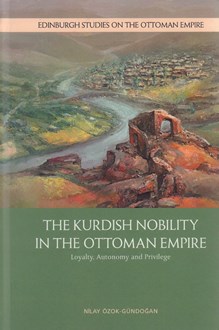
The Kurdish nobility in the Ottoman Empire : loyalty, autonomy and privilege / Nilay Özok-Gündoğan.
Yer Numarası
A.IX/7265
ISBN
9781399508612 (hardback)
9781399508636 (webready PDF)
9781399508643 (epub)
9781399508636 (webready PDF)
9781399508643 (epub)
Dil Kodu
İngilizce
Kütüphane
Türk Tarih Kurumu Kütüphanesi
Yazar
Yayın Bilgisi
Edinburgh : Edinburgh University Press, ©2022.
Fiziksel Niteleme
xi, 338 sayfa : resim, harita, tıpkıbasım, tablo ; 24 cm.
Dizi
Edinburgh studies on the Ottoman Empire
Genel Not
Sözlük s. 288-290.
İndeks s. 330-338.
İndeks s. 330-338.
Bibliyografi, vb. Notu
Seçilmiş bibliyografya s. 291-329.
İçindekiler Notu
List of figures, maps and tables -- Acknowledgements -- Introduction : Rethinking Kurdish nobility in the Ottoman Empire -- At the beginning : The formation of the Kurdish-Ottoman nobility of Palu in the sixteenth century -- Noble privilege on the ground, 1720s-1820s -- The Kurdish nobility and the making of modern state power in Kurdistan -- A system in transition : Negotiating nobility in the locality -- The Weşin Incident : The spark that burnt a village ... and the arsonist -- After Abdullah Beg : The politics of dividing the Kurdish nobles’ lands -- Provincial administration after the Palu nobility -- The beginning of the endgame? The road to the 1895 massacres in Palu -- Conclusion : The end of the nobility in Kurdistan postscript -- Glossary -- Select bibliography -- Index.
Özet, vb.
“This book narrates the rise and fall of Kurdish nobility in the Ottoman Empire from the sixteenth through to the nineteenth century. Focusing on one noble Kurdish family based in the emirate of Palu, a fortressed town in the eastern provinces of the Ottoman Empire, it provides the first systematic analysis of the hereditary nobility in Kurdistan. The book centres on the crucial moment in the 1840s during which the Ottoman state set out to abolish the hereditary privileges of the Kurdish beys, confiscating their large landholdings and setting the stage for a conflict over the fertile lands of Palu that would last nearly six decades. This tug-of-war between Armenian financiers, Armenian and Muslim sharecroppers, the Kurdish beys and the Ottoman state ended in 1895 with a series of massacres against the Armenian population of Palu. Through exhaustive archival research in an untapped body of sources, this book sheds light on the impact this conflict-filled process had on the intercommunal relations in the locality. In doing so, the author brings the voices of Armenian and Kurdish commoners to the fore and highlights the important roles that they, too, played in the local struggles and wider changes in governance. As the first study to present the dissolution of the Kurdish nobility using a social history lens, the book gets to the heart of the historical transformations that changed Palu from a diverse and economically affluent town into an ethnoreligiously homogenised, culturally conservative and economically deprived place. Peppered with vignettes and stories culled from a wide range of archival sources, the author presents a cohesive narrative of the region’s socio-economic and political history between 1720 and 1895, situating developments taking place in the small province of Palu within the larger developments in the Ottoman Empire and the world at large.” -- Yayıncı.
Eseri Alıntıla
Referansları kullanmadan önce gözden geçirmeniz ve varsa gerekli düzeltmeleri yapmanız önerilir.
Dijital Kaynak
MARC Görünümü
LEADER 04097naaaa2200397aa54500
001 604848
003 TR_AnAIT
005 20250627100629
006 aobd|e |||| 001 0d
007 ta
008 240131s2022 stkobd|e |||| 001 0deng c
020 |a9781399508612|q(hardback)
020 |a9781399508636|q(webready PDF)
020 |a9781399508643|q(epub)
040 |aTTK
041 |aeng
049 |aTürk Tarih Kurumu Kütüphanesi
090 |aA.IX/7265
100 1 |aÖzok-Gündoğan, Nilay.
245 14|aThe Kurdish nobility in the Ottoman Empire :|bloyalty, autonomy and privilege /|cNilay Özok-Gündoğan.
260 |aEdinburgh :|bEdinburgh University Press,|c©2022.
300 |axi, 338 sayfa :|bresim, harita, tıpkıbasım, tablo ;|c24 cm.
490 0 |aEdinburgh studies on the Ottoman Empire
500 |aSözlük s. 288-290.
500 |aİndeks s. 330-338.
504 |aSeçilmiş bibliyografya s. 291-329.
505 |tList of figures, maps and tables --|tAcknowledgements --|tIntroduction : Rethinking Kurdish nobility in the Ottoman Empire --|tAt the beginning : The formation of the Kurdish-Ottoman nobility of Palu in the sixteenth century --|tNoble privilege on the ground, 1720s-1820s --|tThe Kurdish nobility and the making of modern state power in Kurdistan --|tA system in transition : Negotiating nobility in the locality --|tThe Weşin Incident : The spark that burnt a village ... and the arsonist --|tAfter Abdullah Beg : The politics of dividing the Kurdish nobles’ lands --|tProvincial administration after the Palu nobility --|tThe beginning of the endgame? The road to the 1895 massacres in Palu --|tConclusion : The end of the nobility in Kurdistan postscript --|tGlossary --|tSelect bibliography --|tIndex.
520 |a“This book narrates the rise and fall of Kurdish nobility in the Ottoman Empire from the sixteenth through to the nineteenth century. Focusing on one noble Kurdish family based in the emirate of Palu, a fortressed town in the eastern provinces of the Ottoman Empire, it provides the first systematic analysis of the hereditary nobility in Kurdistan. The book centres on the crucial moment in the 1840s during which the Ottoman state set out to abolish the hereditary privileges of the Kurdish beys, confiscating their large landholdings and setting the stage for a conflict over the fertile lands of Palu that would last nearly six decades. This tug-of-war between Armenian financiers, Armenian and Muslim sharecroppers, the Kurdish beys and the Ottoman state ended in 1895 with a series of massacres against the Armenian population of Palu. Through exhaustive archival research in an untapped body of sources, this book sheds light on the impact this conflict-filled process had on the intercommunal relations in the locality. In doing so, the author brings the voices of Armenian and Kurdish commoners to the fore and highlights the important roles that they, too, played in the local struggles and wider changes in governance. As the first study to present the dissolution of the Kurdish nobility using a social history lens, the book gets to the heart of the historical transformations that changed Palu from a diverse and economically affluent town into an ethnoreligiously homogenised, culturally conservative and economically deprived place. Peppered with vignettes and stories culled from a wide range of archival sources, the author presents a cohesive narrative of the region’s socio-economic and political history between 1720 and 1895, situating developments taking place in the small province of Palu within the larger developments in the Ottoman Empire and the world at large.” --|cYayıncı.
650 4|aKürtler|zTürkiye|zPalu|xTarih|y18. yy.
650 4|aKürtler|zTürkiye|zPalu|xTarih|y19. yy.
651 4|aPalu (Türkiye)|xTarih|y18. yy.
651 4|aPalu (Türkiye)|xTarih|y19. yy.
651 4|aPalu (Türkiye)|xSosyo-ekonomik durum|y18. yy.
651 4|aPalu (Türkiye)|xSosyo-ekonomik durum|y19. yy.
651 4|aOsmanlı imparatorluğu|xYönetim ve politikalar|y18. yy.
001 604848
003 TR_AnAIT
005 20250627100629
006 aobd|e |||| 001 0d
007 ta
008 240131s2022 stkobd|e |||| 001 0deng c
020 |a9781399508612|q(hardback)
020 |a9781399508636|q(webready PDF)
020 |a9781399508643|q(epub)
040 |aTTK
041 |aeng
049 |aTürk Tarih Kurumu Kütüphanesi
090 |aA.IX/7265
100 1 |aÖzok-Gündoğan, Nilay.
245 14|aThe Kurdish nobility in the Ottoman Empire :|bloyalty, autonomy and privilege /|cNilay Özok-Gündoğan.
260 |aEdinburgh :|bEdinburgh University Press,|c©2022.
300 |axi, 338 sayfa :|bresim, harita, tıpkıbasım, tablo ;|c24 cm.
490 0 |aEdinburgh studies on the Ottoman Empire
500 |aSözlük s. 288-290.
500 |aİndeks s. 330-338.
504 |aSeçilmiş bibliyografya s. 291-329.
505 |tList of figures, maps and tables --|tAcknowledgements --|tIntroduction : Rethinking Kurdish nobility in the Ottoman Empire --|tAt the beginning : The formation of the Kurdish-Ottoman nobility of Palu in the sixteenth century --|tNoble privilege on the ground, 1720s-1820s --|tThe Kurdish nobility and the making of modern state power in Kurdistan --|tA system in transition : Negotiating nobility in the locality --|tThe Weşin Incident : The spark that burnt a village ... and the arsonist --|tAfter Abdullah Beg : The politics of dividing the Kurdish nobles’ lands --|tProvincial administration after the Palu nobility --|tThe beginning of the endgame? The road to the 1895 massacres in Palu --|tConclusion : The end of the nobility in Kurdistan postscript --|tGlossary --|tSelect bibliography --|tIndex.
520 |a“This book narrates the rise and fall of Kurdish nobility in the Ottoman Empire from the sixteenth through to the nineteenth century. Focusing on one noble Kurdish family based in the emirate of Palu, a fortressed town in the eastern provinces of the Ottoman Empire, it provides the first systematic analysis of the hereditary nobility in Kurdistan. The book centres on the crucial moment in the 1840s during which the Ottoman state set out to abolish the hereditary privileges of the Kurdish beys, confiscating their large landholdings and setting the stage for a conflict over the fertile lands of Palu that would last nearly six decades. This tug-of-war between Armenian financiers, Armenian and Muslim sharecroppers, the Kurdish beys and the Ottoman state ended in 1895 with a series of massacres against the Armenian population of Palu. Through exhaustive archival research in an untapped body of sources, this book sheds light on the impact this conflict-filled process had on the intercommunal relations in the locality. In doing so, the author brings the voices of Armenian and Kurdish commoners to the fore and highlights the important roles that they, too, played in the local struggles and wider changes in governance. As the first study to present the dissolution of the Kurdish nobility using a social history lens, the book gets to the heart of the historical transformations that changed Palu from a diverse and economically affluent town into an ethnoreligiously homogenised, culturally conservative and economically deprived place. Peppered with vignettes and stories culled from a wide range of archival sources, the author presents a cohesive narrative of the region’s socio-economic and political history between 1720 and 1895, situating developments taking place in the small province of Palu within the larger developments in the Ottoman Empire and the world at large.” --|cYayıncı.
650 4|aKürtler|zTürkiye|zPalu|xTarih|y18. yy.
650 4|aKürtler|zTürkiye|zPalu|xTarih|y19. yy.
651 4|aPalu (Türkiye)|xTarih|y18. yy.
651 4|aPalu (Türkiye)|xTarih|y19. yy.
651 4|aPalu (Türkiye)|xSosyo-ekonomik durum|y18. yy.
651 4|aPalu (Türkiye)|xSosyo-ekonomik durum|y19. yy.
651 4|aOsmanlı imparatorluğu|xYönetim ve politikalar|y18. yy.
Materyaller
Depodan talep edilen materyal sadece kütüphane içerisinde kullanılmaktadır.
Materyal dışarıya ödünç verilmemektedir.
Materyal dışarıya ödünç verilmemektedir.
