LEADER 03105naaaa2200373aa54500
001 604862
003 TR_AnAIT
005 20250627100554
006 aobd|e |||| 001 0d
007 ta
008 240202s2023 cauobd|e |||| 001 0deng c
020 |a9781503634619|q(cloth)
020 |a9781503635623|q(paperback)
020 |a9781503635630|q(ebook)
040 |aTTK
041 |aeng
049 |aTürk Tarih Kurumu Kütüphanesi
090 |aA.IX/7274
100 1 |aBarakat, Nora Elizabeth,|d19??-
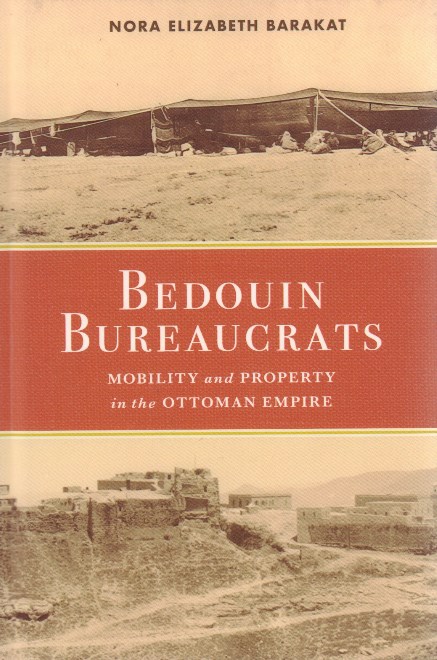
245 10|aBedouin bureaucrats :|bmobility and property in the Ottoman Empire /|cNora Elizabeth Barakat.
260 |aStanford, California :|bStanford University Press,|c©2023.
300 |axi, 361 sayfa :|bresim, harita, grafik, tıpkıbasım, tablo ;|c24 cm
500 |aİndeks s. 345-361.
504 |aBibliyografya s. 319-344.
504 |aBibliyografik notlar s. 277-317.
505 |tList of maps, figures, and tables --|tNote on transliteration, dates, currencies, and measures --|tIntroduction --|tBeyond the tribal frontier --|tCommercial capital in the Syrian interior --|tProducing tribes and property --|tBureaucracy in crisis --|tTaxation, property and citizenship --|tConclusion --|tAcknowledgments --|tNotes --|tBibliography --|tIndex.
520 |a“In the late nineteenth century, the Ottoman government sought to fill landscapes they legally defined as “empty.” Both land and people were incorporated into territorially bounded grids of administrative law. Bedouin Bureaucrats examines how tent-dwelling, seasonally migrating Bedouin engaged in these processes of Ottoman state transformation on local, imperial, and global scales. As the “tribe” became a category of Ottoman administration, Bedouin in the Syrian interior used this category both to gain political influence and to organize community resistance to maintain control over land. Narrating the lives of Bedouin individuals involved in Ottoman administration, Nora Elizabeth Barakat brings this population to the center of modern state-making, from their involvement in the pilgrimage administration in the eighteenth century and their performance of land registration and taxation as the Ottoman bureaucracy expanded in the nineteenth, to their eventual rejection of Ottoman attempts to reallocate the “empty land” they inhabited in the twentieth. She places the Syrian interior in a global context of imperial expansion into regions formerly deemed marginal, especially in relation to American and Russian empires. Ultimately, the book illuminates Ottoman state formation attempts within Bedouin communities and the unique trajectory of Bedouin in Syria, who maintained their control over land” --|cYayıncı.
650 4|aBedeviler|zTürkiye|xYönetim ve politikalar.
650 4|aArazi mülkiyeti|xHükümet politikası|zTürkiye|xTarih.
650 4|aGayrimenkul|zTürkiye|xTarih.
650 4|aMerkezi-yerel yönetim ilişkileri|zTürkiye|xTarih.
651 4|aTürkiye|xYönetim ve politikalar|y1878-1909.
651 4|aTürkiye|xTarih|zOsmanlı İmparatorluğu, 1299-1918.