LEADER 03584naaaa2200373aa54500
001 604882
003 TR_AnAIT
005 20250627100424
006 aobeae |||| 000 0d
007 ta
008 240213s2020 be obeae |||| 000 0deng c
020 |a9782503583785
040 |aTTK
041 |aeng
049 |aTürk Tarih Kurumu Kütüphanesi
090 |aB.II/0069
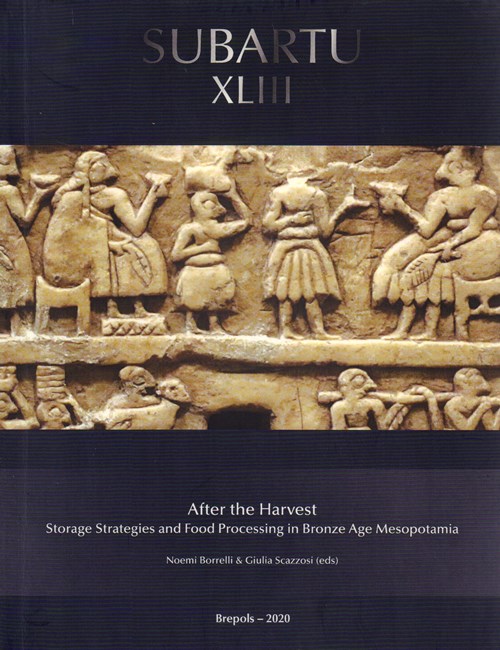
245 10|aAfter the harvest :|bstorage practices and food processing in Bronze Age Mesopotamia /|cedited by Noemi Borrelli and Giulia Scazzosi.
260 |aTurnhout, Belgium :|bBrepols,|c©2020.
300 |aix, 142 sayfa :|bresim, harita, plan, çizim ;|c28 cm.
490 1 |aSubartu,|x1780-3233 ;|vXLIII
504 |aBibliyografya bölüm sonlarındadır.
505 |tList of illustrations --|tList of abbreviations --|tWorkshop programme --|tAfter the harvest : an introduction /|rNoemi Borrelli, Giulia Scazzosi --|tFood : Its gathering, storage, and consumption according to the early textual record /|rKlaus Wagensonner --|tGrain storage and grain distribution at Tell Beydar /|rAlexander Pruß [Pruss] --|tBefore the harvest? Land-grain accounts in Early Dynastic Umma /|rArmando Bramanti --|tInstitutional grain storage and its control network in the Ur III Province of Ĝirsu/Lagaš /|rNoemi Borrelli --|tArchaeological perspectives on beer in Mesopotamia : brewing ingredients /|rTate Paulette --|tBeer-making and drinking between life and death : a fresh look at the ‘Four-Part Sets’ /|rMelania Zingarello --|tBioarchaeology of food production in Ancient Mesopotamia /|rArkadiusz Soltysiak --|t‘Eat the bread, enkidu’: The role of bakeries in Late Third to Early Second Millennium bc Mesopotamia /|rGiulia Scazzosi.
520 |aThe reliance on grain and grain products is a key feature of many past societies, and this is particularly true of the Ancient Near East. The necessity of storing and processing foodstuffs encompassed political and social boundaries: food shaped identities and it was not by chance that, for the Mesopotamian mindset, civilization started with the consumption of bread and beer. At any managerial level, storage practices and food processing reflect the economic organization of a society, its control mechanisms, and its interdependent social structures. This volume includes eight papers by scholars of the Ancient Near East, who draw on a wide range of sources and methodologies, from (bio- ) archaeological evidence to cuneiform texts, in order to explore what actually happened after the harvest in the shared horizon of Bronze Age Mesopotamia. The different case-studies gathered together here examine the impact of continuity - and crucially, of change - in the technical, economic, and social solutions that were adopted by people in response to the common needs of everyday life. This volume represents a dialogue between different perspectives and disciplines that simultaneously opens up new paths of research, at the same time as seeking to narrow the gaps in our understanding of this subject.” --|cArka kapak.
650 4|aAsur-Babil Medeniyeti.
650 4|aGıda işleme|zMezopotamya|xBiyoarkeoloji.
650 4|aBira yapımı|zMezopotamya|yTunç Çağı.
650 4|aTahıl|xDepolama|zMezopotamya|yTunç Çağı.
650 4|aYiyecek toplama|zMezopotamya|yTunç Çağı.
650 4|aYiyecek hazırlama|zMezopotamya|yTunç Çağı.
650 4|aYiyecek saklama|zMezopotamya|yTunç Çağı.
700 1 |aBorrelli, Noemi,|d1987-|eeditör.
700 1 |aScazzosi, Giulia,|d19??-|eeditör.
830 |aSubartu ;|v43.