LEADER 03505naaaa2200445aa54500
001 604883
003 TR_AnAIT
005 20250627100422
006 a||||e |||| 001 0d
007 ta
008 231212s2020 be ||||e |||| 001 0deng c
020 |a9782503584706
020 |a9782503584713|q(eISBN)
040 |aTTK
041 |aeng
049 |aTürk Tarih Kurumu Kütüphanesi
090 |aA.VIII/9757-2
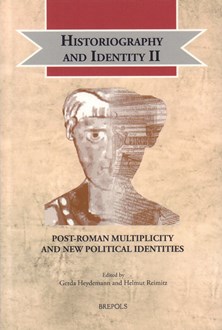
245 00|aHistoriography and Identity.|nII,|pPost-Roman multiplicity and new political identities /|cedited by Gerda Heydemann and Helmut Reimitz.
246 20|aPost-Roman multiplicity and new political identities
260 |aTurnhout, Belgium :|bBrepols Publishers,|c©2020.
300 |a2. cilt (viii, 356 sayfa) ;|c24 cm.
490 1 |aCultural encounters in Late Antiquity and the Middle Ages,|x1378-8779 ;|vvolume 27
490 1 |aHistoriography and identity ;|vII
500 |a“e-ISSN: 2294-8511”
500 |aİndeks s. [351]-356.
504 |aBibliyografya makale sonlarındadır.
505 |tHistoriography and Identity in the Late Antique and Early Medieval West : An Introduction /|rHelmut Reimitz --|tDebating Ethnicity in Post-Roman Historiography /|rWalter Pohl --|tClinging to Empire in Jordanes’ Romana /|rMaya Maskarinec --|tFrom Scythian, to Getan, to Goth : The Getica of Jordanes and the Classical Ethnographic Tradition /|rRandolph Ford --|tTwo Tales – Two Peoples? Goths and Romans in Jordanes’ Works /|rPhilipp Dörler --|tCeltic Britain and Ireland : An Arena for Historical Debate /|rThomas Charles-Edwards --|tGenre and Identity in Merovingian Historiography /|rHelmut Reimitz --|tThe Appropriation of History : The Austrasians, Gregory of Tours, and Fredegar /|rAndreas Fischer --|tHistory-Writing and Education in Late Antique and Early Medieval Iberia /|rJamie Wood, Victoria Leonard --|tThe Ties that Bind : Diagnosing Social Crisis in Julian of Toledo’s Historia Wambae /|rMolly Lester --|tBede’s Historia ecclesiastica and Anglian Northumbria /|rIan Wood --|tHistorical Writing in the Lombard Kingdom : from Secundus to Paul the Deacon /|rWalter Pohl.
520 |a“This second volume of the series studies the social function of historiography in the Justinianic age and the post-Roman kingdoms of the West. The papers explore how writers in Constantinople and in the various kingdoms from Italy to Britain adopted late antique historiographical traditions and adapted them in response to the new needs and challenges created by the transformation of the political and social order. What was the significance of their choices between different models (or their creation of new ones) for their ‘vision of community’? The volume provides a representative analysis of the historiographical resources of ethnic, political, and religious identifications created in the various Western kingdoms. In doing so, it seeks to understand the extant works as part of a once much wider and more polyphonic historiographical debate.” --|cYayıncı.
650 4|aTarih yazıcılığı|zYunanistan.
650 4|aTarih yazıcılığı|zRoma.
650 4|aHristiyanlar|xTarih|y1500’e kadar.
651 4|aRoma|xTarih.
651 4|aYunanistan|xTarih.
700 1 |aHeydemann, Gerda,|eeditör.
700 1 |aReimitz, Helmut,|eeditör.
830 0|aCultural encounters in Late Antiquity and the Middle Ages ;|v27.
830 0|aCELAMA ;|v27.
830 0|aHistoriography and identity ;|v2.
830 0|aHISTID ;|v2.