LEADER 03534nam 2200553 i 4500
001 605500
003 TR_AnAIT
005 20250627093446
006 m d
007 cr un uuuua
008 160308s2016 ne sb 001 0 eng d
010 |a2016011593
020 |a9789004314474|q(electronic book)
020 |z9789004314443|q(print)
024 7 |a10.1163/9789004314474|2DOI
040 |aNL-LeKB|cNL-LeKB|erda
041 |aeng
043 |aa-kz---|ae-ur---|aa-cc---
049 |aTürk Tarih Kurumu Kütüphanesi
050 4|aDK908.75.R8
072 7|aHIS026000|2bisacsh
082 04|a327.584504709/033|223
090 |aDK/0732
100 1 |aNoda, Jin.
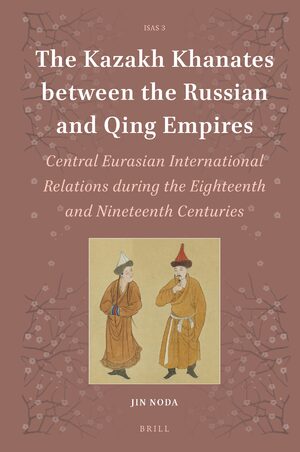
245 14|aThe Kazakh khanates between the Russian and Qing empires :|bcentral Eurasian international relations during the eighteenth and nineteenth centuries /|cby Jin Noda.
264 1|aLeiden ;|aBoston :|bBrill,|c2016.
300 |a1 online resource.
336 |atext|btxt|2rdacontent
337 |acomputer|bc|2rdamedia
338 |aonline resource|2rdacarrier
490 0 |aIslamic area studies,|x2214-6555 ;|vv. 3
504 |aIncludes bibliographical references and index.
505 00|aPreliminary Material -- Introduction: The Kazakh Khanates’ Place within the Central Eurasian World -- 1 Reexamining the Kazakh Khanates’ “Foreign Relations in the East” -- 2 The Impact of Russian Advances into Central Asia on Kazakh-Russian Relations -- 3 The Problem of Kazakh Subjection and the Russian-Qing Relationship in Central Asia -- 4 The Differing Nature of the Three Kazakh Juz and the Three “Bu” (Sections) Mentioned in Qing Historical Sources -- 5 Titles of Kazakh Sultans Bestowed by the Qing Empire: The 1824 Case of Sultan Ghubaidulla -- 6 Kazakh Participation in the Russo-Chinese Trade of Central Asia -- 7 The Transformation of the Russian-Qing Relationship and the Dissolution of the Kazakh Khanates -- Conclusion -- Bibliography -- Index.
506 |aAvailable to subscribing member institutions only.
520 |aIn The Kazakh Khanates between the Russian and Qing Empires , Jin Noda examines the foreign relations of the Kazakh Chinggisid sultans and the Russian and Qing empires during the 18th and 19th centuries. Noda makes use of both Russian and Qing archival documents as well as local Islamic sources. Through analysis of each party’s claims –mainly reflected in the Russian-Qing negotiations regarding Central Eurasia–, the book describes the role played by the Kazakh nomads in tying together the three regions of eastern Kazakh steppe, Western Siberia, and Xinjiang.
588 |aDescription based on print version record and CIP data provided by publisher; resource not viewed.
650 0|aSultans|zKazakhstan|xHistory.
650 0|aNomads|zKazakhstan|xHistory.
650 0|aNomads|zAsia, Central|xHistory.
651 0|aKazakhstan|xForeign relations|zRussia.
651 0|aRussia|xForeign relations|zKazakhstan.
651 0|aKazakhstan|xForeign relations|zChina.
651 0|aAsia, Central|xPolitics and government.
651 0|aRussia|xForeign relations|zChina.
651 0|aChina|xForeign relations|zRussia.
776 08|iPrint version:|aNoda, Jin.|tKazakh khanates between the Russian and Qing empires|dLeiden ; Boston : Brill, 2016|z9789004314443|w(DLC) 2016008886
830 0|aIslamic Area Studies|v3.
830 0|aMiddle East and Islamic Studies E-Books Online, Collection 2016, ISBN: 9789004303935.
856 4 |zDOI:|uhttp://dx.doi.org/10.1163/9789004314474