LEADER 03781nam a22004818i 4500
001 605532
003 TR_AnAIT
005 20250627093338
006 m d
007 cr un uuuua
008 231123s2024 gw sb 001 0 eng d
010 |a2023042445
020 |a9789004688391|q(electronic book)
020 |z9789004688384|q(print)
024 7 |a110.1163/9789004688391|2DOI
035 |z(OCoLC)1406337544
040 |aNL-LeKB|cNL-LeKB|erda
041 |aeng
049 |aTürk Tarih Kurumu Kütüphanesi
050 4|aDS135.E42
072 7|aHIS|x026000|2bisacsh
082 04|a305.800962|223
090 |aDK/0764
100 1 |aLellouch, Benjamin,|eauthor.
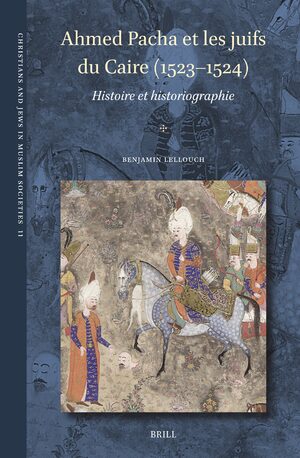
245 10|aAhmed Pacha et les juifs du Caire (1523-1524) :|bHistoire et historiographie /|cBenjamin Lellouch.
246 3 |aHistoire et historiographie
264 4|c©2024
300 |a1 online resource (380 pages) :|billustrations.
336 |atext|btxt|2rdacontent
337 |acomputer|bc|2rdamedia
338 |aonline resource|2rdacarrier
490 1 |aChristians and Jews in Muslim Societies ;|v11
490 1 |aMiddle East and Islamic Studies E-Books Online, Collection 2023
504 |aIncludes bibliographical references and index.
520 |aOn sait depuis longtemps que les juifs furent, parmi bien d’autres au Caire, victimes de violences pendant la révolte du gouverneur ottoman Ahmed Pacha (1523-1524), et qu’ils commémorèrent chaque année leurs épreuves au cours d’une fête locale de Pourim. Ce livre mobilise pour la première fois une riche documentation en turc, italien et arabe sur ces violences et leur contexte. Il souligne l’apport de Capsali (m. 1550), dont la chronique de la révolte en hébreu, négligée par les chercheurs, est traduite ici ; il invite à reconsidérer l’histoire de la chronique liturgique ( megillah ) anonyme, donc aussi celle de la fête. Dernier avatar d’une tradition historiographique vieille de cinq siècles, il renouvelle en profondeur l’exposé des faits et l’analyse des dynamiques sociales à l’œuvre dans la révolte, en les inscrivant dans l’histoire de la transition des Mamelouks aux Ottomans en Égypte et en Syrie. It has been long known that Jews, among many others in Cairo, were victims of violence during the revolt of the Ottoman governor Ahmed Pasha (1523-1524), and that they would commemorate their sufferings each year, during a local Purim festival. For the first time, this book draws on a wealth of documentation in Turkish, Italian and Arabic on these acts of violence and their context. It highlights the contribution of Capsali (d. 1550), whose chronicle of the revolt in Hebrew – neglected by scholars – has been translated here; it also prompts readers to reconsider the history of the anonymous liturgical chronicle ( megillah ), and therefore that of the festival as well. As the last avatar of a five-century-old historiographical tradition, it thoroughly recasts the presentation of facts along with an analysis of the social dynamics at work in the revolt, contextualizing them within the history of the transition from the Mamluks to the Ottomans in Egypt and Syria.
546 |aFrench and Hebrew
588 |aDescription based on print version record.
650 0|aJews|zEgypt|zCairo|xHistory|y16th century.
650 0|aTurks|zEgypt|xHistory|y16th century.
776 08|iPrint version:|tAhmed Pacha et les juifs du Caire (1523-1524) : Histoire et historiographie.|dLeiden ; Boston : Brill, 2024.|z9789004688384|w(DLC) 2023042444
830 0|aChristians and Jews in Muslim Societies ;|v11.
830 0|aMiddle East and Islamic Studies E-Books Online, Collection 2023.
856 4 |zDOI:|uhttp://dx.doi.org/10.1163/9789004688391