LEADER 03777nam a22005171i 4500
001 605543
003 TR_AnAIT
005 20250627093312
006 m d
007 cr un uuuua
008 220201t20212022ne sb 001 0 eng d
010 |a2021048757
020 |a9789004503557|q(electronic book)
020 |a9789004503526|q(print)
024 7 |a10.1163/9789004503557|2DOI
040 |aNL-LeKB|cNL-LeKB|erda
041 |aeng
043 |ae-urk--|ae-ur---
049 |aTürk Tarih Kurumu Kütüphanesi
050 00|aDK509
072 7|aHIS|x026000|2bisacsh
082 00|a947.5|223/eng/20211012
090 |aDK/0775
100 1 |aPubblici, Lorenzo,|eauthor.
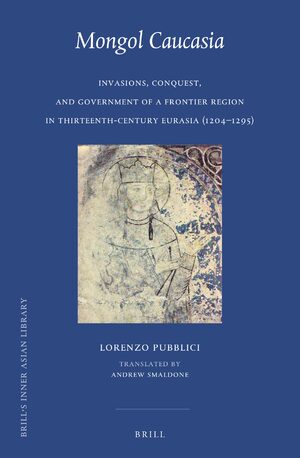
245 10|aMongol Caucasia :|bInvasions, Conquest, and Government of a Frontier Region in Thirteenth-Century Eurasia (1204-1295) /|cby Lorenzo Pubblici; (Translated by) Andrew Smaldone, Clarissa Weiss.
246 3 |aInvasions, Conquest, and Government of a Frontier Region in Thirteenth-Century Eurasia (1204-1295)
264 4|c©2022
300 |a1 online resource.
336 |atext|btxt|2rdacontent
337 |acomputer|bc|2rdamedia
338 |aonline resource|2rdacarrier
490 1 |aBrill's Inner Asian Library ;|v41
504 |aIncludes bibliographical references and index.
505 00|tPreliminary Material /|rLorenzo Pubblici --|tCopyright page /|rLorenzo Pubblici --|tDedication /|rLorenzo Pubblici --|tPreface to the English Edition /|rLorenzo Pubblici --|tAcknowledgments /|rLorenzo Pubblici --|tNote on Transliteration /|rLorenzo Pubblici --|tMaps /|rLorenzo Pubblici --|tIntroduction /|rLorenzo Pubblici --|tChapter 1 The Premises /|rLorenzo Pubblici --|tChapter 2 North: The Pontic Steppes before the Mongol “Squall“ /|rLorenzo Pubblici --|tChapter 3 Caucasia, Nomadism and Immigration /|rLorenzo Pubblici --|tChapter 4 Building a People /|rLorenzo Pubblici --|tChapter 5 A New Geography: The Mongol Expansion in the Caucasus and the Azov Basin /|rLorenzo Pubblici --|tChapter 6 The Political Consequences of the Mongol Conquests and the Caucasian “Separation“ /|rLorenzo Pubblici --|tChapter 7 The Religious Factor and the Problem of Integration after the Conquest /|rLorenzo Pubblici --|tChapter 8 Population and Coexistence: The Demographic Factor between Conquest and Reconstruction /|rLorenzo Pubblici --|tConclusions: Results and Perspectives /|rLorenzo Pubblici --|tBibliography /|rLorenzo Pubblici --|tIndex /|rLorenzo Pubblici.
520 |aThe work focuses on the Mongol conquest and domination of Caucasia in the 13th century, from the Sea of Azov in the north to present-day Georgia and Armenia. While sedentary civilizations and nomadic cultures had a long history of interaction in this region, the Mongol conquest made it into a frontier in which Medieval Europe and Asia became more intensely integrated and interconnected. The Mongols made Caucasia into a coherent power based on both European and Asian experiences and traditions. The genesis of this deeply transformational process constitutes the central theme of this book.
588 |aDescription based on print version record.
650 0|aMongols|zCaucasus|xHistory.
650 0|aNomads|zCaucasus|xHistory.
650 0|aNomads|zRussia, Southern|xHistory.
651 0|aCaucasus|xHistory.
651 0|aRussia, Southern|xHistory.
700 1 |aSmaldone, Andrew,|etranslator.
700 1 |aWeiss, Clarissa,|etranslator.
776 08|iPrint version:|tMongol Caucasia : Invasions, Conquest, and Government of a Frontier Region in Thirteenth-Century Eurasia (1204-1295).|dLeiden ; Boston : Brill, 2021|z9789004503526|w(DLC) 2021048756|w(OCoLC)1275367735
830 0|aBrill's Inner Asian Library ;|v41.
856 4 |zDOI:|uhttp://dx.doi.org/10.1163/9789004503557