

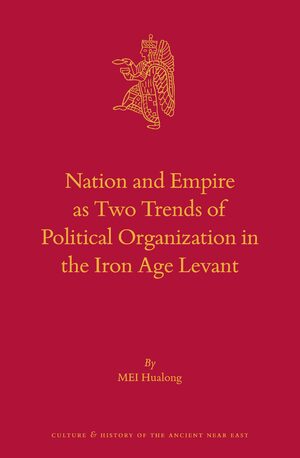
Nation and Empire as Two Trends of Political Organization in the Iron Age Levant / MEI Hualong.
Erişim Adresi
ISBN
9789004685581 (electronic book)
9789004685574 (print)
9789004685574 (print)
Dil Kodu
İngilizce
Yer Numarası
DK/0797
Yazar
Yayın Bilgisi
©2024
Fiziksel Niteleme
1 online resource (512 pages) : illustrations.
Dizi
Biblical Studies, Ancient Near East and Early Christianity E-Books Online, Collection 2024
Culture and History of the Ancient Near East ; 136
Culture and History of the Ancient Near East ; 136
Bibliyografi, vb. Notu
Includes bibliographical references and index.
İçindekiler Notu
Front Matter -- Preliminary Material / MEI Hualong -- Copyright Page / MEI Hualong -- Dedication / MEI Hualong -- Acknowledgements / MEI Hualong -- Abbreviations / MEI Hualong -- Introduction New Trends in Iron Age Levantine Polities and Politics / MEI Hualong -- Part 1 -- Chapter 1 Nation and the Impact of Ethnocultural Elements on Politics: A Survey of Native Terminology / MEI Hualong -- Chapter 2 Ethnocultural Elements and Political Identity in the Iron Age Levant (1): The Role of (Self-)Designation and Kinship Ideology / MEI Hualong -- Chapter 3 Ethnocultural Elements and Political Identity in the Iron Age Levant (2): The Role of “National Gods” and Religion / MEI Hualong -- Chapter 4 Ethnocultural Elements and Political Identity in the Iron Age Levant (3): The Role of Language and Script / MEI Hualong -- Chapter 5 Cultural Elements and Political Identity: A Summary of Different Scenarios in the Iron Age Levant / MEI Hualong -- Part 2 -- Chapter 6 Empire, Universal Empire and Imperial Ideology: Theoretical Concerns and Case Studies / MEI Hualong -- Chapter 7 The Impact of External Imperialism in the Levant and Mutual Perception of the Center and the Periphery / MEI Hualong -- Chapter 8 When the Two Trends Meet: Imperialism of “Nations” vs. The Universal Empire as a “Nation”—Possibilities and Uncertainties / MEI Hualong -- Concluding Remarks / MEI Hualong -- Back Matter -- Works Cited / MEI Hualong -- Indexes / MEI Hualong.
Özet, vb.
In Nation and Empire as Two Trends of Political Organization in the Iron Age Levant MEI Hualong offers an analysis of national and imperial ideologies--two political principles that influenced the establishment, consolidation and expansion of trans-local/trans-tribal polities in the Iron Age Levant. By examining key terminologies, historical accounts and literary sources, MEI argues that the elites of ancient nations may attempt to reshape their political and cultural identity in imperial terms (vice versa, but to a lesser extent). The conceptual transformation from the one to the other is closely related to the political entity’s consciousness and understanding of limits and boundaries: political and cultural, real and imagined.
Dil Notu
English
Konu
Imperialism.
Iron age.
Kinship __ Political aspects.
Iron age.
Kinship __ Political aspects.
Eseri Alıntıla
Referansları kullanmadan önce gözden geçirmeniz ve varsa gerekli düzeltmeleri yapmanız önerilir.
Dijital Kaynak
MARC Görünümü
LEADER 04050nam a22004938i 4500
001 605565
003 TR_AnAIT
005 20250627093218
006 m d
007 cr un uuuua
008 231123s2024 gw sb 001 0 eng d
010 |a2023037321
020 |a9789004685581|q(electronic book)
020 |z9789004685574|q(print)
024 7 |a110.1163/9789004685581|2DOI
035 |z(OCoLC)1408382879
040 |aNL-LeKB|cNL-LeKB|erda
041 |aeng
049 |aTürk Tarih Kurumu Kütüphanesi
050 4|aJC359
072 7|aHIS|x010000|2bisacsh
082 04|a327.1|223
090 |aDK/0797
100 1 |aHualong, MEI,|eauthor.
245 10|aNation and Empire as Two Trends of Political Organization in the Iron Age Levant /|cMEI Hualong.
264 4|c©2024
300 |a1 online resource (512 pages) :|billustrations.
336 |atext|btxt|2rdacontent
337 |acomputer|bc|2rdamedia
338 |aonline resource|2rdacarrier
490 1 |aBiblical Studies, Ancient Near East and Early Christianity E-Books Online, Collection 2024
490 1 |aCulture and History of the Ancient Near East ;|v136
504 |aIncludes bibliographical references and index.
505 0 |tFront Matter -- Preliminary Material /|rMEI Hualong -- Copyright Page /|rMEI Hualong -- Dedication /|rMEI Hualong -- Acknowledgements /|rMEI Hualong -- Abbreviations /|rMEI Hualong -- Introduction New Trends in Iron Age Levantine Polities and Politics /|rMEI Hualong -- Part 1 -- Chapter 1 Nation and the Impact of Ethnocultural Elements on Politics: A Survey of Native Terminology /|rMEI Hualong -- Chapter 2 Ethnocultural Elements and Political Identity in the Iron Age Levant (1): The Role of (Self-)Designation and Kinship Ideology /|rMEI Hualong -- Chapter 3 Ethnocultural Elements and Political Identity in the Iron Age Levant (2): The Role of “National Gods” and Religion /|rMEI Hualong -- Chapter 4 Ethnocultural Elements and Political Identity in the Iron Age Levant (3): The Role of Language and Script /|rMEI Hualong -- Chapter 5 Cultural Elements and Political Identity: A Summary of Different Scenarios in the Iron Age Levant /|rMEI Hualong -- Part 2 -- Chapter 6 Empire, Universal Empire and Imperial Ideology: Theoretical Concerns and Case Studies /|rMEI Hualong -- Chapter 7 The Impact of External Imperialism in the Levant and Mutual Perception of the Center and the Periphery /|rMEI Hualong -- Chapter 8 When the Two Trends Meet: Imperialism of “Nations” vs. The Universal Empire as a “Nation”—Possibilities and Uncertainties /|rMEI Hualong -- Concluding Remarks /|rMEI Hualong -- Back Matter -- Works Cited /|rMEI Hualong -- Indexes /|rMEI Hualong.
520 |aIn Nation and Empire as Two Trends of Political Organization in the Iron Age Levant MEI Hualong offers an analysis of national and imperial ideologies--two political principles that influenced the establishment, consolidation and expansion of trans-local/trans-tribal polities in the Iron Age Levant. By examining key terminologies, historical accounts and literary sources, MEI argues that the elites of ancient nations may attempt to reshape their political and cultural identity in imperial terms (vice versa, but to a lesser extent). The conceptual transformation from the one to the other is closely related to the political entity’s consciousness and understanding of limits and boundaries: political and cultural, real and imagined.
546 |aEnglish
588 |aDescription based on print version record.
650 0|aImperialism.
650 0|aIron age.
650 0|aKinship|xPolitical aspects.
776 08|iPrint version:|tNation and Empire as Two Trends of Political Organization in the Iron Age Levant.|dLeiden ; Boston : Brill, 2024.|z9789004685574|w(DLC) 2023037320
830 0|aBiblical Studies, Ancient Near East and Early Christianity E-Books Online, Collection 2024.
830 0|aCulture and History of the Ancient Near East ;|v136.
856 4 |zDOI:|uhttp://dx.doi.org/10.1163/9789004685581
001 605565
003 TR_AnAIT
005 20250627093218
006 m d
007 cr un uuuua
008 231123s2024 gw sb 001 0 eng d
010 |a2023037321
020 |a9789004685581|q(electronic book)
020 |z9789004685574|q(print)
024 7 |a110.1163/9789004685581|2DOI
035 |z(OCoLC)1408382879
040 |aNL-LeKB|cNL-LeKB|erda
041 |aeng
049 |aTürk Tarih Kurumu Kütüphanesi
050 4|aJC359
072 7|aHIS|x010000|2bisacsh
082 04|a327.1|223
090 |aDK/0797
100 1 |aHualong, MEI,|eauthor.
245 10|aNation and Empire as Two Trends of Political Organization in the Iron Age Levant /|cMEI Hualong.
264 4|c©2024
300 |a1 online resource (512 pages) :|billustrations.
336 |atext|btxt|2rdacontent
337 |acomputer|bc|2rdamedia
338 |aonline resource|2rdacarrier
490 1 |aBiblical Studies, Ancient Near East and Early Christianity E-Books Online, Collection 2024
490 1 |aCulture and History of the Ancient Near East ;|v136
504 |aIncludes bibliographical references and index.
505 0 |tFront Matter -- Preliminary Material /|rMEI Hualong -- Copyright Page /|rMEI Hualong -- Dedication /|rMEI Hualong -- Acknowledgements /|rMEI Hualong -- Abbreviations /|rMEI Hualong -- Introduction New Trends in Iron Age Levantine Polities and Politics /|rMEI Hualong -- Part 1 -- Chapter 1 Nation and the Impact of Ethnocultural Elements on Politics: A Survey of Native Terminology /|rMEI Hualong -- Chapter 2 Ethnocultural Elements and Political Identity in the Iron Age Levant (1): The Role of (Self-)Designation and Kinship Ideology /|rMEI Hualong -- Chapter 3 Ethnocultural Elements and Political Identity in the Iron Age Levant (2): The Role of “National Gods” and Religion /|rMEI Hualong -- Chapter 4 Ethnocultural Elements and Political Identity in the Iron Age Levant (3): The Role of Language and Script /|rMEI Hualong -- Chapter 5 Cultural Elements and Political Identity: A Summary of Different Scenarios in the Iron Age Levant /|rMEI Hualong -- Part 2 -- Chapter 6 Empire, Universal Empire and Imperial Ideology: Theoretical Concerns and Case Studies /|rMEI Hualong -- Chapter 7 The Impact of External Imperialism in the Levant and Mutual Perception of the Center and the Periphery /|rMEI Hualong -- Chapter 8 When the Two Trends Meet: Imperialism of “Nations” vs. The Universal Empire as a “Nation”—Possibilities and Uncertainties /|rMEI Hualong -- Concluding Remarks /|rMEI Hualong -- Back Matter -- Works Cited /|rMEI Hualong -- Indexes /|rMEI Hualong.
520 |aIn Nation and Empire as Two Trends of Political Organization in the Iron Age Levant MEI Hualong offers an analysis of national and imperial ideologies--two political principles that influenced the establishment, consolidation and expansion of trans-local/trans-tribal polities in the Iron Age Levant. By examining key terminologies, historical accounts and literary sources, MEI argues that the elites of ancient nations may attempt to reshape their political and cultural identity in imperial terms (vice versa, but to a lesser extent). The conceptual transformation from the one to the other is closely related to the political entity’s consciousness and understanding of limits and boundaries: political and cultural, real and imagined.
546 |aEnglish
588 |aDescription based on print version record.
650 0|aImperialism.
650 0|aIron age.
650 0|aKinship|xPolitical aspects.
776 08|iPrint version:|tNation and Empire as Two Trends of Political Organization in the Iron Age Levant.|dLeiden ; Boston : Brill, 2024.|z9789004685574|w(DLC) 2023037320
830 0|aBiblical Studies, Ancient Near East and Early Christianity E-Books Online, Collection 2024.
830 0|aCulture and History of the Ancient Near East ;|v136.
856 4 |zDOI:|uhttp://dx.doi.org/10.1163/9789004685581
Materyaller
Depodan talep edilen materyal sadece kütüphane içerisinde kullanılmaktadır.
Materyal dışarıya ödünç verilmemektedir.
Materyal dışarıya ödünç verilmemektedir.
