LEADER 03719nam 2200565 i 4500
001 605618
003 TR_AnAIT
005 20250627093022
006 m d
007 cr un uuuua
008 110218s2011 ne sb 001 0 eng
010 |a2011006131
020 |a9789004203921|q(electronic book)
020 |z9789004203235|q(print)
024 7 |a10.1163/ej.9789004203235.i-536|2DOI
035 |a(OCoLC)705568035
040 |aNL-LeKB|cNL-LeKB|erda
041 |aeng
043 |ae-fr---|aa-tu---|amm-----
049 |aTürk Tarih Kurumu Kütüphanesi
050 4|aDF611|b.T75 2011
082 04|a949.5/04|222
090 |aDK/0849
100 1 |aTricht, Filip van.
240 10|aLatijnse renovatio van Byzantium.|lEnglish
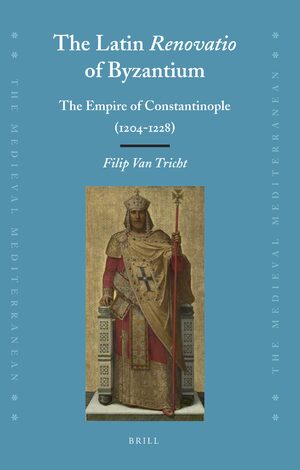
245 14|aThe Latin renovatio of Byzantium|bthe Empire of Constantinople (1204-1228) /|cby Filip Van Tricht ; translated by Peter Longbottom.
264 1|aLeiden ;|aBoston :|bBrill,|c2011.
300 |a1 online resource.
336 |atext|btxt|2rdacontent
337 |acomputer|bc|2rdamedia
338 |aonline resource|2rdacarrier
490 0 |aBrill eBook titles 2011
504 |aIncludes bibliographical references (p. [483]-519) and index.
505 00|tPreliminary Material /|rF. Van Tricht --|tIntroduction /|rF. Van Tricht --|tPrologue /|rF. Van Tricht --|tChapter One. The Constitutional Treaties Of 1204–1205: The Latin Restructuring Of Byzantium /|rF. Van Tricht --|tChapter Two. The Imperial Ideology /|rF. Van Tricht --|tChapter Three. The Imperial Quarter /|rF. Van Tricht --|tChapter Four. Imperial Authority Within The Empire In Its Entirety /|rF. Van Tricht --|tChapter Five. The Central Elite /|rF. Van Tricht --|tChapter Six. Religion, Church And Empire /|rF. Van Tricht --|tChapter Seven. The Byzantine Space /|rF. Van Tricht --|tChapter Eight. The Latin Orient /|rF. Van Tricht --|tConclusion /|rF. Van Tricht --|tBibliography /|rF. Van Tricht --|tIndex /|rF. Van Tricht.
506 1 |aAvailable to subscribing member institutions only.
520 |aIn 1204 the army of the Fourth Crusade sacked the great city of Constantinople. In earlier historiography the view prevailed that these Western barons and knights temporarily destroyed the Byzantine state and replaced it with a series of feudal states of their own making. Through a comprehensive rereading of better and lesser-known sources this book offers an alternative perspective arguing that the Latin rulers did not abolish, but very consciously wanted to continue the Eastern Empire. In this, the new imperial dynasty coming from Flanders-Hainaut played a pivotal role. Despite religious and other differences many Byzantines sided with the new regime and administrative practices at the different governmental levels were to a larger or lesser degree maintained.
650 0|aCrusades|yFourth, 1202-1204.
650 0|aImperialism|xSocial aspects|xHistory.|zByzantine Empire
650 0|aSocial change|zByzantine Empire|xHistory.
651 0|aByzantine Empire|xHistory|y1081-1453.
651 0|aByzantine Empire|xPolitics and government.
651 0|aIstanbul (Turkey)|xHistory|ySiege, 1203-1204.
651 0|aIstanbul (Turkey)|xHistory|yTo 1453.
651 0|aIstanbul (Turkey)|xPolitics and government.
651 0|aIstanbul (Turkey)|xSocial conditions.
651 0|aLatin Empire, 1204-1261.
776 0 |tLatin renovatio of|z9789004203235 (hbk. : acid-free paper)|z9004203230 (hbk. : acid-free paper)|z9789004203921 (electronic book)
830 0|aThe Medieval Mediterranean|v90.
830 0|aEuropean History and Culture E-Books Online, Collection 2011, ISBN: 9789004222878.
856 4 |zDOI:|uhttp://dx.doi.org/10.1163/ej.9789004203235.i-536