

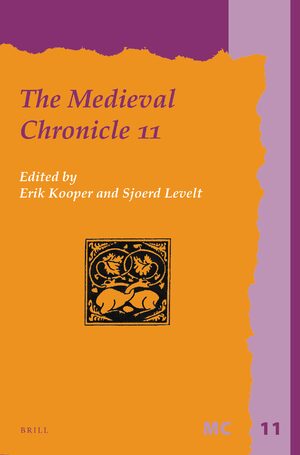
The Medieval chronicle. 11 / edited by Erik Kooper and Sjoerd Levelt.
Erişim Adresi
ISBN
9789004351875 (electronic book)
9789004341586 (print)
9789004341586 (print)
Dil Kodu
İngilizce
Yer Numarası
DK/0880
Yayın Bilgisi
Leiden : Brill, 2017.
Fiziksel Niteleme
1 online resource (288 pages)
Dizi
The Medieval Chronicle ; 11
Bibliyografi, vb. Notu
Includes bibliographical references.
İçindekiler Notu
Front Matter -- Eyewitness and Medieval Historical Narrative / Marcus Bull -- La Chronique de Memmingen : histoire et luttes politiques dans une ville d’ Empire au XVe siècle / Dominique Adrian -- Le rôle du connecteur car (ou nam/enim) dans la prose historique : connecteur interphrastique ? / Anders Bengtsson -- The Vindication of Sancho II in the Crónica de Castilla: Political Identity and Historiographical Reinvention in Medieval Castilian Chronicles / Kim Bergqvist -- Faux Pas in the Chronicles: What is a Pas d’ Armes? / Catherine Blunk -- The Perception and Evaluation of Foreign Soldiers in the Wars of King Peter I of Cyprus: The Evidence of the Cypriot Chronicles and Its Shortcomings / Nicholas Coureas -- Toujours loyal. A Middle Dutch Chronicle of Flanders by Jan van Dixmude in Sixteenth-Century Ghent / Lisa Demets -- Using an Example: Denis Sauvage, Philippe de Commynes and the ‘Vieil Exemplaire’ / Catherine Emerson -- Reassessing Spanish Chronicle Writing before 900: The Tradition of Compilation in Oviedo at the End of the Ninth Century / Rodrigo Furtado -- Decennovenal Reason and Unreason in the C-Text of Annales Cambriae / Henry Gough-Cooper -- The Battle of Gallipoli 1416: A Detail Rescued from a Chronicle / John Melville-Jones -- The Origins of the Polish Piast Dynasty as Chronicled by Bishop Vincent of Kraków (Wincenty Kadłubek) to Serve as a Political Model for His Own Contemporary Time / Grischa Vercamer -- Review: The Chronicle of Amadi. Translated from the Italian by Nicholas Coureas and Peter Edbury. Texts and Studies in the History of Cyprus 74. Nicosia: Cyprus Research Centre, 2015. xxvi + 580 pages. ISBN 978-9963-0-8137-0. / Karl Borchardt -- Review: Éloïse Adde-Vomáčka, La Chronique de Dalimil. Les débuts de l’ historiographie nationale tchèque en langue vulgaire au XIVe siècle. Textes et documents d’ histoire médiévale 12. Université Paris 1 Panthéon-Sorbonne. Paris: Publications de la Sorbonne, 2016. ISBN 978-2-85944-945-2, 461 S. + 15 Farbtafeln, 2 Karten im Text. / Ivan Hlaváček -- Anthony Munday’s ‘Briefe Chronologicall Suruay Concerning the Netherlands’ and the Medieval Chronicle Tradition of Holland in the Early Modern Period: Introduction and Edition / Sjoerd Levelt.
Özet, vb.
Alongside annals, chronicles were the main genre of historical writing in the Middle Ages. Their significance as sources for the study of medieval history and culture is today widely recognised not only by historians, but also by students of medieval literature and linguistics and by art historians. The series The Medieval Chronicle aims to provide a representative survey of the on-going research in the field of chronicle studies, illustrated by examples from specific chronicles from a wide variety of countries, periods and cultural backgrounds. There are several reasons why the chronicle is particularly suited as the topic of a yearbook. In the first place there is its ubiquity: all over Europe and throughout the Middle Ages chronicles were written, both in Latin and in the vernacular, and not only in Europe but also in the countries neighbouring on it, like those of the Arabic world. Secondly, all chronicles raise such questions as by whom, for whom, or for what purpose were they written, how do they reconstruct the past, what determined the choice of verse or prose, or what kind of literary influences are discernable in them. Finally, many chronicles have been beautifully illuminated, and the relation between text and image leads to a wholly different set of questions. The Medieval Chronicle is published in cooperation with the Medieval Chronicle Society (medievalchronicle.org).
Konu
Europe __ History __ Historiography. __ 476-1492.
Diğer Yazarlar
Eseri Alıntıla
Referansları kullanmadan önce gözden geçirmeniz ve varsa gerekli düzeltmeleri yapmanız önerilir.
Dijital Kaynak
MARC Görünümü
LEADER 05227nam 2200445 i 4500
001 605649
003 TR_AnAIT
005 20250627092901
006 m d
007 cr un uuuua
008 180323s2017 ne sb 000 0 eng d
020 |a9789004351875|q(electronic book)
020 |z9789004341586|q(print)
024 7 |a10.1163/9789004351875|2DOI
035 |a(OCoLC)1029353251
040 |aNL-LeKB|cNL-LeKB|erda
041 |aeng
049 |aTürk Tarih Kurumu Kütüphanesi
050 4|aD117.A2|b.M43 2018
072 7|aHIS000000|2bisacsh
082 04|a940.1|223
090 |aDK/0880
245 04|aThe Medieval chronicle.|n11 /|cedited by Erik Kooper and Sjoerd Levelt.
264 1|aLeiden :|bBrill,|c2017.
300 |a1 online resource (288 pages)
336 |atext|btxt|2rdacontent
337 |acomputer|bc|2rdamedia
338 |aonline resource|2rdacarrier
490 0 |aThe Medieval Chronicle ;|v11
504 |aIncludes bibliographical references.
505 00|tFront Matter --|tEyewitness and Medieval Historical Narrative /|rMarcus Bull --|tLa Chronique de Memmingen : histoire et luttes politiques dans une ville d’ Empire au XVe siècle /|rDominique Adrian --|tLe rôle du connecteur car (ou nam/enim) dans la prose historique : connecteur interphrastique ? /|rAnders Bengtsson --|tThe Vindication of Sancho II in the Crónica de Castilla: Political Identity and Historiographical Reinvention in Medieval Castilian Chronicles /|rKim Bergqvist --|tFaux Pas in the Chronicles: What is a Pas d’ Armes? /|rCatherine Blunk --|tThe Perception and Evaluation of Foreign Soldiers in the Wars of King Peter I of Cyprus: The Evidence of the Cypriot Chronicles and Its Shortcomings /|rNicholas Coureas --|tToujours loyal. A Middle Dutch Chronicle of Flanders by Jan van Dixmude in Sixteenth-Century Ghent /|rLisa Demets --|tUsing an Example: Denis Sauvage, Philippe de Commynes and the ‘Vieil Exemplaire’ /|rCatherine Emerson --|tReassessing Spanish Chronicle Writing before 900: The Tradition of Compilation in Oviedo at the End of the Ninth Century /|rRodrigo Furtado --|tDecennovenal Reason and Unreason in the C-Text of Annales Cambriae /|rHenry Gough-Cooper --|tThe Battle of Gallipoli 1416: A Detail Rescued from a Chronicle /|rJohn Melville-Jones --|tThe Origins of the Polish Piast Dynasty as Chronicled by Bishop Vincent of Kraków (Wincenty Kadłubek) to Serve as a Political Model for His Own Contemporary Time /|rGrischa Vercamer --|tReview: The Chronicle of Amadi. Translated from the Italian by Nicholas Coureas and Peter Edbury. Texts and Studies in the History of Cyprus 74. Nicosia: Cyprus Research Centre, 2015. xxvi + 580 pages. ISBN 978-9963-0-8137-0. /|rKarl Borchardt --|tReview: Éloïse Adde-Vomáčka, La Chronique de Dalimil. Les débuts de l’ historiographie nationale tchèque en langue vulgaire au XIVe siècle. Textes et documents d’ histoire médiévale 12. Université Paris 1 Panthéon-Sorbonne. Paris: Publications de la Sorbonne, 2016. ISBN 978-2-85944-945-2, 461 S. + 15 Farbtafeln, 2 Karten im Text. /|rIvan Hlaváček --|tAnthony Munday’s ‘Briefe Chronologicall Suruay Concerning the Netherlands’ and the Medieval Chronicle Tradition of Holland in the Early Modern Period: Introduction and Edition /|rSjoerd Levelt.
506 |aAvailable to subscribing member institutions only.
520 |aAlongside annals, chronicles were the main genre of historical writing in the Middle Ages. Their significance as sources for the study of medieval history and culture is today widely recognised not only by historians, but also by students of medieval literature and linguistics and by art historians. The series The Medieval Chronicle aims to provide a representative survey of the on-going research in the field of chronicle studies, illustrated by examples from specific chronicles from a wide variety of countries, periods and cultural backgrounds. There are several reasons why the chronicle is particularly suited as the topic of a yearbook. In the first place there is its ubiquity: all over Europe and throughout the Middle Ages chronicles were written, both in Latin and in the vernacular, and not only in Europe but also in the countries neighbouring on it, like those of the Arabic world. Secondly, all chronicles raise such questions as by whom, for whom, or for what purpose were they written, how do they reconstruct the past, what determined the choice of verse or prose, or what kind of literary influences are discernable in them. Finally, many chronicles have been beautifully illuminated, and the relation between text and image leads to a wholly different set of questions. The Medieval Chronicle is published in cooperation with the Medieval Chronicle Society (medievalchronicle.org).
651 0|aEurope|xHistory|xHistoriography.|y476-1492.
700 1 |aKooper, Erik.
700 1 |aLevelt, Sjoerd.
776 08|iPrint version:|tThe Medieval Chronicle 11|dLeiden, Boston : BRILL, 2017,|z9789004341586
830 0|aThe Medieval Chronicle|v11.
830 0|aEuropean History and Culture E-Books Online, Collection 2018-I, ISBN: 9789004353299.
856 4 |zDOI:|uhttp://dx.doi.org/10.1163/9789004351875
001 605649
003 TR_AnAIT
005 20250627092901
006 m d
007 cr un uuuua
008 180323s2017 ne sb 000 0 eng d
020 |a9789004351875|q(electronic book)
020 |z9789004341586|q(print)
024 7 |a10.1163/9789004351875|2DOI
035 |a(OCoLC)1029353251
040 |aNL-LeKB|cNL-LeKB|erda
041 |aeng
049 |aTürk Tarih Kurumu Kütüphanesi
050 4|aD117.A2|b.M43 2018
072 7|aHIS000000|2bisacsh
082 04|a940.1|223
090 |aDK/0880
245 04|aThe Medieval chronicle.|n11 /|cedited by Erik Kooper and Sjoerd Levelt.
264 1|aLeiden :|bBrill,|c2017.
300 |a1 online resource (288 pages)
336 |atext|btxt|2rdacontent
337 |acomputer|bc|2rdamedia
338 |aonline resource|2rdacarrier
490 0 |aThe Medieval Chronicle ;|v11
504 |aIncludes bibliographical references.
505 00|tFront Matter --|tEyewitness and Medieval Historical Narrative /|rMarcus Bull --|tLa Chronique de Memmingen : histoire et luttes politiques dans une ville d’ Empire au XVe siècle /|rDominique Adrian --|tLe rôle du connecteur car (ou nam/enim) dans la prose historique : connecteur interphrastique ? /|rAnders Bengtsson --|tThe Vindication of Sancho II in the Crónica de Castilla: Political Identity and Historiographical Reinvention in Medieval Castilian Chronicles /|rKim Bergqvist --|tFaux Pas in the Chronicles: What is a Pas d’ Armes? /|rCatherine Blunk --|tThe Perception and Evaluation of Foreign Soldiers in the Wars of King Peter I of Cyprus: The Evidence of the Cypriot Chronicles and Its Shortcomings /|rNicholas Coureas --|tToujours loyal. A Middle Dutch Chronicle of Flanders by Jan van Dixmude in Sixteenth-Century Ghent /|rLisa Demets --|tUsing an Example: Denis Sauvage, Philippe de Commynes and the ‘Vieil Exemplaire’ /|rCatherine Emerson --|tReassessing Spanish Chronicle Writing before 900: The Tradition of Compilation in Oviedo at the End of the Ninth Century /|rRodrigo Furtado --|tDecennovenal Reason and Unreason in the C-Text of Annales Cambriae /|rHenry Gough-Cooper --|tThe Battle of Gallipoli 1416: A Detail Rescued from a Chronicle /|rJohn Melville-Jones --|tThe Origins of the Polish Piast Dynasty as Chronicled by Bishop Vincent of Kraków (Wincenty Kadłubek) to Serve as a Political Model for His Own Contemporary Time /|rGrischa Vercamer --|tReview: The Chronicle of Amadi. Translated from the Italian by Nicholas Coureas and Peter Edbury. Texts and Studies in the History of Cyprus 74. Nicosia: Cyprus Research Centre, 2015. xxvi + 580 pages. ISBN 978-9963-0-8137-0. /|rKarl Borchardt --|tReview: Éloïse Adde-Vomáčka, La Chronique de Dalimil. Les débuts de l’ historiographie nationale tchèque en langue vulgaire au XIVe siècle. Textes et documents d’ histoire médiévale 12. Université Paris 1 Panthéon-Sorbonne. Paris: Publications de la Sorbonne, 2016. ISBN 978-2-85944-945-2, 461 S. + 15 Farbtafeln, 2 Karten im Text. /|rIvan Hlaváček --|tAnthony Munday’s ‘Briefe Chronologicall Suruay Concerning the Netherlands’ and the Medieval Chronicle Tradition of Holland in the Early Modern Period: Introduction and Edition /|rSjoerd Levelt.
506 |aAvailable to subscribing member institutions only.
520 |aAlongside annals, chronicles were the main genre of historical writing in the Middle Ages. Their significance as sources for the study of medieval history and culture is today widely recognised not only by historians, but also by students of medieval literature and linguistics and by art historians. The series The Medieval Chronicle aims to provide a representative survey of the on-going research in the field of chronicle studies, illustrated by examples from specific chronicles from a wide variety of countries, periods and cultural backgrounds. There are several reasons why the chronicle is particularly suited as the topic of a yearbook. In the first place there is its ubiquity: all over Europe and throughout the Middle Ages chronicles were written, both in Latin and in the vernacular, and not only in Europe but also in the countries neighbouring on it, like those of the Arabic world. Secondly, all chronicles raise such questions as by whom, for whom, or for what purpose were they written, how do they reconstruct the past, what determined the choice of verse or prose, or what kind of literary influences are discernable in them. Finally, many chronicles have been beautifully illuminated, and the relation between text and image leads to a wholly different set of questions. The Medieval Chronicle is published in cooperation with the Medieval Chronicle Society (medievalchronicle.org).
651 0|aEurope|xHistory|xHistoriography.|y476-1492.
700 1 |aKooper, Erik.
700 1 |aLevelt, Sjoerd.
776 08|iPrint version:|tThe Medieval Chronicle 11|dLeiden, Boston : BRILL, 2017,|z9789004341586
830 0|aThe Medieval Chronicle|v11.
830 0|aEuropean History and Culture E-Books Online, Collection 2018-I, ISBN: 9789004353299.
856 4 |zDOI:|uhttp://dx.doi.org/10.1163/9789004351875
Materyaller
Depodan talep edilen materyal sadece kütüphane içerisinde kullanılmaktadır.
Materyal dışarıya ödünç verilmemektedir.
Materyal dışarıya ödünç verilmemektedir.
