LEADER 02860cam a22004458i 4500
001 605665
003 TR_AnAIT
005 20250627092826
006 m d
007 cr un uuuua
008 180809s2018 ne b 001 0 eng
010 |a2018037207
020 |a9789004383067|q(electronic book)
020 |z9789004380806|q(print)
024 7 |a10.1163/9789004383067|2DOI
040 |aNL-LeKB|cNL-LeKB|erda
041 |aeng
049 |aTürk Tarih Kurumu Kütüphanesi
050 4|aBL1585|b.W335 2018
072 7|aHIS|x000000|2bisacsh
082 04|a299/.15|223
090 |aDK/0896
100 1 |aWalsh, David|c(Lecturer in Classical and Archaeological Studies),|eauthor.
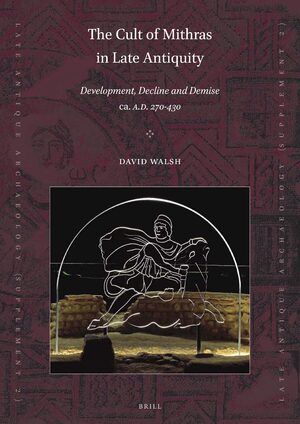
245 14|aThe cult of Mithras in late antiquity :|bdevelopment, decline, and demise circa A.D. 270-430 /|cby David Walsh.
264 1|aLeiden ;|aBoston :|bBrill,|c2018.
300 |a1 online resource.
336 |atext|btxt|2rdacontent
337 |aunmediated|bn|2rdamedia
338 |aonline resource|2rdacarrier
490 0 |aLate Antique Archaeology (Supplementary Series),|x2352-5177 ;|vVOLUME 2
490 0 |aLate Antiquity and Medieval Studies E-Books Online, Collection 2019, ISBN: 9789004386303
504 |aIncludes bibliographical references and index.
505 00|aFront Matter -- Copyright page -- Foreword -- Illustrations -- Abbreviations -- Introduction -- The Development of the Cult of Mithras in Late Antiquity -- The Decline of the Cult I: The Evidence -- The Decline of the Cult II: Explaining the Decline -- The Fate of Mithraea -- Conclusion -- Gazetteer of Mithraea Active in the 4th c. and Those That Exhibit Evidence of Christian Iconoclasm -- Mithraea Constructed and Repaired circa AD 201–400 -- Late Antique Archaeology -- Back Matter -- Bibliography -- Index.
520 |aIn The Cult of Mithras in Late Antiquity David Walsh explores how the cult of Mithras developed across the Third and 4th centuries A.D. and why by the early 5th century the cult had completely disappeared. Contrary to the traditional narrative that the cult was violently persecuted out of existence by Christians, Walsh demonstrates that the cult’s decline was a far more gradual process that resulted from a variety of factors. He also challenges the popular image of the cult as a monolithic entity, highlighting how by the 4th century Mithras had come to mean different things to different people in different places.
650 0|aMithras (Zoroastrian deity)|xCult.
650 0|aMithraism.
776 08|iPrint version:|tThe Cult of Mithras in Late Antiquity|dLeiden ; Boston : BRILL, [2018],|z9789004380806
830 0|aLate Antique Archaeology (Supplementary Series)|v2.
830 0|aLate Antiquity and Medieval Studies E-Books Online, Collection 2019, ISBN: 9789004386303.
856 4 |zDOI:|uhttp://dx.doi.org/10.1163/9789004383067