LEADER 03501nam 2200553 i 4500
001 605728
003 TR_AnAIT
005 20250627092556
006 m d
007 cr un uuuua
008 111219s2012 maua sb 001 0 eng d
010 |a2011052389
020 |a9789004224322|q(electronic book)
020 |z9789004209909|q(print)
024 7 |a10.1163/9789004224322|2DOI
040 |aNL-LeKB|cNL-LeKB|erda
041 |aeng
043 |ae-sp---
049 |aTürk Tarih Kurumu Kütüphanesi
050 4|aDP96|b.W66 2012
072 7|aHIS|x000000|2bisacsh
079 |aocn801443234
082 04|a946.01|223
090 |aDK/0959
100 1 |aWood, Jamie P.,|d1978-
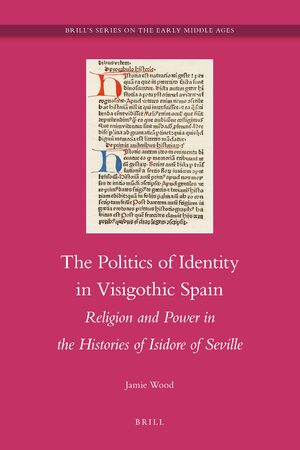
245 14|aThe politics of identity in Visigothic Spain :|breligion and power in the histories of Isidor of Seville /|cby Jamie Wood.
264 1|aLeiden ;|aBoston :|bBrill,|c2012.
300 |a1 online resource (xii, 275 pages) :|billustrations.
336 |atext|btxt|2rdacontent
337 |acomputer|bc|2rdamedia
338 |aonline resource|2rdacarrier
490 1 |aBrill's series on the early Middle Ages,|x1878-4879 ;|vv. 21
504 |aIncludes bibliographical references (p. [243]-269) and index.
505 00|aPreliminary Material -- Introduction -- Iberian Identities: Isidore in Context -- Reception and Reuse: History, Historians and Historiography in the Writings of Isidore of Seville -- A Spanish Homeland: History, Kingship and Conquest in the Histories of Isidore of Seville -- The Hispano-Visigothic Church Triumphant: Religion and Conversion in Isidore’s Histories -- Conclusions -- Bibliography -- Index.
506 |aAvailable to subscribing member institutions only.
520 |aPrevious scholarship has interpreted Bishop Isidore of Seville (d. 636) retrospectively as the architect of the medieval Spanish church, as the father of Spanish identity, and as a key figure in the transmission of Classical and Patristic learning to the Middle Ages. Drawing on recent studies on identity formation in the early medieval period and an upsurge in interest in late antique Spain, this book examines the historical Isidore as a social actor managing a complex web of responsibilities and relationships. A comparative analysis of Isidore's historical works demonstrates that writing about the past was a method for reconciling Visigothic kings, nobles and Spanish bishops in a period of transformation. This results in a fresh portrait of Isidore as motivated, both politically and pastorally, to balance competing interests and ensure the spiritual and material security of the people of Spain.
600 00|aIsidore,|cof Seville, Saint,|dd. 636|xKnowledge|xHistory.
650 0|aVisigoths|zSpain|xHistory.
650 0|aChurch and state|zSpain|xHistory|yTo 1500.
650 0|aNation-building|zSpain|xHistory|yTo 1500.
650 0|aNational characteristics, Spanish.
650 0|aGroup identity|zSpain.
651 0|aSpain|xHistory|yGothic period, 414-711.
651 0|aSpain|xEthnic relations|xHistory|yTo 1500.
651 0|aSpain|xCivilization|yTo 711.
776 08|iPrint version:|tThe Politics of Identity in Visigothic Spain: Religion and Power in the Histories of Isidore of Seville|dLeiden, Boston : BRILL, 2012,|z9789004209909
830 0|aBrill's Series on the Early Middle Ages|v21.
830 0|aEuropean History and Culture E-Books Online, Collection 2012, ISBN: 9789004223257.
856 4 |zDOI:|uhttp://dx.doi.org/10.1163/9789004224322