LEADER 03798nam 2200433 i 4500
001 605766
003 TR_AnAIT
005 20250627092430
006 m d
007 cr un uuuua
008 150220s2015 ne s 000 0 eng d
020 |a9789401212120|q(electronic book)
020 |z9789042039315|q(print)
024 7 |a10.1163/9789401212120|2DOI
035 |a(OCoLC)903803742|z(OCoLC)904036956
040 |aNL-LeKB|cNL-LeKB|erda
041 |aeng
049 |aTürk Tarih Kurumu Kütüphanesi
050 4|aD900|b.M43 2015
072 7|aLIT011000|2bisacsh
082 04|a940.1
090 |aDK/0997
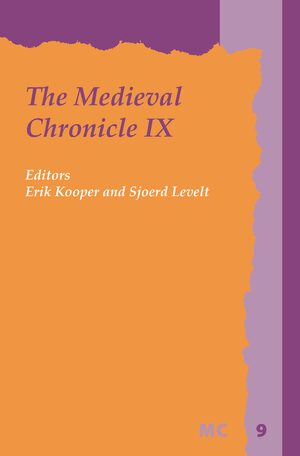
245 04|aThe medieval chronicle IX /|cErik Kooper; Sjoerd Levelt.
264 1|aAmsterdam :|bRodopi B.V.,|c2015.
300 |a1 online resource (324 pages)
336 |atext|btxt|2rdacontent
337 |acomputer|bc|2rdamedia
338 |aonline resource|2rdacarrier
490 1 |aThe Medieval Chronicle ;|v9
505 00|tPreliminary material /|rEditors The Medieval Chronicle IX --|tTHE GENEALOGY OF THE CZECH LUXEMBOURGS IN CONTEMPORARY HISTORIOGRAPHY AND POLITICAL PROPAGANDA /|rMarie Bláhová --|tTHE ANONIMO ROMANO AT HIS DESK: RECOUNTING THE BATTLE OF CRÉCY IN FOURTEENTH-CENTURY ITALY /|rMaurizio Campanelli --|tART AND SCIENCE IN THE MANUSCRIPTS OF MATTHEW PARIS /|rJudith Collard --|tLA REPRESENTATION DU RÈGNE D’ARTHUR DANS LE MANUSCRIT ENLUMINÉ DU BRUT EN PROSE, LONDRES, LAMBETH PALACE 6 (C.1480) /|rIrène Fabry-Tehranchi --|tANALYSE COMPARATIVE DE DEUX REMODELAGES DU CHRONICON DE GUILLAUME DE NANGIS (XIIIE/XIVE S.): RÉÉCRITURES LEXICO-SYNTAXIQUES /|rPer Förnegård --|tSOME NEW REMARKS ON THE HUNGARIAN-POLISH CHRONICLE /|rRyszard Grzesik --|tCONTRIBUTIONS JURIDICTIONNELLES DANS DES SOURCES NARRATIVES HONGROISES DES XIE–XIIIE SIÈCLES /|rGergely Bálint Kiss --|tDER METATEXT DES AUTORS IN DEN CHRONIKEN DER MITTELALTERLICHEN RUS’ UND IN DEN SOG. CONTINUATIONES COSMAE /|rJitka Komendová --|tVISUAL ARGUMENT AND THE INTERPRETATION OF DREAMS IN THE CHRONICLE OF JOHN OF WORCESTER /|rRobert A. Maxwell --|tPILGRIM AND PATRON: CNUT IN POST-CONQUEST HISTORICAL WRITING /|rEleanor Parker --|tTHE BISHOP AND THE EMPEROR: TRACING NARRATIVE INTENT IN OTTO OF FREISING’S GESTA FREDERICI /|rRomedio Schmitz-Esser.
506 |aAvailable to subscribing member institutions only.
520 |aThere are several reasons why the chronicle is particularly suited as the topic of a yearbook. In the first place there is its ubiquity: all over Europe and throughout the Middle Ages chronicles were written, both in Latin and in the vernacular, and not only in Europe but also in the countries neighbouring on it, like those of the Arabic world. Secondly, all chronicles raise such questions as by whom, for whom, or for what purpose were they written, how do they reconstruct the past, what determined the choice of verse or prose, or what kind of literary influences are discernable in them. Finally, many chronicles have been beautifully illuminated, and the relation between text and image leads to a wholly different set of questions. The yearbook The Medieval Chronicle aims to provide a representative survey of the on-going research in the field of chronicle studies, illustrated by examples from specific chronicles from a wide variety of countries, periods and cultural backgrounds. The Medieval Chronicle is published in cooperation with the “Medieval Chronicle Society“.
650 0|aMiddle Ages|xHistoriography.
650 0|aLiterature, Medieval|xHistory and criticism.
700 1 |aKooper, Erik.
700 1 |aLevelt, Sjoerd.
830 0|aThe Medieval Chronicle|v9.
830 0|aEuropean History and Culture E-Books Online, Collection 2015-I, ISBN: 9789004287419.
856 4 |zDOI:|uhttp://dx.doi.org/10.1163/9789401212120