

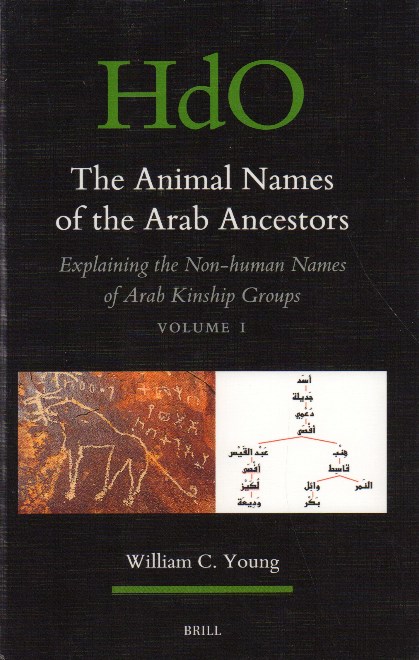
The animal names of the Arab ancestors : explaining the non-human names of Arab kinship groups / by William C. Young.
Yer Numarası
A.IX/7496
ISBN
9789004690363 (hardback, v. 1)
9789004690370 (e-book, v. 1)
9789004690394 (hardback, v. 2, 1)
9789004690400 (e-book, v. 2, 1)
9789004697478 (hardback, v. 2, 2)
9789004697485 (e-book, v. 2, 2)
9789004690370 (e-book, v. 1)
9789004690394 (hardback, v. 2, 1)
9789004690400 (e-book, v. 2, 1)
9789004697478 (hardback, v. 2, 2)
9789004697485 (e-book, v. 2, 2)
Dil Kodu
İngilizce
Kütüphane
Türk Tarih Kurumu Kütüphanesi
Yayın Bilgisi
Leiden ; Boston : Brill, ©2024.
Fiziksel Niteleme
3 cilt (1. c. xix, 540 sayfa ; 2. c. 1. kısım ix, 362 sayfa ; 2. c. 2. kısım ix, sayfa [363]-1240) : şema, tablo ; 24 cm.
Dizi
Handbook of Oriental Studies = Handbuch der Orientalistik. Section one. The Near and Middle East, 0169-9423 ; volume 178/1, 178.2/1, 178.2/2
Genel Not
1. c. İndeks s. [532]-540.
Bibliyografi, vb. Notu
Bibliyografya s. [491]-531 (1. c.).
Özet, vb.
“In the Arab world, people belong to kinship groups (lineages and tribes). Many lineages are named after animals, birds, and plants. Why? This survey evaluates five old explanations - “totemism,“ “emulation of predatory animals,“ “ancestor eponymy,“ “nicknaming,“ and “Bedouin proximity to nature.“ It suggests a new hypothesis: Bedouin tribes use animal names to obscure their internal cleavages. Such tribes wax and wane as they attract and lose allies and clients; they include “attached“ elements as well as actual kin. To prevent outsiders from spotting “attached“ groups, Bedouin tribes scatter non-human names across their segments, making it difficult to link any segment with a human ancestor. Young's argument contributes to theories of tribal organization, Arab identity, onomastics, and Near Eastern kinship.“ -- Arka kapak.
Konu
Dizi Ek Girişi- Tek Biçim Başlık
Handbook of Oriental Studies. Section 1, The Near and Middle East ; volume 178/1, 178.2/1, 178.2/2.
Handbuch der Orientalistik. Section 1, The Near and Middle East ; volume 178/1, 178.2/1, 178.2/2.
HdO. I ; vol. 178/1, 178.2/1, 178.2/2.
Handbuch der Orientalistik. Section 1, The Near and Middle East ; volume 178/1, 178.2/1, 178.2/2.
HdO. I ; vol. 178/1, 178.2/1, 178.2/2.
