LEADER 02428naaaa2200325aa54500
001 606179
003 TR_AnAIT
005 20250627090540
006 aoabee |||| 001 0d
007 ta
008 240528s2021 stkoabee |||| 001 0deng c
020 |a9781474488044|q(hardback)
020 |a9781474488068|q(paperback)
020 |a9781474488075|q(webready PDF)
020 |a9781474488051|q(epub)
040 |aTTK
041 |aeng
049 |aTürk Tarih Kurumu Kütüphanesi
090 |aA.IX/7615
100 1 |aBall, Warwick,|d1951-
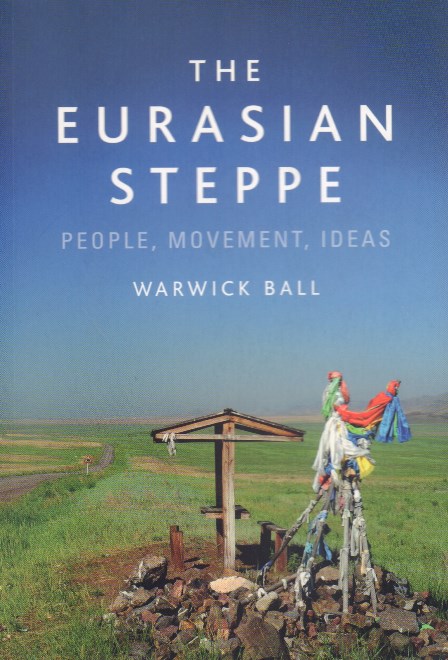
245 14|aThe Eurasian Steppe :|bpeople, movement, ideas /|cWarwick Ball.
260 |aEdinburgh :|bEdinburgh University Press,|c©2021.
300 |axviii, 414 sayfa :|bresim (renkli), çizim, harita, plan, tıpkıbasım ;|c24 cm
500 |aİndeks s. [394]-414.
504 |aBibliyografya s. [368]-393.
504 |aBibliyografik notlar s. [346]-367.
520 |a“Tells the story of the Eurasian steppe, from legends of Amazons and Gog and Magog to its effects on Europe in the 21st century. Shows how the history, languages, ideas, art forms, peoples, nations and identities of the steppe have shaped almost every aspect of the life of Europe. Explores the history of steppe peoples, from the Scythians to the Mongols, with discussion of both earlier and later movements. Looks at the art of the steppe, from animal style to avant-garde, and explores how Scythian art influenced Chinese, Persian, Anatolian, Greek and Russian art. Draws on historical, archaeological and art-historical sources to build a picture of life on the steppe from prehistory to the present. Read an extract from chapter 6, Scythian Gold, on the Edinburgh University Press blog. A geographical area, not a political entity, the steppe connects the western and eastern parts of the Eurasian land mass. As such, it is always open, subject to constant movement between Asia and Europe. Steppe peoples such as Huns, Avars and Turks changed the course of European history, while others such as Finns, Magyars and Bulgars form European nations. The steppe saw the world's only Jewish Empire, while the Mongols conquered an empire from the Pacific to the Mediterranean. Indeed, Europe's largest nation, Russia, was formed from the fusion of Eurasian nomadic and European sedentary elements.” --|cYayıncı.
650 4|aAvrasya halkları|zAvrasya|xTarih.
651 4|aAvrasya|xMedeniyet|xTarih.