LEADER 02070naaaa2200337aa54500
001 606183
003 TR_AnAIT
005 20250627090529
006 aobede |||| 001 0d
007 ta
008 240527s2022 stkobede |||| 001 0deng c
020 |a9781474499347|q(hardback)
020 |a9781474499361|q(webready PDF)
020 |a9781474499378|q(epub)
040 |aTTK
041 |aeng
049 |aTürk Tarih Kurumu Kütüphanesi
090 |aA.IX/7611
100 1 |aMahendrarajah, Shivan.
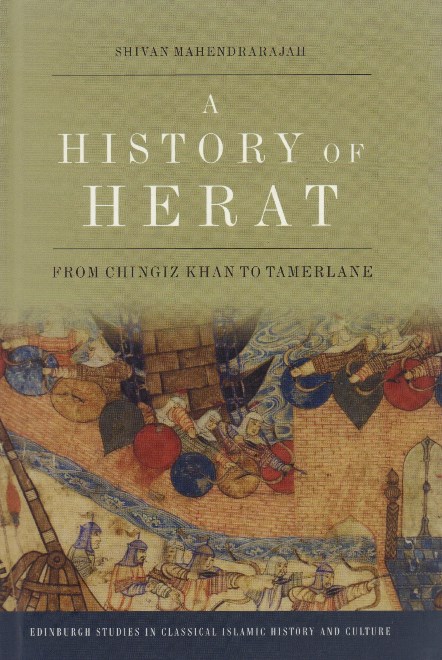
245 12|aA history of Herat :|bfrom Chingiz Khan to Tamerlane /|cShivan Mahendrarajah.
260 |aEdinburgh :|bEdinburgh University Press,|c2022.
300 |axiv, 379 sayfa :|bresim, harita, plan, şema, tablo ;|c24 cm.
490 0 |aEdinburgh studies in classical Islamic history and culture
500 |aSözlük s. [314]-318.
500 |aİndeks s. [366]-379.
504 |aBibliyografya s. [341]-365.
520 |a“This book tells the history of Herat, from its desolation under Chingiz Khan in 1222, to its capitulation to Tamerlane in 1381. Unlike the other three quarters of Khurasan (Balkh, Marw, Nishapur), which were ravaged by the Mongols, Herat became an important political, cultural and economic centre of the eastern Islamic world. The post-Mongol age in which an autochthonous Tajik dynasty, the Kartids, ruled the region set the foundations for Herat's Timurid-era splendors.Divided into two parts (a political-military history and a social-economic history), the book explains why the Mongol Empire rebuilt Herat: its rationales and approaches; and Chinggisid internecine conflicts that impacted on Herat's people. It analyses the roles of Iranians, Turks and Mongols in regional politics; in devising fortifications; in restoring commercial and cultural edifices; and in resuscitating economic and cultural activities in the Herat Quarter.” --|cYayıncı.
651 4|aHerat (Afganistan)|xTarih|y1222-1381.
651 4|aHerat (Afganistan)|xEkonomik durum|y1222-1381.
651 4|aHerat (Afganistan)|xSosyal durum|y1222-1381.