LEADER 02737naaaa2200361aa54500
001 606408
003 TR_AnAIT
005 20250627085506
006 a||||e |||| 001 0d
007 ta
008 240614s2023 enk||||e |||| 001 0deng c
020 |a9780755647682|q(HB)
020 |a9780755647699|q(ePDF)
020 |a9780755647705|q(eBook)
040 |aTTK
041 |aeng
049 |aTürk Tarih Kurumu Kütüphanesi
090 |aA.IX/7775
100 1 |aTaylor, Malissa.
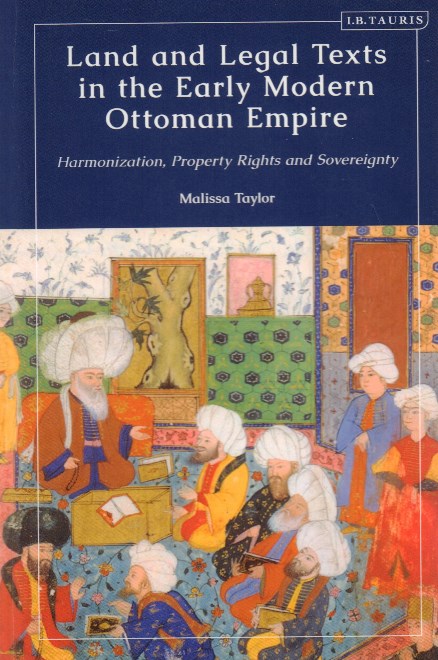
245 10|aLand and legal texts in the early modern Ottoman Empire :|bharmonization, property rights and sovereignty /|cMalissa Taylor.
250 |aFirst published.
260 |aLondon, UK ;|aNew York, NY :|bI.B. Tauris,|c2023.
300 |ax, 203 sayfa ;|c24 cm.
490 0 |aThe Ottoman Empire and the world
500 |aİndeks s. [197]-203.
504 |aSeçilmiş bibliyografya s. [181]-196.
504 |aBibliyografik notlar s. [129]-179.
505 |tLifelong tasarruf, land tenure practices, and law over the longue durée --|tConquering a new terrain : Establishing the sultan's legislative authority --|tCanonical voices : Discretion and analogy in the formation of the harmony tradition of land tenure --|t'The books of fiqh' : The Kanunname of Candia and the consolidation of a new doctrine in Hanafi academic texts --|tThe age of the mutasarrifs : Diffusion, rights and discretion in the eighteenth century --|tFrom harmony to uniformity: Defensive sovereignty and the Ottoman nineteenth-century reforms.
520 |a“Using Arabic and Ottoman Turkish sources drawn from three genres of legal text, this book is the first full-length study in decades to investigate the evolution of Ottoman land law from its “classical“ articulation in the sixteenth century to its reformulation in the 1858 Land Code. The book demonstrates that well before the nineteenth century the tradition of Ottoman land tenure law had developed an indigenous form of property right that would remain intact in the Land Code. In addition, the rising consensus of the jurists that the sultan was the source of the land law paved the way for the wider legislative authority that the Ottoman state would increasingly assert in the Tanzimat period of reform. Demonstrating the profound and ongoing adaptation of a legal tradition that was at once both Ottoman and Islamic, it revises our understanding of the relationship between the modern Islamic world and its early modern past, and what kind of intervention was represented by reform in the nineteenth century“ --|cArka kapak.
650 4|aGayrimenkul|zTürkiye|xTarih.
650 4|aArazi mülkiyeti|zTürkiye|xTarih.
651 4|aTürkiye|xTarih|zOsmanlı İmparatorluğu, 1299-1918.