LEADER 02747namaa22003378a 4500
001 606835
003 TR_AnAIT
005 20250627083537
006 aob||e ||||o001 0
007 ta
008 241113s2024 xxkob||e ||||o001 0 eng c
020 |a9781009253703|q(hardback)
020 |a9781009253666|q(paperback)
020 |a9781009253673|q(epub)
041 |aeng
049 |aTürk Tarih Kurumu Kütüphanesi
090 |aA.IX/8837
100 1 |aChoudhury, Rishad,|d1984.
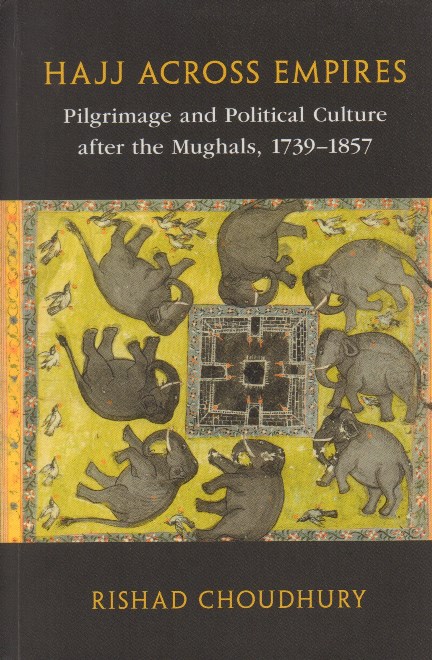
245 10|aHajj across empires :|bpilgrimage and political culture after the Mughals, 1739-1857 /|cRishad Choudhury.
250 |aFirst published [1. baskı].
260 |aCambridge, United Kingdom :|bCambridge University Press,|c2024.
300 |axxi, 351, [2] sayfa :|bresim, harita ;|c24 cm.
490 0 |aAsian connections ;|v14
500 |aİndeks s. 343-351.
504 |aBibliyografya s. 303-342.
505 |tIntroduction: Hajj in the crisis of empire --|gPart I.|tDEPARTURES: EXPERIENCES AND EXCHANGES IN THE INDIAN OCEAN.|g1.|tPilgrim passages --|g2.|tThe hajj bazaar economy --|gPART II.|tCROSSINGS: IDEOLOGIES AND INSTITUTIONS ACROSS EMPIRES.|g3.|tThe ʻulama on hajj --|g4.|tHindi sufis and the hajj --|gPART III.|tRETURNS: STATES BETWEEN HOME AND THE HARAMAIN.|g5.|tThe company raj and the hajjis --|g6.|tRoutes of the Muslim state --|g7.|tFaqirs and fanatics, or, reconfiguring pilgrimage and political culture --|tConclusion: the hajj and the ends of the Mughal World.
520 |a“Rishad Choudhury presents a new history of imperial connections across the Indian Ocean from 1739 to 1857, a period that witnessed the decline and collapse of Mughal rule and the consolidation of British colonialism in South Asia. In this highly original and comprehensive study, he reveals how the hajj pilgrimage significantly transformed Muslim political culture and colonial attitudes towards it, creating new ideas of religion and rule. Examining links between the Indian Subcontinent and the Ottoman Middle East through multilingual sources – from first-hand accounts to administrative archives of hajj – Choudhury uncovers a striking array of pilgrims who leveraged their experiences and exchanges abroad to address the decline and decentralization of an Islamic old regime at home. Hajjis crucially mediated the birth of modern Muslim political traditions around South Asia. Hajj across Empires argues they did so by channeling inter-imperial crosscurrents to successive surges of imperial revolution and regional regime change“ --|cYayıncı.
650 4|aMüslüman hacılar ve hac|zSuudi Arabistan|zMekke|xTarih.
651 4|aBabür İmparatorluğu|xMedeniyet|y18. yy.
651 4|aBabür İmparatorluğu|xMedeniyet|y19. yy.