

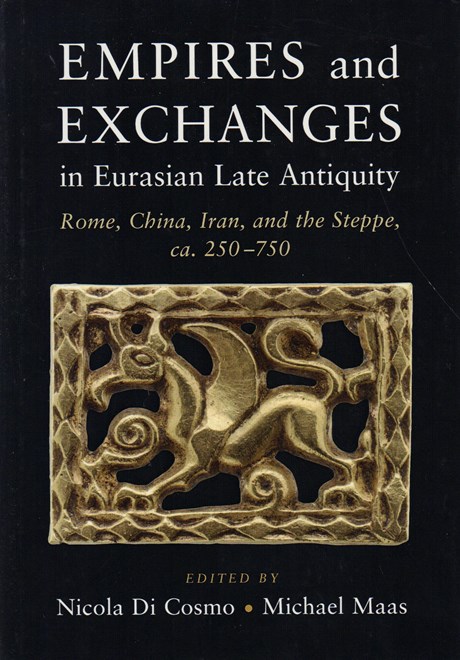
Empires and exchanges in Eurasian late antiquity : Rome, China, Iran, and the steppe, ca. 250-750 / edited by Nicola Di Cosmo, Institute for Advanced Study, Princeton, Michael Maas, Rice University.
Yer Numarası
B.II/0282
ISBN
9781107094345
Dil Kodu
İngilizce
Kütüphane
Türk Tarih Kurumu Kütüphanesi
Yayın Bilgisi
Cambridge, United Kingdom : Cambridge University Press, 2018.
Fiziksel Niteleme
xxxvii, 504 sayfa : resim, harita, tıpkıbasım ; 26 cm
Genel Not
Sözlük ve Çince terimler s. 431-438.
İndeks s. 487-504.
İndeks s. 487-504.
Bibliyografi, vb. Notu
Bibliyografya s. 439-486.
İçindekiler Notu
Introduction / Nicola Di Cosmo and Michael Maas -- How the steppes became Byzantine: Rome and the Eurasian nomads in historical perspective / Michael Maas -- The relations between China and the Steppe from the Xiongnu to the Turk Empire / Nicola Di cosmo -- Sasanian Iran and the projection of power in Late Antique Eurasia: competing cosmologies and topographies of power / Matthew P. Canepa -- Trade and exchanges along the silk and Steppe routes in Late Antique Eurasia / Richard Lim -- Sogdian merchants and Sogdian culture on the Silk Road / Rong Xinjiang -- “Charismatic“ goods: commerce, diplomacy, and cultural contacts along the Silk Road in Late Antiquity / Peter Brown -- The synthesis of the Tang dynasty: the culmination of China's contacts and communication with Eurasia, 310-755 CE -- Giusto traina central asia in the late roman mental map, second to sixth centuries / Valerie Hansen -- Genetic history and migrations in Western Eurasia, 500-1000 / Patrick J. Geary -- Northern invaders: migration and conquest as scholarly topos in Eurasian history / Michael KulikowsKi -- Chinese and inner Asian perspectives on the history of the Northern Dynasties (386-589 CE) in Chinese historiography / Luo Xin -- Xiongnu and Huns: archaeological perspectives on a centuries-old debate about identity and migration / Ursula Brosseder -- Ethnicity and Empire in the Western Eurasian Steppes / Walter Pohl -- The languages of Christianity on the Silk Roads and the transmission of mediterranean culture into Central Asia / Scott Fitzgerald Johnson -- The spread of Buddhist culture to China between the third and seventh century / Max Deeg -- The circulation of astrological lore and its political use between the Roman East, Sasanian Iran, Central Asia, and the Turks / Frantz Grenet -- Luminous markers: pearls and royal authority in Late Antique Iran and Eurasia / Joel Walker -- Byzantium's Eurasian policy in the age of the Turk Empire / Mark Whittow -- Sasanian Iran and its Northeastern frontier: offense, defense, and diplomatic entente / Daniel T. Potts -- Infrastructures of legitimacy in Inner Asia: the Early Turk Empires / Michael R. Drompp -- The stateless nomads of Central Eurasia / Peter B. Golden -- Aspects of elite representation among the sixth- to seventh-century Turks / Soren Stark -- Patterns of Roman diplomacy with Iran and the Steppe peoples / Ekaterina Nechaeva -- Collapse of a Eurasian Hybrid: the case of the Northern Wei / Andrew Eisenberg -- Ideological interweaving in Eastern Eurasia: simultaneous kingship and dynastic competition, 580-755 / Jonathan Karam Skaff -- Followers and leaders in Northeastern Eurasia, ca. seventh to tenth centuries / Naomi Standen -- Epilogue / Averil Cameron.
Özet, vb.
“The second phase of Roman-steppe relations began during the latter part of the fourth century, when Hunnic groups entered the western steppes, and lasted through the early sixth century. This “Age of Attila“ saw major shifts throughout Western Eurasia. Several decades after the battle of Adrianople, Huns moved into Europe and became unified early in the fifth century with a center of power in the Hungarian plain“-- Yayıncı.
Konu
Emeği Geçenler
Di Cosmo, Nicola, 1957- editör.
Maas, Michael, 1951- editör.
Maas, Michael, 1951- editör.
Eseri Alıntıla
Referansları kullanmadan önce gözden geçirmeniz ve varsa gerekli düzeltmeleri yapmanız önerilir.
Dijital Kaynak
MARC Görünümü
LEADER 04494namaa22003378a44500
001 606838
003 TR_AnAIT
005 20250627083522
006 obl|e ||||o001 0
007 ta
008 241113s2018 xxkobl|e ||||o001 0 eng c
020 |a9781107094345
041 |aeng
049 |aTürk Tarih Kurumu Kütüphanesi
090 |aB.II/0282
245 00|aEmpires and exchanges in Eurasian late antiquity :|bRome, China, Iran, and the steppe, ca. 250-750 /|cedited by Nicola Di Cosmo, Institute for Advanced Study, Princeton, Michael Maas, Rice University.
260 |aCambridge, United Kingdom :|bCambridge University Press,|c2018.
300 |axxxvii, 504 sayfa :|bresim, harita, tıpkıbasım ;|c26 cm
500 |aSözlük ve Çince terimler s. 431-438.
500 |aİndeks s. 487-504.
504 |aBibliyografya s. 439-486.
505 |tIntroduction /|rNicola Di Cosmo and Michael Maas --|tHow the steppes became Byzantine: Rome and the Eurasian nomads in historical perspective /|rMichael Maas --|tThe relations between China and the Steppe from the Xiongnu to the Turk Empire /|rNicola Di cosmo --|tSasanian Iran and the projection of power in Late Antique Eurasia: competing cosmologies and topographies of power /|rMatthew P. Canepa --|tTrade and exchanges along the silk and Steppe routes in Late Antique Eurasia /|rRichard Lim --|tSogdian merchants and Sogdian culture on the Silk Road /|rRong Xinjiang --|t“Charismatic“ goods: commerce, diplomacy, and cultural contacts along the Silk Road in Late Antiquity /|rPeter Brown --|tThe synthesis of the Tang dynasty: the culmination of China's contacts and communication with Eurasia, 310-755 CE --|tGiusto traina central asia in the late roman mental map, second to sixth centuries /|rValerie Hansen --|tGenetic history and migrations in Western Eurasia, 500-1000 /|rPatrick J. Geary --|tNorthern invaders: migration and conquest as scholarly topos in Eurasian history /|rMichael KulikowsKi --|tChinese and inner Asian perspectives on the history of the Northern Dynasties (386-589 CE) in Chinese historiography /|rLuo Xin --|tXiongnu and Huns: archaeological perspectives on a centuries-old debate about identity and migration /|rUrsula Brosseder --|tEthnicity and Empire in the Western Eurasian Steppes /|rWalter Pohl --|tThe languages of Christianity on the Silk Roads and the transmission of mediterranean culture into Central Asia /|rScott Fitzgerald Johnson --|tThe spread of Buddhist culture to China between the third and seventh century /|rMax Deeg --|tThe circulation of astrological lore and its political use between the Roman East, Sasanian Iran, Central Asia, and the Turks /|rFrantz Grenet --|tLuminous markers: pearls and royal authority in Late Antique Iran and Eurasia /|rJoel Walker --|tByzantium's Eurasian policy in the age of the Turk Empire /|rMark Whittow --|tSasanian Iran and its Northeastern frontier: offense, defense, and diplomatic entente /|rDaniel T. Potts --|tInfrastructures of legitimacy in Inner Asia: the Early Turk Empires /|rMichael R. Drompp --|tThe stateless nomads of Central Eurasia /|rPeter B. Golden --|tAspects of elite representation among the sixth- to seventh-century Turks /|rSoren Stark --|tPatterns of Roman diplomacy with Iran and the Steppe peoples /|rEkaterina Nechaeva --|tCollapse of a Eurasian Hybrid: the case of the Northern Wei /|rAndrew Eisenberg --|tIdeological interweaving in Eastern Eurasia: simultaneous kingship and dynastic competition, 580-755 /|rJonathan Karam Skaff --|tFollowers and leaders in Northeastern Eurasia, ca. seventh to tenth centuries /|rNaomi Standen --|tEpilogue /|rAveril Cameron.
520 |a“The second phase of Roman-steppe relations began during the latter part of the fourth century, when Hunnic groups entered the western steppes, and lasted through the early sixth century. This “Age of Attila“ saw major shifts throughout Western Eurasia. Several decades after the battle of Adrianople, Huns moved into Europe and became unified early in the fifth century with a center of power in the Hungarian plain“--|cYayıncı.
650 4|aKültürlerarası iletişim|zAvrasya|xTarih|y1500'e kadar.
650 4|aTicaret|xTarih|y1500'e kadar.
651 4|aAvrasya|xTarih|y1500’e kadar.
651 4|aOrta Doğu|xTarih|y622'ye kadar.
651 4|aRoma|xTarih|yİmparatorluk, MÖ 30-MS 476.
651 4|aÇin|xTarih|yMÖ 221-MS 960.
700 1 |aDi Cosmo, Nicola,|d1957-|eeditör.
700 1 |aMaas, Michael,|d1951-|eeditör.
001 606838
003 TR_AnAIT
005 20250627083522
006 obl|e ||||o001 0
007 ta
008 241113s2018 xxkobl|e ||||o001 0 eng c
020 |a9781107094345
041 |aeng
049 |aTürk Tarih Kurumu Kütüphanesi
090 |aB.II/0282
245 00|aEmpires and exchanges in Eurasian late antiquity :|bRome, China, Iran, and the steppe, ca. 250-750 /|cedited by Nicola Di Cosmo, Institute for Advanced Study, Princeton, Michael Maas, Rice University.
260 |aCambridge, United Kingdom :|bCambridge University Press,|c2018.
300 |axxxvii, 504 sayfa :|bresim, harita, tıpkıbasım ;|c26 cm
500 |aSözlük ve Çince terimler s. 431-438.
500 |aİndeks s. 487-504.
504 |aBibliyografya s. 439-486.
505 |tIntroduction /|rNicola Di Cosmo and Michael Maas --|tHow the steppes became Byzantine: Rome and the Eurasian nomads in historical perspective /|rMichael Maas --|tThe relations between China and the Steppe from the Xiongnu to the Turk Empire /|rNicola Di cosmo --|tSasanian Iran and the projection of power in Late Antique Eurasia: competing cosmologies and topographies of power /|rMatthew P. Canepa --|tTrade and exchanges along the silk and Steppe routes in Late Antique Eurasia /|rRichard Lim --|tSogdian merchants and Sogdian culture on the Silk Road /|rRong Xinjiang --|t“Charismatic“ goods: commerce, diplomacy, and cultural contacts along the Silk Road in Late Antiquity /|rPeter Brown --|tThe synthesis of the Tang dynasty: the culmination of China's contacts and communication with Eurasia, 310-755 CE --|tGiusto traina central asia in the late roman mental map, second to sixth centuries /|rValerie Hansen --|tGenetic history and migrations in Western Eurasia, 500-1000 /|rPatrick J. Geary --|tNorthern invaders: migration and conquest as scholarly topos in Eurasian history /|rMichael KulikowsKi --|tChinese and inner Asian perspectives on the history of the Northern Dynasties (386-589 CE) in Chinese historiography /|rLuo Xin --|tXiongnu and Huns: archaeological perspectives on a centuries-old debate about identity and migration /|rUrsula Brosseder --|tEthnicity and Empire in the Western Eurasian Steppes /|rWalter Pohl --|tThe languages of Christianity on the Silk Roads and the transmission of mediterranean culture into Central Asia /|rScott Fitzgerald Johnson --|tThe spread of Buddhist culture to China between the third and seventh century /|rMax Deeg --|tThe circulation of astrological lore and its political use between the Roman East, Sasanian Iran, Central Asia, and the Turks /|rFrantz Grenet --|tLuminous markers: pearls and royal authority in Late Antique Iran and Eurasia /|rJoel Walker --|tByzantium's Eurasian policy in the age of the Turk Empire /|rMark Whittow --|tSasanian Iran and its Northeastern frontier: offense, defense, and diplomatic entente /|rDaniel T. Potts --|tInfrastructures of legitimacy in Inner Asia: the Early Turk Empires /|rMichael R. Drompp --|tThe stateless nomads of Central Eurasia /|rPeter B. Golden --|tAspects of elite representation among the sixth- to seventh-century Turks /|rSoren Stark --|tPatterns of Roman diplomacy with Iran and the Steppe peoples /|rEkaterina Nechaeva --|tCollapse of a Eurasian Hybrid: the case of the Northern Wei /|rAndrew Eisenberg --|tIdeological interweaving in Eastern Eurasia: simultaneous kingship and dynastic competition, 580-755 /|rJonathan Karam Skaff --|tFollowers and leaders in Northeastern Eurasia, ca. seventh to tenth centuries /|rNaomi Standen --|tEpilogue /|rAveril Cameron.
520 |a“The second phase of Roman-steppe relations began during the latter part of the fourth century, when Hunnic groups entered the western steppes, and lasted through the early sixth century. This “Age of Attila“ saw major shifts throughout Western Eurasia. Several decades after the battle of Adrianople, Huns moved into Europe and became unified early in the fifth century with a center of power in the Hungarian plain“--|cYayıncı.
650 4|aKültürlerarası iletişim|zAvrasya|xTarih|y1500'e kadar.
650 4|aTicaret|xTarih|y1500'e kadar.
651 4|aAvrasya|xTarih|y1500’e kadar.
651 4|aOrta Doğu|xTarih|y622'ye kadar.
651 4|aRoma|xTarih|yİmparatorluk, MÖ 30-MS 476.
651 4|aÇin|xTarih|yMÖ 221-MS 960.
700 1 |aDi Cosmo, Nicola,|d1957-|eeditör.
700 1 |aMaas, Michael,|d1951-|eeditör.
Materyaller
Depodan talep edilen materyal sadece kütüphane içerisinde kullanılmaktadır.
Materyal dışarıya ödünç verilmemektedir.
Materyal dışarıya ödünç verilmemektedir.
