

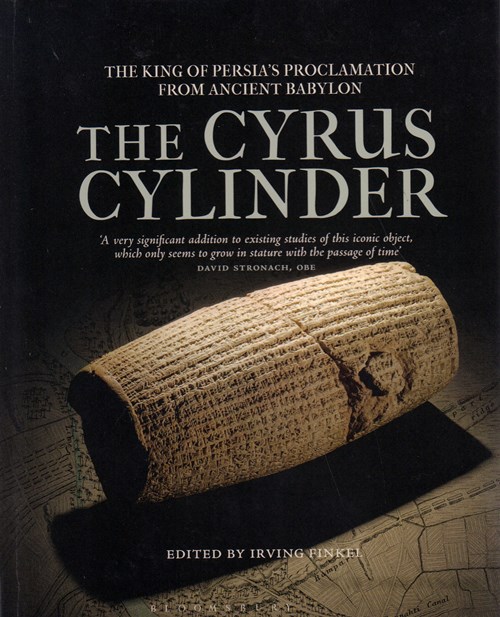
The Cyrus cylinder : the king of Persia's proclamation from ancient Babylon / edited by Irving Finkel.
Yer Numarası
B.II/0281
ISBN
9781350297050
Dil Kodu
İngilizce
Kütüphane
Türk Tarih Kurumu Kütüphanesi
Yayın Bilgisi
London ; New York : Bloomsbury Academic, 2022.
Fiziksel Niteleme
xi, 144 sayfa : resim (çoğu renkli), portre, harita, plan, tıpkıbasım, tablo ; 26 cm
Genel Not
İndeks s. [141]-144.
Bibliyografi, vb. Notu
Bibliyografya s. [137]-140.
İçindekiler Notu
Preface / Jonathan Tubb -- Introduction / Irving Finkel -- The Cyrus Cylinder : The Babylonian perspective / Irving Finkel -- The Cyrus Cylinder : discovery / Jonathan Taylor -- The Cyrus Cylinder : display and replica / St John Simpson -- The Cyrus Cylinder : the creation of an icon and its loan to Tehran / John Curtis -- The Cyrus Cylinder : a Persian perspective / Shahrokh Razmjou -- Afterword / Irving Finkel -- Appendix : Transliteration of the Cyrus Cylinder text / Irving Finkel.
Özet, vb.
“Some historical artefacts are destined forever to alter how the ancient world is perceived. The unearthing in today's Iraq (in 1879) of a clay cylinder-shaped decree from Cyrus the Great, founder of the Achaemenid dynasty of Persia, stands in the same tradition of game-changing discoveries from antiquity as Hammurabi's famous law code or the intact tomb of the boy-king Tutankhamun. For the Cyrus Cylinder contains in microcosm the whole history of its period. Inscribed with an account of the conquest of Babylon in 539 BC by the Persian king, it records an event which launched one of the greatest imperial adventures in history. It describes Cyrus' capture and deposition of Nabonidus, last native Babylonian ruler (represented by the Cylinder text as an oppressor of his own people), and proclaims the Persian, aided by the god Marduk, as a liberator. His annexation of Babylon was to become the platform upon which the Achaemenid military machine built its later vast imperium.
But the Cylinder is more than an ancient exercise in propaganda. It has been celebrated as the world's first declaration of human rights, and an international symbol of religious tolerance, setting out the decree from which Cyrus freed the Jews in Babylon: an event recorded by Isaiah. Few other objects from antiquity are invested with so many hopes for the future. This important volume is the first to discuss the Cylinder and its remarkable history. Written by internationally respected authorities from the British Museum, it offers a fresh consideration of its subject in the light of new discoveries. Included here is a complete new translation of the Cylinder inscription using recently identified but previously unpublished sources. Archive materials have allowed a fresh investigation of the circumstances of the original nineteenth-century find by Hormuzd Rassam, and a reappraisal of the mysterious 'Chinese bone' forgeries. The book also discusses the extraordinary and evolving history of Cyrus' timeless message: a message that continues powerfully to resonate.” -- Yayıncı.
Konu
Emeği Geçenler
Finkel, Irving L., 1951- editör.
Eseri Alıntıla
Referansları kullanmadan önce gözden geçirmeniz ve varsa gerekli düzeltmeleri yapmanız önerilir.
Dijital Kaynak
MARC Görünümü
LEADER 03595naaaa2200313aa54500
001 606841
003 TR_AnAIT
005 20250627083513
006 aocbee |||| 001 0d
007 ta
008 241120s2022 enkocbee |||| 001 0deng c
020 |a9781350297050
040 |aTTK
041 |aeng
049 |aTürk Tarih Kurumu Kütüphanesi
090 |aB.II/0281
245 04|aThe Cyrus cylinder :|bthe king of Persia's proclamation from ancient Babylon /|cedited by Irving Finkel.
260 |aLondon ;|aNew York :|bBloomsbury Academic,|c2022.
300 |axi, 144 sayfa :|bresim (çoğu renkli), portre, harita, plan, tıpkıbasım, tablo ;|c26 cm
500 |aİndeks s. [141]-144.
504 |aBibliyografya s. [137]-140.
505 |tPreface /|rJonathan Tubb --|tIntroduction /|rIrving Finkel --|tThe Cyrus Cylinder : The Babylonian perspective /|rIrving Finkel --|tThe Cyrus Cylinder : discovery /|rJonathan Taylor --|tThe Cyrus Cylinder : display and replica /|rSt John Simpson --|tThe Cyrus Cylinder : the creation of an icon and its loan to Tehran /|rJohn Curtis --|tThe Cyrus Cylinder : a Persian perspective / Shahrokh Razmjou --|tAfterword /|rIrving Finkel --|tAppendix : Transliteration of the Cyrus Cylinder text /|rIrving Finkel.
520 |a“Some historical artefacts are destined forever to alter how the ancient world is perceived. The unearthing in today's Iraq (in 1879) of a clay cylinder-shaped decree from Cyrus the Great, founder of the Achaemenid dynasty of Persia, stands in the same tradition of game-changing discoveries from antiquity as Hammurabi's famous law code or the intact tomb of the boy-king Tutankhamun. For the Cyrus Cylinder contains in microcosm the whole history of its period. Inscribed with an account of the conquest of Babylon in 539 BC by the Persian king, it records an event which launched one of the greatest imperial adventures in history. It describes Cyrus' capture and deposition of Nabonidus, last native Babylonian ruler (represented by the Cylinder text as an oppressor of his own people), and proclaims the Persian, aided by the god Marduk, as a liberator. His annexation of Babylon was to become the platform upon which the Achaemenid military machine built its later vast imperium.
But the Cylinder is more than an ancient exercise in propaganda. It has been celebrated as the world's first declaration of human rights, and an international symbol of religious tolerance, setting out the decree from which Cyrus freed the Jews in Babylon: an event recorded by Isaiah. Few other objects from antiquity are invested with so many hopes for the future. This important volume is the first to discuss the Cylinder and its remarkable history. Written by internationally respected authorities from the British Museum, it offers a fresh consideration of its subject in the light of new discoveries. Included here is a complete new translation of the Cylinder inscription using recently identified but previously unpublished sources. Archive materials have allowed a fresh investigation of the circumstances of the original nineteenth-century find by Hormuzd Rassam, and a reappraisal of the mysterious 'Chinese bone' forgeries. The book also discusses the extraordinary and evolving history of Cyrus' timeless message: a message that continues powerfully to resonate.” --|cYayıncı.
600 04|aCyrus II (Pers Kralı ; MÖ ?-530)
600 04|aBüyük Kiros (Pers Kralı ; MÖ ?-530)
650 4|aAkad yazıtları.
651 4|aAhameniş İmparatorluğu, MÖ 550-330.
700 1 |aFinkel, Irving L.,|d1951-|eeditör.
001 606841
003 TR_AnAIT
005 20250627083513
006 aocbee |||| 001 0d
007 ta
008 241120s2022 enkocbee |||| 001 0deng c
020 |a9781350297050
040 |aTTK
041 |aeng
049 |aTürk Tarih Kurumu Kütüphanesi
090 |aB.II/0281
245 04|aThe Cyrus cylinder :|bthe king of Persia's proclamation from ancient Babylon /|cedited by Irving Finkel.
260 |aLondon ;|aNew York :|bBloomsbury Academic,|c2022.
300 |axi, 144 sayfa :|bresim (çoğu renkli), portre, harita, plan, tıpkıbasım, tablo ;|c26 cm
500 |aİndeks s. [141]-144.
504 |aBibliyografya s. [137]-140.
505 |tPreface /|rJonathan Tubb --|tIntroduction /|rIrving Finkel --|tThe Cyrus Cylinder : The Babylonian perspective /|rIrving Finkel --|tThe Cyrus Cylinder : discovery /|rJonathan Taylor --|tThe Cyrus Cylinder : display and replica /|rSt John Simpson --|tThe Cyrus Cylinder : the creation of an icon and its loan to Tehran /|rJohn Curtis --|tThe Cyrus Cylinder : a Persian perspective / Shahrokh Razmjou --|tAfterword /|rIrving Finkel --|tAppendix : Transliteration of the Cyrus Cylinder text /|rIrving Finkel.
520 |a“Some historical artefacts are destined forever to alter how the ancient world is perceived. The unearthing in today's Iraq (in 1879) of a clay cylinder-shaped decree from Cyrus the Great, founder of the Achaemenid dynasty of Persia, stands in the same tradition of game-changing discoveries from antiquity as Hammurabi's famous law code or the intact tomb of the boy-king Tutankhamun. For the Cyrus Cylinder contains in microcosm the whole history of its period. Inscribed with an account of the conquest of Babylon in 539 BC by the Persian king, it records an event which launched one of the greatest imperial adventures in history. It describes Cyrus' capture and deposition of Nabonidus, last native Babylonian ruler (represented by the Cylinder text as an oppressor of his own people), and proclaims the Persian, aided by the god Marduk, as a liberator. His annexation of Babylon was to become the platform upon which the Achaemenid military machine built its later vast imperium.
But the Cylinder is more than an ancient exercise in propaganda. It has been celebrated as the world's first declaration of human rights, and an international symbol of religious tolerance, setting out the decree from which Cyrus freed the Jews in Babylon: an event recorded by Isaiah. Few other objects from antiquity are invested with so many hopes for the future. This important volume is the first to discuss the Cylinder and its remarkable history. Written by internationally respected authorities from the British Museum, it offers a fresh consideration of its subject in the light of new discoveries. Included here is a complete new translation of the Cylinder inscription using recently identified but previously unpublished sources. Archive materials have allowed a fresh investigation of the circumstances of the original nineteenth-century find by Hormuzd Rassam, and a reappraisal of the mysterious 'Chinese bone' forgeries. The book also discusses the extraordinary and evolving history of Cyrus' timeless message: a message that continues powerfully to resonate.” --|cYayıncı.
600 04|aCyrus II (Pers Kralı ; MÖ ?-530)
600 04|aBüyük Kiros (Pers Kralı ; MÖ ?-530)
650 4|aAkad yazıtları.
651 4|aAhameniş İmparatorluğu, MÖ 550-330.
700 1 |aFinkel, Irving L.,|d1951-|eeditör.
Materyaller
Depodan talep edilen materyal sadece kütüphane içerisinde kullanılmaktadır.
Materyal dışarıya ödünç verilmemektedir.
Materyal dışarıya ödünç verilmemektedir.
