LEADER 02233nam 22003138a 4500
001 606844
003 TR_AnAIT
005 20250627083506
020 |a9781399520638|q(hardback)
020 |a9781399520652|q(webready PDF)
020 |a9781399520669|q(epub)
040 |aTTK
041 |aeng
049 |aTürk Tarih Kurumu Kütüphanesi
090 |aA.IX/8475
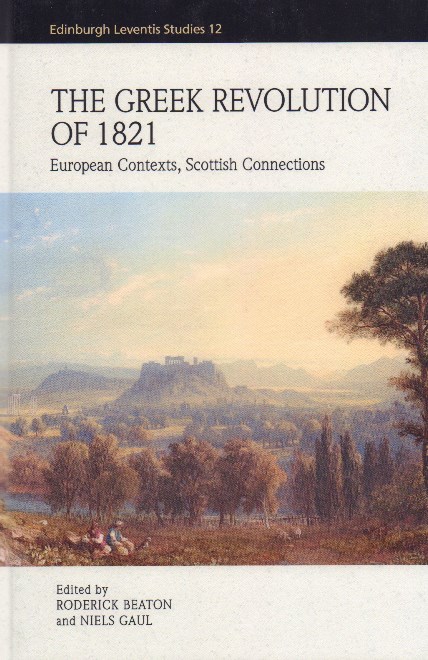
245 00|aThe Greek revolution of 1821 :|bEuropean contexts, Scottish connections /|cedited by Roderick Beaton and Niels Gaul.
260 |aEdinburg :|bEdinburgh University Press,|c©2024.
300 |axvi, 405 sayfa :|bresim (kimi renkli), tablo ;|c24 cm
490 1 |aEdinburgh Leventis studies ;|v12
500 |aİndeks s. [391]-405.
504 |aBibliyografya makale sonlarındadır.
520 |a''Political history and history of ideas, art history, theories of nations and nationalism, Classical Reception studies, modern Greek history and modern Scottish history come together in this collection of essays by experts in all these fields. The starting point for the volume is the bicentenary of the Greek Revolution (1821–1832), for the first time linked to the cultural and intellectual history of Scotland, and particularly of Edinburgh, during roughly the same period. The book’s two parts respectively contextualise the struggle for Greek national independence in space and time, and explore the engagement of Scots with Greece during the period, as well as parallels between the two nations. Throughout, the Greek Revolution and its Scottish supporters are viewed in relation to the Classical Tradition, or Classical Reception. This pioneering book makes a unique contribution to the burgeoning literature on the Greek Revolution during the anniversary decade, and raises issues of national identity and self-determination that have contemporary resonances in both Greece and Scotland, at opposite ends of Europe, today.'' --|cArka kapak.
650 4|aYunan devrimi, 1821-1829.
651 4|aİskoçya|xEntelektüel yaşam|y19. yy.
651 4|aYunanistan|xEtnik yapı|y19. yy.
651 4|aİskoçya|xEtnik yapı|y19. yy.
700 1 |aBeaton, Roderick,|d1951-|eyayına hazırlayan.
700 1 |aGaul, Niels,|eyayına hazırlayan.