LEADER 02253namaa22003378a 4500
001 606867
003 TR_AnAIT
005 20250627083333
006 ald||e ||||o000 0
007 ta
008 241113s2021 ua ld||e ||||o000 0 eng c
020 |a9782724707496
020 |a9782724708097|q(PDF)
020 |a2724707494
041 |aeng
049 |aTürk Tarih Kurumu Kütüphanesi
090 |aA.IX/8834
100 1 |aMestyán, Ádám,|d1979-
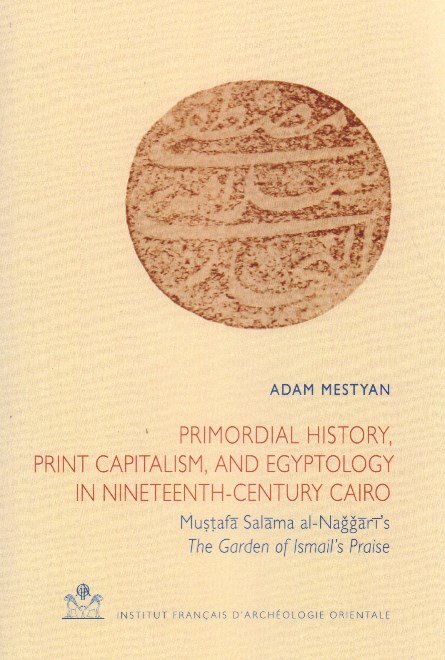
245 10|aPrimordial history, print capitalism, and egyptology in nineteenth-century Cairo :|bMustafā Salāma al-Naǧǧārīs the garden of Ismail's praise /|cAdam Mestyan.
260 |aLe Caire :|bInstitut français d'archéologie orientale,|c2021.
300 |avi, 129 sayfa, sayfa [133]-177 tıpkıbasım :|btıpkıbasım (kimi renkli), tablo ;|c24 cm
490 1 |aCahier des annales Islamologiques,|x0254-282X ;|v35
490 0 |aCAI ;|v35
504 |aBibliyografya s. [119]-129.
520 |a“How old is the world? This question was a central problem for Muslims, Christians, and Jews in the face of the new scientific discoveries in the nineteenth century. This book introduces the answer from a Muslim point of view, outside of official institutions. The extended introduction – a microhistory in the Middle East – explores the life and œuvre of a forgotten Egyptian intellectual and poet, Muṣṭafā Salāma al-Naǧǧārī (d. 1870). Next, Mestyan provides the English translation and Arabic transcription of the surviving fragments of al-Naǧǧārīʼs manuscript, The Garden of Ismail’s Praise. This is a universal history of Egypt, written while the Suez Canal was under construction to praise the governor Khedive Ismail (r. 1863-1879). The author advocates a unique solution to computing the period of primordial history, before the Deluge, in the age of steam and print. Al-Naǧǧārī's alternative Nahḍa voice is available for the first time in this edition“ --|cYayıncı.
546 |aArapça metin içerir.
600 04|aİsmâil Paşa, Hidiv, 1830-1895.
651 4|aKahire (Mısır)|xTarih|y19. yy.
830 0|aCahier des Annales Islamologiques ;|v35.