

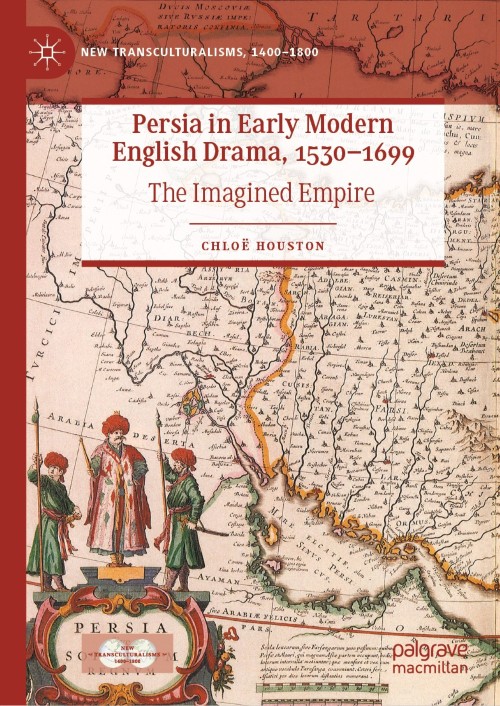
Persia in Early Modern English Drama, 1530–1699 [electronic resource] : The Imagined Empire / by Chloë Houston.
Erişim Adresi
ISBN
9783031226182
Dil Kodu
İngilizce
Yer Numarası
DK/1045
Yazar
Basım Bildirimi
1st ed. 2023.
Yayın Bilgisi
Cham : Springer International Publishing : Imprint: Palgrave Macmillan, 2023.
Fiziksel Niteleme
XII, 295 p. 1 illus. online resource.
Dizi
New Transculturalisms, 1400–1800, 2946-5346
İçindekiler Notu
1. Introduction: the imagined empire -- 2. ‘In this noble region’: politics and counsel in The Godly Queene Hester (Anonymous, c. 1530) -- 3. ‘[A]dvice unto a Prince’: kingship and counsel in Kyng Daryus (Anonymous, 1565) and Cambises (Thomas Preston, c. 1560) -- 4. ‘A crown enchas’d with pearl and gold’: wealth and absolute rule in The Warres of Cyrus (Richard Farrant, 1576-80) and Tamburlaine the Great Parts 1 and 2 (Christopher Marlowe, 1587-8) -- ‘I wish to be none other but as he’: friendship and counsel in The Travailes of the Three English Brothers (1607) by John Day, William Rowley, and George Wilkins and contemporary closet drama -- 6. ‘Read[ing] philosophy to a king’: ideals of monarchy in William Cartwright’s The Royall Slave (1636) -- 7. ‘[R]eally acted in Persia’: counsel, regicide and restoration in John Denham, The Sophy (1642) and Robert Baron, Mirza (1655) -- 8. To ‘dispose of Crowns’: Conversion, the Authorityof Monarchy and the Issue of Succession: Elkanah Settle’s Cambyses (1667) -- 9. ‘The king, who loves the Persian mode’: tyranny and excess in The Rival Queens (1677) -- 10. ‘[D]evour’d by Luxury’: Gender, Governance and Absolute Kingship in John Crowne’s Darius, King of Persia (1688) and Colley Cibber’s Xerxes (1699).
Özet, vb.
This book is a study of the representation of the Persian empire in English drama across the early modern period, from the 1530s to the 1690s. Its wide focus, encompassing fifteen dramatic entertainments, both canonical and little-known, allows it to trace the changes and developments in the dramatic use of Persia and its people across the period. It explores what Persia signified to English playwrights and audiences in this period; ideas and associations conjured up by mention of ‘Persia’; and where information about Persia came from. It also considers how ideas about Persia changed with the development of global travel and trade, as English people came into contact with Persians for the first time. In addressing these issues, this book provides an examination not only of the representation of Persia in dramatic material, but of the broader relationship between travel, politics and the theatre in early modern England. Chloë Houston is Associate Professorin the Department of English Literature at the University of Reading, UK. .
Konu
Europe __ History __ 1492-.
Great Britain __ History.
Middle East __ History.
World history.
Civilization __ History.
Theater __ History.
History of Early Modern Europe.
History of Britain and Ireland.
History of the Middle East.
World History, Global and Transnational History.
Cultural History.
Theatre History.
Great Britain __ History.
Middle East __ History.
World history.
Civilization __ History.
Theater __ History.
History of Early Modern Europe.
History of Britain and Ireland.
History of the Middle East.
World History, Global and Transnational History.
Cultural History.
Theatre History.
Eseri Alıntıla
Referansları kullanmadan önce gözden geçirmeniz ve varsa gerekli düzeltmeleri yapmanız önerilir.
Dijital Kaynak
MARC Görünümü
LEADER 04475nam a22006015i 4500
001 608372
003 TR_AnAIT
005 20250627073448
007 cr nn 008mamaa
008 230501s2023 sz | s |||| 0|eng d
020 |a9783031226182|9978-3-031-22618-2
024 7 |a10.1007/978-3-031-22618-2|2doi
041 |aeng
049 |aTürk Tarih Kurumu Kütüphanesi
050 4|aD203.2-475
072 7|aHBJD|2bicssc
072 7|aHBLH|2bicssc
072 7|aHIS010000|2bisacsh
072 7|aNHD|x3M|2thema
082 04|a940.903|223
090 |aDK/1045
100 1 |aHouston, Chloë.|eauthor.|4aut|4http://id.loc.gov/vocabulary/relators/aut
245 10|aPersia in Early Modern English Drama, 1530–1699|h[electronic resource] :|bThe Imagined Empire /|cby Chloë Houston.
250 |a1st ed. 2023.
264 1|aCham :|bSpringer International Publishing :|bImprint: Palgrave Macmillan,|c2023.
300 |aXII, 295 p. 1 illus.|bonline resource.
336 |atext|btxt|2rdacontent
337 |acomputer|bc|2rdamedia
338 |aonline resource|bcr|2rdacarrier
347 |atext file|bPDF|2rda
490 1 |aNew Transculturalisms, 1400–1800,|x2946-5346
505 0 |a1. Introduction: the imagined empire -- 2. ‘In this noble region’: politics and counsel in The Godly Queene Hester (Anonymous, c. 1530) -- 3. ‘[A]dvice unto a Prince’: kingship and counsel in Kyng Daryus (Anonymous, 1565) and Cambises (Thomas Preston, c. 1560) -- 4. ‘A crown enchas’d with pearl and gold’: wealth and absolute rule in The Warres of Cyrus (Richard Farrant, 1576-80) and Tamburlaine the Great Parts 1 and 2 (Christopher Marlowe, 1587-8) -- ‘I wish to be none other but as he’: friendship and counsel in The Travailes of the Three English Brothers (1607) by John Day, William Rowley, and George Wilkins and contemporary closet drama -- 6. ‘Read[ing] philosophy to a king’: ideals of monarchy in William Cartwright’s The Royall Slave (1636) -- 7. ‘[R]eally acted in Persia’: counsel, regicide and restoration in John Denham, The Sophy (1642) and Robert Baron, Mirza (1655) -- 8. To ‘dispose of Crowns’: Conversion, the Authorityof Monarchy and the Issue of Succession: Elkanah Settle’s Cambyses (1667) -- 9. ‘The king, who loves the Persian mode’: tyranny and excess in The Rival Queens (1677) -- 10. ‘[D]evour’d by Luxury’: Gender, Governance and Absolute Kingship in John Crowne’s Darius, King of Persia (1688) and Colley Cibber’s Xerxes (1699).
520 |aThis book is a study of the representation of the Persian empire in English drama across the early modern period, from the 1530s to the 1690s. Its wide focus, encompassing fifteen dramatic entertainments, both canonical and little-known, allows it to trace the changes and developments in the dramatic use of Persia and its people across the period. It explores what Persia signified to English playwrights and audiences in this period; ideas and associations conjured up by mention of ‘Persia’; and where information about Persia came from. It also considers how ideas about Persia changed with the development of global travel and trade, as English people came into contact with Persians for the first time. In addressing these issues, this book provides an examination not only of the representation of Persia in dramatic material, but of the broader relationship between travel, politics and the theatre in early modern England. Chloë Houston is Associate Professorin the Department of English Literature at the University of Reading, UK. .
650 0|aEurope|xHistory|x1492-.
650 0|aGreat Britain|xHistory.
650 0|aMiddle East|xHistory.
650 0|aWorld history.
650 0|aCivilization|xHistory.
650 0|aTheater|xHistory.
650 14|aHistory of Early Modern Europe.
650 24|aHistory of Britain and Ireland.
650 24|aHistory of the Middle East.
650 24|aWorld History, Global and Transnational History.
650 24|aCultural History.
650 24|aTheatre History.
773 0 |tSpringer Nature eBook
776 08|iPrinted edition:|z9783031226175
776 08|iPrinted edition:|z9783031226199
776 08|iPrinted edition:|z9783031226205
830 0|aNew Transculturalisms, 1400–1800,|x2946-5346
856 40|uhttps://doi.org/10.1007/978-3-031-22618-2
912 |aZDB-2-HTY
912 |aZDB-2-SXH
950 |aHistory (SpringerNature-41172)
950 |aHistory (R0) (SpringerNature-43722)
001 608372
003 TR_AnAIT
005 20250627073448
007 cr nn 008mamaa
008 230501s2023 sz | s |||| 0|eng d
020 |a9783031226182|9978-3-031-22618-2
024 7 |a10.1007/978-3-031-22618-2|2doi
041 |aeng
049 |aTürk Tarih Kurumu Kütüphanesi
050 4|aD203.2-475
072 7|aHBJD|2bicssc
072 7|aHBLH|2bicssc
072 7|aHIS010000|2bisacsh
072 7|aNHD|x3M|2thema
082 04|a940.903|223
090 |aDK/1045
100 1 |aHouston, Chloë.|eauthor.|4aut|4http://id.loc.gov/vocabulary/relators/aut
245 10|aPersia in Early Modern English Drama, 1530–1699|h[electronic resource] :|bThe Imagined Empire /|cby Chloë Houston.
250 |a1st ed. 2023.
264 1|aCham :|bSpringer International Publishing :|bImprint: Palgrave Macmillan,|c2023.
300 |aXII, 295 p. 1 illus.|bonline resource.
336 |atext|btxt|2rdacontent
337 |acomputer|bc|2rdamedia
338 |aonline resource|bcr|2rdacarrier
347 |atext file|bPDF|2rda
490 1 |aNew Transculturalisms, 1400–1800,|x2946-5346
505 0 |a1. Introduction: the imagined empire -- 2. ‘In this noble region’: politics and counsel in The Godly Queene Hester (Anonymous, c. 1530) -- 3. ‘[A]dvice unto a Prince’: kingship and counsel in Kyng Daryus (Anonymous, 1565) and Cambises (Thomas Preston, c. 1560) -- 4. ‘A crown enchas’d with pearl and gold’: wealth and absolute rule in The Warres of Cyrus (Richard Farrant, 1576-80) and Tamburlaine the Great Parts 1 and 2 (Christopher Marlowe, 1587-8) -- ‘I wish to be none other but as he’: friendship and counsel in The Travailes of the Three English Brothers (1607) by John Day, William Rowley, and George Wilkins and contemporary closet drama -- 6. ‘Read[ing] philosophy to a king’: ideals of monarchy in William Cartwright’s The Royall Slave (1636) -- 7. ‘[R]eally acted in Persia’: counsel, regicide and restoration in John Denham, The Sophy (1642) and Robert Baron, Mirza (1655) -- 8. To ‘dispose of Crowns’: Conversion, the Authorityof Monarchy and the Issue of Succession: Elkanah Settle’s Cambyses (1667) -- 9. ‘The king, who loves the Persian mode’: tyranny and excess in The Rival Queens (1677) -- 10. ‘[D]evour’d by Luxury’: Gender, Governance and Absolute Kingship in John Crowne’s Darius, King of Persia (1688) and Colley Cibber’s Xerxes (1699).
520 |aThis book is a study of the representation of the Persian empire in English drama across the early modern period, from the 1530s to the 1690s. Its wide focus, encompassing fifteen dramatic entertainments, both canonical and little-known, allows it to trace the changes and developments in the dramatic use of Persia and its people across the period. It explores what Persia signified to English playwrights and audiences in this period; ideas and associations conjured up by mention of ‘Persia’; and where information about Persia came from. It also considers how ideas about Persia changed with the development of global travel and trade, as English people came into contact with Persians for the first time. In addressing these issues, this book provides an examination not only of the representation of Persia in dramatic material, but of the broader relationship between travel, politics and the theatre in early modern England. Chloë Houston is Associate Professorin the Department of English Literature at the University of Reading, UK. .
650 0|aEurope|xHistory|x1492-.
650 0|aGreat Britain|xHistory.
650 0|aMiddle East|xHistory.
650 0|aWorld history.
650 0|aCivilization|xHistory.
650 0|aTheater|xHistory.
650 14|aHistory of Early Modern Europe.
650 24|aHistory of Britain and Ireland.
650 24|aHistory of the Middle East.
650 24|aWorld History, Global and Transnational History.
650 24|aCultural History.
650 24|aTheatre History.
773 0 |tSpringer Nature eBook
776 08|iPrinted edition:|z9783031226175
776 08|iPrinted edition:|z9783031226199
776 08|iPrinted edition:|z9783031226205
830 0|aNew Transculturalisms, 1400–1800,|x2946-5346
856 40|uhttps://doi.org/10.1007/978-3-031-22618-2
912 |aZDB-2-HTY
912 |aZDB-2-SXH
950 |aHistory (SpringerNature-41172)
950 |aHistory (R0) (SpringerNature-43722)
Materyaller
Depodan talep edilen materyal sadece kütüphane içerisinde kullanılmaktadır.
Materyal dışarıya ödünç verilmemektedir.
Materyal dışarıya ödünç verilmemektedir.
