LEADER 03842nam a22005535i 4500
001 608411
003 TR_AnAIT
005 20250627073333
007 cr nn 008mamaa
008 190109s2019 sz | s |||| 0|eng d
020 |a9783030013462|9978-3-030-01346-2
024 7 |a10.1007/978-3-030-01346-2|2doi
041 |aeng
049 |aTürk Tarih Kurumu Kütüphanesi
050 4|aD111-203
072 7|aHBJD|2bicssc
072 7|aHBLC1|2bicssc
072 7|aHIS037010|2bisacsh
072 7|aNHDJ|2thema
082 04|a940.902|223
090 |aDK/1084
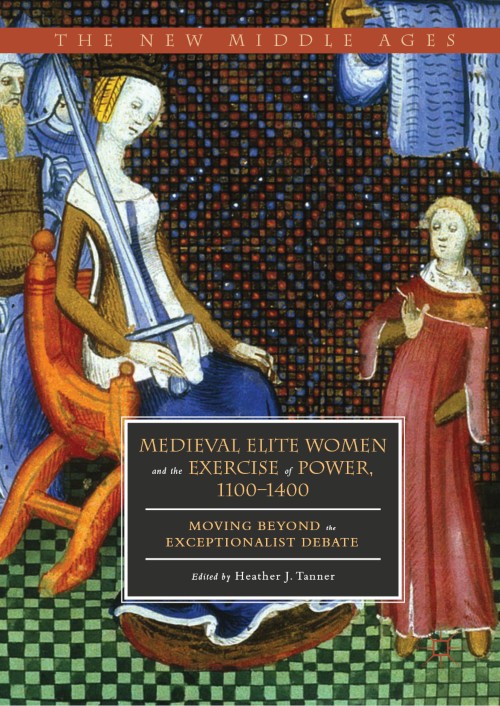
245 10|aMedieval Elite Women and the Exercise of Power, 1100–1400|h[electronic resource] :|bMoving beyond the Exceptionalist Debate /|cedited by Heather J. Tanner.
250 |a1st ed. 2019.
264 1|aCham :|bSpringer International Publishing :|bImprint: Palgrave Macmillan,|c2019.
300 |aXVII, 310 p. 6 illus., 3 illus. in color.|bonline resource.
336 |atext|btxt|2rdacontent
337 |acomputer|bc|2rdamedia
338 |aonline resource|bcr|2rdacarrier
347 |atext file|bPDF|2rda
490 1 |aThe New Middle Ages,|x2945-5944
505 0 |a1. Introduction -- 2. Power and Agency in Post-Conquest England: Elite Women and the Transformation of the Twelfth Century -- 3. The Most Perfect Knight's Countess: Isabella de Clare, Her Daughters, and Women's Exercise of Power and Influence, 1190–ca. 1250 -- 4. Beyond Good Queen Anne: Anne of Bohemia, Patronage, and Politics -- 5. Emma of Ivry, c. 1008–1080 -- 6. From Mothers to Daughters: Literary Patronage as Political Work in Ponthieu -- 7. Pirate, Traitor, Wife: Jeanne of Belleville and the Categories of Fourteenth-Century French Noblewomen -- 8. Just Another Day in the Neighborhood: Collective Female Donation Practices at the Hospital of Saint John in Brussels -- 9. A "Necessary Companion": The Salian Consort's Expected Role in Governance -- 10. Power in Pursuit of Religion: The Penitent Sisters of Speyer and their Choice of Affiliation -- 11. Women of Antioch: Political Culture and Powerful Women in the Latin East -- 12. Unexceptional Women: Power, Authority, and Queenship in Early Portugal -- 13. A Lifetime of Power: Beyond Binaries of Gender.
520 |aFor decades, medieval scholarship has been dominated by the paradigm that women who wielded power after c. 1100 were exceptions to the “rule” of female exclusion from governance and the public sphere. This collection makes a powerful case for a new paradigm. Building on the premise that elite women in positions of authority were expected, accepted, and routine, these essays traverse the cities and kingdoms of France, England, Germany, Portugal, and the Latin Kingdom of Jerusalem in order to illuminate women’s roles in medieval power structures. Without losing sight of the predominance of patriarchy and misogyny, contributors lay the groundwork for the acceptance of female public authority as normal in medieval society, fostering a new framework for understanding medieval elite women and power.
650 0|aEurope|xHistory|x476-1492.
650 0|aEurope|xHistory|x1492-.
650 0|aFeminism.
650 0|aFeminist theory.
650 0|aLiterature, Medieval.
650 14|aHistory of Medieval Europe.
650 24|aHistory of Early Modern Europe.
650 24|aFeminism and Feminist Theory.
650 24|aMedieval Literature.
700 1 |aTanner, Heather J.|eeditor.|4edt|4http://id.loc.gov/vocabulary/relators/edt
773 0 |tSpringer Nature eBook
776 08|iPrinted edition:|z9783030013455
776 08|iPrinted edition:|z9783030013479
830 0|aThe New Middle Ages,|x2945-5944
856 40|uhttps://doi.org/10.1007/978-3-030-01346-2
912 |aZDB-2-HTY
912 |aZDB-2-SXH
950 |aHistory (SpringerNature-41172)
950 |aHistory (R0) (SpringerNature-43722)