LEADER 03700nam a22006135i 4500
001 608435
003 TR_AnAIT
005 20250627073251
007 cr nn 008mamaa
008 191212s2019 sz | s |||| 0|eng d
020 |a9783030321383|9978-3-030-32138-3
024 7 |a10.1007/978-3-030-32138-3|2doi
041 |aeng
049 |aTürk Tarih Kurumu Kütüphanesi
050 4|aDU1-950
072 7|aHBJQ|2bicssc
072 7|a1MBF|2bicssc
072 7|aHIS004000|2bisacsh
072 7|aNHQ|x1MBF|2thema
082 04|a994|223
090 |aDK/1108
100 1 |aKing, Carolyn M.|eauthor.|4aut|4http://id.loc.gov/vocabulary/relators/aut
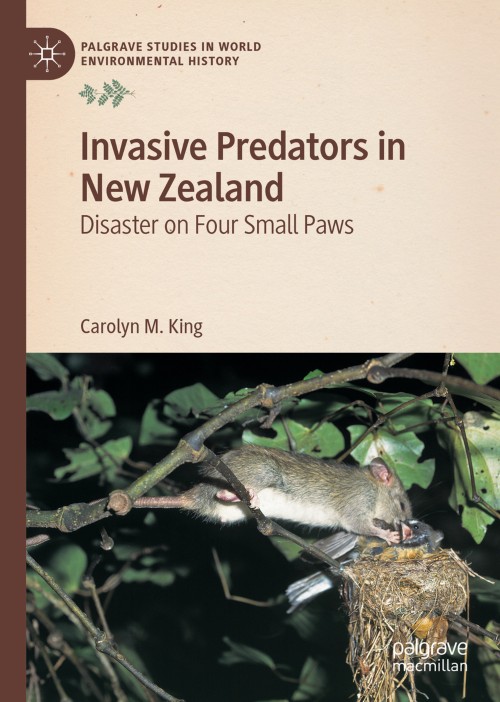
245 10|aInvasive Predators in New Zealand|h[electronic resource] :|bDisaster on Four Small Paws /|cby Carolyn M. King.
250 |a1st ed. 2019.
264 1|aCham :|bSpringer International Publishing :|bImprint: Palgrave Macmillan,|c2019.
300 |aXXXIV, 343 p. 40 illus., 30 illus. in color.|bonline resource.
336 |atext|btxt|2rdacontent
337 |acomputer|bc|2rdamedia
338 |aonline resource|bcr|2rdacarrier
347 |atext file|bPDF|2rda
490 1 |aPalgrave Studies in World Environmental History,|x2730-9754
505 0 |aI. The Years before Cook -- 1. Introduction (82 million years ago to AD 1280) -- 2. The Māori Era (1280–1769) -- II. The Years of Accidental Invasions -- 3. Reconstructing Invasion Histories from European Shipping Records (1769–1900) and Genetics (since 2000) -- 4. European Rats (1769) -- 5. House Mice (since about 1792) -- 6. Cats (1769–1900) -- III. The Years of Deliberate Introductions -- 7. Rabbits (1858–1900) -- 8. Ferrets (1852–1892) -- 9. Stoats and Weasels (1876–1883) -- 10. Stoats and Weasels (1883–1892) -- 11. Lucky Escapes and Nasty Surprises (1884–1920) -- IV. What Now? -- 12. Hard Lessons in Pest Management (1976–2019).
520 |aThe story of invasive species in New Zealand is unlike any other in the world. By the mid-thirteenth century, the main islands of the country were the last large landmasses on Earth to remain uninhabited by humans, or any other land mammals. New Zealand’s endemic fauna evolved in isolation until first Polynesians, and then Europeans, arrived with a host of companion animals such as rats and cats in tow. Well-equipped with teeth and claws, these small furry mammals, along with the later arrival of stoats and ferrets, have devastated the fragile populations of unique birds, lizards and insects. Carolyn M. King brings together the necessary historical analysis and recent ecological research to understand this long, slow tragedy. As a comprehensive historical perspective on the fate of an iconic endemic fauna, this book offers much-needed insight into one of New Zealand’s longest-running national crises. .
650 0|aAustralasia.
650 0|aHistory.
650 0|aWorld history.
650 0|aScience|xHistory.
650 0|aAnimal migration.
650 0|aSocial history.
650 0|aPhysical geography.
650 14|aAustralian History.
650 24|aWorld History, Global and Transnational History.
650 24|aHistory of Science.
650 24|aAnimal Migration.
650 24|aSocial History.
650 24|aPhysical Geography.
773 0 |tSpringer Nature eBook
776 08|iPrinted edition:|z9783030321376
776 08|iPrinted edition:|z9783030321390
776 08|iPrinted edition:|z9783030321406
830 0|aPalgrave Studies in World Environmental History,|x2730-9754
856 40|uhttps://doi.org/10.1007/978-3-030-32138-3
912 |aZDB-2-HTY
912 |aZDB-2-SXH
950 |aHistory (SpringerNature-41172)
950 |aHistory (R0) (SpringerNature-43722)