

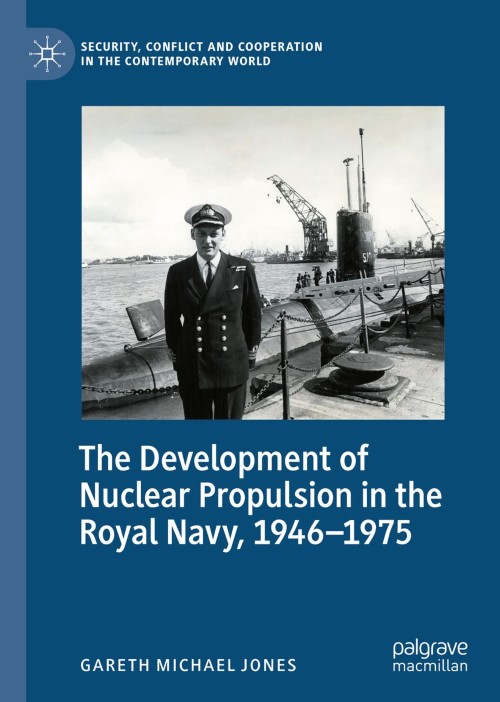
The Development of Nuclear Propulsion in the Royal Navy, 1946-1975 [electronic resource] / by Gareth Michael Jones.
Erişim Adresi
ISBN
9783031051296
Dil Kodu
İngilizce
Yer Numarası
DK/1146
Yazar
Basım Bildirimi
1st ed. 2022.
Yayın Bilgisi
Cham : Springer International Publishing : Imprint: Palgrave Macmillan, 2022.
Fiziksel Niteleme
XXV, 287 p. 15 illus. online resource.
Dizi
Security, Conflict and Cooperation in the Contemporary World, 2731-6815
İçindekiler Notu
1 Introduction -- Overview -- Chapters -- Literature Review -- Nuclear Historiography -- The Nuclear Submarine in Context -- Summary -- 2 Improving the Submersible -- Introduction of World War II Submarine Developments -- The Soviet Submarine Threat -- Conversions to “Fast Battery Drive” -- HTP and Air-Independent Engines -- The Discovery of Nuclear Fission and Its Application to Submarines -- Discussions on the Development of the Nuclear “Engine” -- 3 The Nuclear Option -- Tube Alloys, US Cooperation and the McMahon Act -- Acquiring an Experienced Team -- Harwell and the Admiralty -- Initial Considerations -- The Mark I Enriched Reactor -- Metropolitan-Vickers and the Problem of Scale -- The End of the Beginning -- 4 The Pressurised Water Reactor -- The Reactor Technical Challenge -- The Brontosaurus in the Museum: Quality Assurance -- Industry Joins the Project -- Miracle Metals -- The Fuel Element Decision -- Neptune: The Zero Energy Experimental Reactor -- 5 HMS/m Dreadnought -- Admiral Hyman G. Rickover USN.-What Price Exchange of Information? -- The Offers to Purchase a US Submarine Reactor -- Choices and Decisions -- Mountbatten Corrections -- Management and Establishment of the Dreadnought Project Team -- Purchase of the S5W Reactor -- Final Adjustments -- 6 Nuclear Training and Dounreay -- Training Facilities -- Off to School -- Practical Training and Jason -- Dounreay Submarine Prototype (DS/MP) -- Dounreay’s Future Questioned -- A Very Serious Snag -- HMS/m Valiant -- 7 Future Developments -- Refuelling Preparations -- The Strength of Steel -- Core Development -- Amended Access Agreements -- Core Development Programme (CORDEP) -- Nuclear Development (Submarines): NuDe(S) -- NuDe(S) II—FLIP—ANP -- Core Z -- Secondary Machinery Improvement -- Reporting the Nuclear Navy -- Project Cost -- 8 Conclusions -- Political Problems and Indifference -- Technical Considerations -- The Military Situation -- The Nuclear Propulsion Legacy -- Research in the “Secret (Nuclear) State” -- Appendix A -- Appendix B -- Glossary -- Bibliography -- Index.
Özet, vb.
This book examines the development of nuclear propulsion in the Royal Navy from the first proposal in 1946 to the start-up of the last core improvement for the first submarine reactor power plant PWR 1 in December 1974. Drawing from unreleased records and archives, the book answers questions around three main themes. Political: what problems were encountered in transferring nuclear knowledge from the USA to the UK in the post-war period, and how much support was there for the development of nuclear propulsion? Military: why was there a requirement to develop nuclear propulsion, and in particular, why submarines? Technical: were the problems associated with nuclear energy fully appreciated, and did the UK have the technical and engineering capability to develop nuclear propulsion? Aside from the political considerations and military motives for developing nuclear propulsion in the Royal Navy, the author focuses on the technical problems that had to be overcome by all participants in theRoyal Navy’s development of nuclear propulsion, adding significantly to naval historiography. Providing a critical analysis of the political, technological, operational and industrial issues of introducing nuclear propulsion into the Royal Navy, the author situates his research in the context of the evolving Cold War, changing Anglo-American relations, the end of Empire and the relative decline of British power. Gareth Michael Jones is a former CPO(WSM) Royal Navy submariner retiring from the service in 2003. He is currently working as a Project Engineer with Babcock International Group at Devonport Royal Dockyard. He is interested in the history of nuclear propulsion development and completed his PhD at the University of Plymouth in the UK.
Konu
Military history.
Great Britain __ History.
Technology.
History.
United States __ History.
International relations __ History.
Politics and war.
Military History.
History of Britain and Ireland.
History of Technology.
US History.
Diplomatic and International History.
Military and Defence Studies.
Great Britain __ History.
Technology.
History.
United States __ History.
International relations __ History.
Politics and war.
Military History.
History of Britain and Ireland.
History of Technology.
US History.
Diplomatic and International History.
Military and Defence Studies.
Eseri Alıntıla
Referansları kullanmadan önce gözden geçirmeniz ve varsa gerekli düzeltmeleri yapmanız önerilir.
Dijital Kaynak
MARC Görünümü
LEADER 06019nam a22006135i 4500
001 608473
003 TR_AnAIT
005 20250627073139
007 cr nn 008mamaa
008 220830s2022 sz | s |||| 0|eng d
020 |a9783031051296|9978-3-031-05129-6
024 7 |a10.1007/978-3-031-05129-6|2doi
041 |aeng
049 |aTürk Tarih Kurumu Kütüphanesi
050 4|aD25-25.9
072 7|aHBW|2bicssc
072 7|aHIS027000|2bisacsh
072 7|aNHW|2thema
082 04|a355.009|223
082 04|a909|223
090 |aDK/1146
100 1 |aJones, Gareth Michael.|eauthor.|4aut|4http://id.loc.gov/vocabulary/relators/aut
245 14|aThe Development of Nuclear Propulsion in the Royal Navy, 1946-1975|h[electronic resource] /|cby Gareth Michael Jones.
250 |a1st ed. 2022.
264 1|aCham :|bSpringer International Publishing :|bImprint: Palgrave Macmillan,|c2022.
300 |aXXV, 287 p. 15 illus.|bonline resource.
336 |atext|btxt|2rdacontent
337 |acomputer|bc|2rdamedia
338 |aonline resource|bcr|2rdacarrier
347 |atext file|bPDF|2rda
490 1 |aSecurity, Conflict and Cooperation in the Contemporary World,|x2731-6815
505 0 |a1 Introduction -- Overview -- Chapters -- Literature Review -- Nuclear Historiography -- The Nuclear Submarine in Context -- Summary -- 2 Improving the Submersible -- Introduction of World War II Submarine Developments -- The Soviet Submarine Threat -- Conversions to “Fast Battery Drive” -- HTP and Air-Independent Engines -- The Discovery of Nuclear Fission and Its Application to Submarines -- Discussions on the Development of the Nuclear “Engine” -- 3 The Nuclear Option -- Tube Alloys, US Cooperation and the McMahon Act -- Acquiring an Experienced Team -- Harwell and the Admiralty -- Initial Considerations -- The Mark I Enriched Reactor -- Metropolitan-Vickers and the Problem of Scale -- The End of the Beginning -- 4 The Pressurised Water Reactor -- The Reactor Technical Challenge -- The Brontosaurus in the Museum: Quality Assurance -- Industry Joins the Project -- Miracle Metals -- The Fuel Element Decision -- Neptune: The Zero Energy Experimental Reactor -- 5 HMS/m Dreadnought -- Admiral Hyman G. Rickover USN.-What Price Exchange of Information? -- The Offers to Purchase a US Submarine Reactor -- Choices and Decisions -- Mountbatten Corrections -- Management and Establishment of the Dreadnought Project Team -- Purchase of the S5W Reactor -- Final Adjustments -- 6 Nuclear Training and Dounreay -- Training Facilities -- Off to School -- Practical Training and Jason -- Dounreay Submarine Prototype (DS/MP) -- Dounreay’s Future Questioned -- A Very Serious Snag -- HMS/m Valiant -- 7 Future Developments -- Refuelling Preparations -- The Strength of Steel -- Core Development -- Amended Access Agreements -- Core Development Programme (CORDEP) -- Nuclear Development (Submarines): NuDe(S) -- NuDe(S) II—FLIP—ANP -- Core Z -- Secondary Machinery Improvement -- Reporting the Nuclear Navy -- Project Cost -- 8 Conclusions -- Political Problems and Indifference -- Technical Considerations -- The Military Situation -- The Nuclear Propulsion Legacy -- Research in the “Secret (Nuclear) State” -- Appendix A -- Appendix B -- Glossary -- Bibliography -- Index.
520 |aThis book examines the development of nuclear propulsion in the Royal Navy from the first proposal in 1946 to the start-up of the last core improvement for the first submarine reactor power plant PWR 1 in December 1974. Drawing from unreleased records and archives, the book answers questions around three main themes. Political: what problems were encountered in transferring nuclear knowledge from the USA to the UK in the post-war period, and how much support was there for the development of nuclear propulsion? Military: why was there a requirement to develop nuclear propulsion, and in particular, why submarines? Technical: were the problems associated with nuclear energy fully appreciated, and did the UK have the technical and engineering capability to develop nuclear propulsion? Aside from the political considerations and military motives for developing nuclear propulsion in the Royal Navy, the author focuses on the technical problems that had to be overcome by all participants in theRoyal Navy’s development of nuclear propulsion, adding significantly to naval historiography. Providing a critical analysis of the political, technological, operational and industrial issues of introducing nuclear propulsion into the Royal Navy, the author situates his research in the context of the evolving Cold War, changing Anglo-American relations, the end of Empire and the relative decline of British power. Gareth Michael Jones is a former CPO(WSM) Royal Navy submariner retiring from the service in 2003. He is currently working as a Project Engineer with Babcock International Group at Devonport Royal Dockyard. He is interested in the history of nuclear propulsion development and completed his PhD at the University of Plymouth in the UK.
650 0|aMilitary history.
650 0|aGreat Britain|xHistory.
650 0|aTechnology.
650 0|aHistory.
650 0|aUnited States|xHistory.
650 0|aInternational relations|xHistory.
650 0|aPolitics and war.
650 14|aMilitary History.
650 24|aHistory of Britain and Ireland.
650 24|aHistory of Technology.
650 24|aUS History.
650 24|aDiplomatic and International History.
650 24|aMilitary and Defence Studies.
773 0 |tSpringer Nature eBook
776 08|iPrinted edition:|z9783031051289
776 08|iPrinted edition:|z9783031051302
776 08|iPrinted edition:|z9783031051319
830 0|aSecurity, Conflict and Cooperation in the Contemporary World,|x2731-6815
856 40|uhttps://doi.org/10.1007/978-3-031-05129-6
912 |aZDB-2-HTY
912 |aZDB-2-SXH
950 |aHistory (SpringerNature-41172)
950 |aHistory (R0) (SpringerNature-43722)
001 608473
003 TR_AnAIT
005 20250627073139
007 cr nn 008mamaa
008 220830s2022 sz | s |||| 0|eng d
020 |a9783031051296|9978-3-031-05129-6
024 7 |a10.1007/978-3-031-05129-6|2doi
041 |aeng
049 |aTürk Tarih Kurumu Kütüphanesi
050 4|aD25-25.9
072 7|aHBW|2bicssc
072 7|aHIS027000|2bisacsh
072 7|aNHW|2thema
082 04|a355.009|223
082 04|a909|223
090 |aDK/1146
100 1 |aJones, Gareth Michael.|eauthor.|4aut|4http://id.loc.gov/vocabulary/relators/aut
245 14|aThe Development of Nuclear Propulsion in the Royal Navy, 1946-1975|h[electronic resource] /|cby Gareth Michael Jones.
250 |a1st ed. 2022.
264 1|aCham :|bSpringer International Publishing :|bImprint: Palgrave Macmillan,|c2022.
300 |aXXV, 287 p. 15 illus.|bonline resource.
336 |atext|btxt|2rdacontent
337 |acomputer|bc|2rdamedia
338 |aonline resource|bcr|2rdacarrier
347 |atext file|bPDF|2rda
490 1 |aSecurity, Conflict and Cooperation in the Contemporary World,|x2731-6815
505 0 |a1 Introduction -- Overview -- Chapters -- Literature Review -- Nuclear Historiography -- The Nuclear Submarine in Context -- Summary -- 2 Improving the Submersible -- Introduction of World War II Submarine Developments -- The Soviet Submarine Threat -- Conversions to “Fast Battery Drive” -- HTP and Air-Independent Engines -- The Discovery of Nuclear Fission and Its Application to Submarines -- Discussions on the Development of the Nuclear “Engine” -- 3 The Nuclear Option -- Tube Alloys, US Cooperation and the McMahon Act -- Acquiring an Experienced Team -- Harwell and the Admiralty -- Initial Considerations -- The Mark I Enriched Reactor -- Metropolitan-Vickers and the Problem of Scale -- The End of the Beginning -- 4 The Pressurised Water Reactor -- The Reactor Technical Challenge -- The Brontosaurus in the Museum: Quality Assurance -- Industry Joins the Project -- Miracle Metals -- The Fuel Element Decision -- Neptune: The Zero Energy Experimental Reactor -- 5 HMS/m Dreadnought -- Admiral Hyman G. Rickover USN.-What Price Exchange of Information? -- The Offers to Purchase a US Submarine Reactor -- Choices and Decisions -- Mountbatten Corrections -- Management and Establishment of the Dreadnought Project Team -- Purchase of the S5W Reactor -- Final Adjustments -- 6 Nuclear Training and Dounreay -- Training Facilities -- Off to School -- Practical Training and Jason -- Dounreay Submarine Prototype (DS/MP) -- Dounreay’s Future Questioned -- A Very Serious Snag -- HMS/m Valiant -- 7 Future Developments -- Refuelling Preparations -- The Strength of Steel -- Core Development -- Amended Access Agreements -- Core Development Programme (CORDEP) -- Nuclear Development (Submarines): NuDe(S) -- NuDe(S) II—FLIP—ANP -- Core Z -- Secondary Machinery Improvement -- Reporting the Nuclear Navy -- Project Cost -- 8 Conclusions -- Political Problems and Indifference -- Technical Considerations -- The Military Situation -- The Nuclear Propulsion Legacy -- Research in the “Secret (Nuclear) State” -- Appendix A -- Appendix B -- Glossary -- Bibliography -- Index.
520 |aThis book examines the development of nuclear propulsion in the Royal Navy from the first proposal in 1946 to the start-up of the last core improvement for the first submarine reactor power plant PWR 1 in December 1974. Drawing from unreleased records and archives, the book answers questions around three main themes. Political: what problems were encountered in transferring nuclear knowledge from the USA to the UK in the post-war period, and how much support was there for the development of nuclear propulsion? Military: why was there a requirement to develop nuclear propulsion, and in particular, why submarines? Technical: were the problems associated with nuclear energy fully appreciated, and did the UK have the technical and engineering capability to develop nuclear propulsion? Aside from the political considerations and military motives for developing nuclear propulsion in the Royal Navy, the author focuses on the technical problems that had to be overcome by all participants in theRoyal Navy’s development of nuclear propulsion, adding significantly to naval historiography. Providing a critical analysis of the political, technological, operational and industrial issues of introducing nuclear propulsion into the Royal Navy, the author situates his research in the context of the evolving Cold War, changing Anglo-American relations, the end of Empire and the relative decline of British power. Gareth Michael Jones is a former CPO(WSM) Royal Navy submariner retiring from the service in 2003. He is currently working as a Project Engineer with Babcock International Group at Devonport Royal Dockyard. He is interested in the history of nuclear propulsion development and completed his PhD at the University of Plymouth in the UK.
650 0|aMilitary history.
650 0|aGreat Britain|xHistory.
650 0|aTechnology.
650 0|aHistory.
650 0|aUnited States|xHistory.
650 0|aInternational relations|xHistory.
650 0|aPolitics and war.
650 14|aMilitary History.
650 24|aHistory of Britain and Ireland.
650 24|aHistory of Technology.
650 24|aUS History.
650 24|aDiplomatic and International History.
650 24|aMilitary and Defence Studies.
773 0 |tSpringer Nature eBook
776 08|iPrinted edition:|z9783031051289
776 08|iPrinted edition:|z9783031051302
776 08|iPrinted edition:|z9783031051319
830 0|aSecurity, Conflict and Cooperation in the Contemporary World,|x2731-6815
856 40|uhttps://doi.org/10.1007/978-3-031-05129-6
912 |aZDB-2-HTY
912 |aZDB-2-SXH
950 |aHistory (SpringerNature-41172)
950 |aHistory (R0) (SpringerNature-43722)
Materyaller
Depodan talep edilen materyal sadece kütüphane içerisinde kullanılmaktadır.
Materyal dışarıya ödünç verilmemektedir.
Materyal dışarıya ödünç verilmemektedir.
