

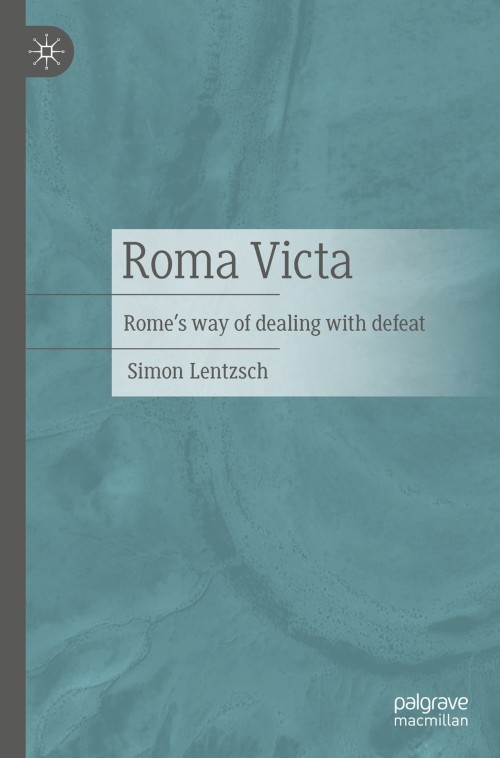
Roma Victa [electronic resource] : Rome's way of dealing with defeat / by Simon Lentzsch.
Erişim Adresi
ISBN
9783476059420
Dil Kodu
İngilizce
Yer Numarası
DK/1159
Yazar
Basım Bildirimi
1st ed. 2023.
Yayın Bilgisi
Stuttgart : J.B. Metzler : Imprint: Palgrave Macmillan, 2023.
Fiziksel Niteleme
XII, 421 p. 1 illus. online resource.
İçindekiler Notu
1. Introduction -- 2. Methodological Preliminary Remarks -- 3. The Most Dangerous Adversary Since the Endurance of Our Rule-Rome's Celtic Wars -- 4. Under the Yoke-The Samnite Wars -- 5. The Darkest Hour-The Roman-Carthaginian Wars -- 6. Summary.
Özet, vb.
The history of the Roman Republic was a military success story. Texts, monuments and rituals commemorated Rome's victories, and this emphasis on its own triumphs formed a basis for the Roman nobility's claim to leadership. However, the Romans also suffered numerous heavy defeats during the Republic. This study is the first to comprehensively examine how Rome's defeats at the hands of the Celts, Samnites, and Carthaginians were explained and interpreted in the historical culture of the Republic and early imperial period. What emerges is a specifically Roman culture of dealing with defeats, which helped the Romans to find meaning in the stories of their failures and to assign them a place in their own past. Simon Lentzsch is a research assistant at the Chair of Ancient History at the University of Cologne. This book is a translation of an original German edition. The translation was done with the help of artificial intelligence(machine translation by the service DeepL.com). A subsequent human revision was done primarily in terms of content, so that the book will read stylistically differently from a conventional translation.
Konu
Europe __ History __ To 476.
History of Ancient Europe.
History of Ancient Europe.
