LEADER 03541nam a22005655i 4500
001 608568
003 TR_AnAIT
005 20250627072841
007 cr nn 008mamaa
008 180613s2018 sz | s |||| 0|eng d
020 |a9783319754819|9978-3-319-75481-9
024 7 |a10.1007/978-3-319-75481-9|2doi
041 |aeng
049 |aTürk Tarih Kurumu Kütüphanesi
050 4|aHN
072 7|aHBTB|2bicssc
072 7|aHIS054000|2bisacsh
072 7|aNHTB|2thema
082 04|a306.09|223
090 |aDK/1241
100 1 |aPeterson, Anna M.|eauthor.|4aut|4http://id.loc.gov/vocabulary/relators/aut
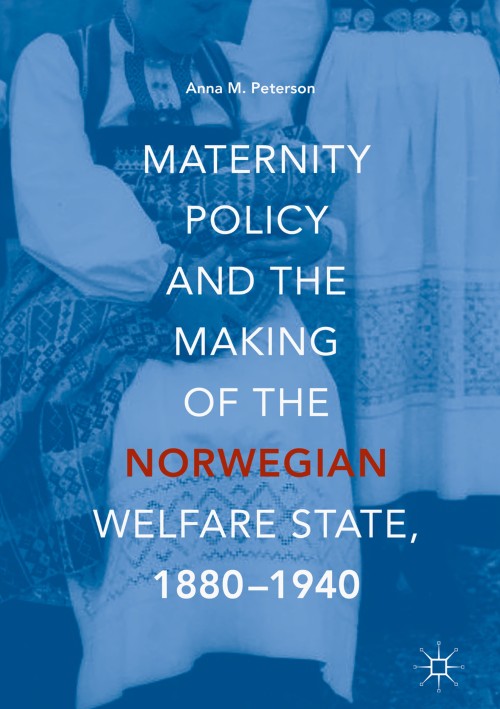
245 10|aMaternity Policy and the Making of the Norwegian Welfare State, 1880-1940|h[electronic resource] /|cby Anna M. Peterson.
250 |a1st ed. 2018.
264 1|aCham :|bSpringer International Publishing :|bImprint: Palgrave Macmillan,|c2018.
300 |aXIII, 221 p. 9 illus.|bonline resource.
336 |atext|btxt|2rdacontent
337 |acomputer|bc|2rdamedia
338 |aonline resource|bcr|2rdacarrier
347 |atext file|bPDF|2rda
505 0 |aChapter 1: Introduction -- Chapter 2: “What Nature Itself Demands:” The Development of Maternity Legislation at the End of the Nineteenth Century -- Chapter 3: “For the Health of the People:” Public Health and the Compensation of Maternity Leave in the 1910s -- Chapter 4: “Protecting Mothers and Children:” The Castbergian Children’s Laws and Maternity Assistance for Single Mothers in the 1910s -- Chapter 5: “Getting the Most Money Possible:” Women’s Responses to the Implementation of Maternity Laws, 1916-1930 -- Chapter 6: “Mothers’ Freedom is the Key to Women’s Emancipation:” Feminist Efforts to Expand Maternity Legislation in the Interwar Period -- Chapter 7: Conclusion -- Index.
520 |aThis book traces women’s influence on maternity policy in Norway from 1880-1940. Maternity policies, including maternity leave, midwifery services and public assistance for mothers, were some of the first welfare policies enacted in Norway. Feminists, midwives, and working women participated in their creation and helped transform maternity policies from a restriction to a benefit. Situating Norway within the larger European context, this book contributes to discussions of Scandinavian welfare state development and further untangles the relationship between social policy and gender equality. This study of poor, rural women alongside urban middle-class feminists is rooted in an inclusive archival source base that speaks to the interplay between local and national welfare officials and recipients, the development and implementation of laws in diverse settings, the divergent effects maternity policies had on women, and women’s varied responses.
650 0|aSocial history.
650 0|aLabor.
650 0|aHistory.
650 0|aEurope|xHistory|x1492-.
650 0|aFeminism.
650 0|aFeminist theory.
650 0|aCivilization|xHistory.
650 14|aSocial History.
650 24|aLabor History.
650 24|aHistory of Modern Europe.
650 24|aFeminism and Feminist Theory.
650 24|aCultural History.
773 0 |tSpringer Nature eBook
776 08|iPrinted edition:|z9783319754802
776 08|iPrinted edition:|z9783319754826
776 08|iPrinted edition:|z9783030092436
856 40|uhttps://doi.org/10.1007/978-3-319-75481-9
912 |aZDB-2-HTY
912 |aZDB-2-SXH
950 |aHistory (SpringerNature-41172)
950 |aHistory (R0) (SpringerNature-43722)