LEADER 03329nam a22005655i 4500
001 608601
003 TR_AnAIT
005 20250627072737
007 cr nn 008mamaa
008 191106s2019 sz | s |||| 0|eng d
020 |a9783319694771|9978-3-319-69477-1
024 7 |a10.1007/978-3-319-69477-1|2doi
041 |aeng
049 |aTürk Tarih Kurumu Kütüphanesi
050 4|aD17-24.5
072 7|aHBG|2bicssc
072 7|aHIS037000|2bisacsh
072 7|aNHB|2thema
082 04|a909|223
090 |aDK/1274
100 1 |aChapman, Jane L.|eauthor.|4aut|4http://id.loc.gov/vocabulary/relators/aut
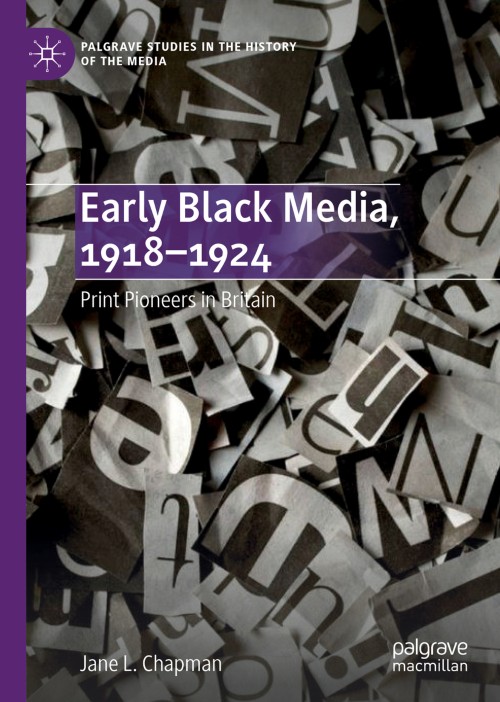
245 10|aEarly Black Media, 1918–1924|h[electronic resource] :|bPrint Pioneers in Britain /|cby Jane L. Chapman.
250 |a1st ed. 2019.
264 1|aCham :|bSpringer International Publishing :|bImprint: Palgrave Pivot,|c2019.
300 |aXI, 80 p.|bonline resource.
336 |atext|btxt|2rdacontent
337 |acomputer|bc|2rdamedia
338 |aonline resource|bcr|2rdacarrier
347 |atext file|bPDF|2rda
490 1 |aPalgrave Studies in the History of the Media,|x2634-6583
505 0 |a1. Introduction -- 2. Organisational Outlooks and Barriers to Publishing -- 3. Individual Voices: journalistic records -- 4. Conclusions and Postscript: legacy and memory.
520 |aThis book represents the first systematic attempt to analyse media and public communications published in Britain by people of African and Afro-Caribbean origin during the aftermaths of war, presenting an in-depth study of print publications for the period 1919-1924. This was a period of post-conflict readjustment that experienced a transnational surge in special interest newspapers and periodicals, including visual discourse. This study provides evidence that the aftermath of war needs to be given more attention as a distinctly defined period of post-conflict adjustment in which individual voices should be highlighted. As such it forms part of a continuing imperative to re-discover and recuperate black history, adding to the body of research on the aftermaths of The First World War, black studies, and the origins of diaspora. Jane L. Chapman analyses how the newspapers of black communities act as a record of conflict memory, and specifically how physical and political oppression was understood by members of the African Caribbean community. Pioneering black activist journalism demonstrates opinions on either empowerment or disempowerment, visibility, self-esteem, and economic struggles for survival.
650 0|aWorld history.
650 0|aSocial history.
650 0|aPrinting.
650 0|aPublishers and publishing.
650 0|aMilitary history.
650 0|aCivilization|xHistory.
650 14|aWorld History, Global and Transnational History.
650 24|aSocial History.
650 24|aPrinting and Publishing.
650 24|aMilitary History.
650 24|aCultural History.
773 0 |tSpringer Nature eBook
776 08|iPrinted edition:|z9783319694764
776 08|iPrinted edition:|z9783319694788
830 0|aPalgrave Studies in the History of the Media,|x2634-6583
856 40|uhttps://doi.org/10.1007/978-3-319-69477-1
912 |aZDB-2-HTY
912 |aZDB-2-SXH
950 |aHistory (SpringerNature-41172)
950 |aHistory (R0) (SpringerNature-43722)