LEADER 03746nam a22005295i 4500
001 608636
003 TR_AnAIT
005 20250627072630
007 cr nn 008mamaa
008 230101s2022 sz | s |||| 0|eng d
020 |a9783031085932|9978-3-031-08593-2
024 7 |a10.1007/978-3-031-08593-2|2doi
041 |aeng
049 |aTürk Tarih Kurumu Kütüphanesi
050 4|aB1-5802
072 7|aHPC|2bicssc
072 7|aPHI009000|2bisacsh
072 7|aQDH|2thema
082 04|a109|223
090 |aDK/1309
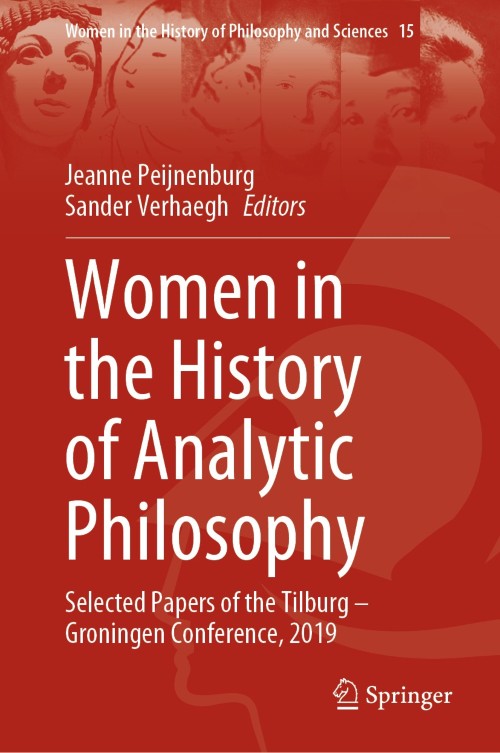
245 10|aWomen in the History of Analytic Philosophy|h[electronic resource] :|bSelected Papers of the Tilburg – Groningen Conference, 2019 /|cedited by Jeanne Peijnenburg, Sander Verhaegh.
250 |a1st ed. 2022.
264 1|aCham :|bSpringer International Publishing :|bImprint: Springer,|c2022.
300 |aXI, 278 p. 12 illus.|bonline resource.
336 |atext|btxt|2rdacontent
337 |acomputer|bc|2rdamedia
338 |aonline resource|bcr|2rdacarrier
347 |atext file|bPDF|2rda
490 1 |aWomen in the History of Philosophy and Sciences,|x2523-8779 ;|v15
505 0 |aIntroduction: Women in the History of Analytic Philosophy -- What Welby Wanted -- E. E. Constance Jones on Identity and Predication -- Emmy Noether’s Influence on Contemporary Philosophy of Mathematics -- Rózsa Péter on the Philosophy and Foundations of Mathematics: A Reappraisal -- Grete Hermann, Quantum Mechanics, and the Evolution of Kantian Philosophy -- What can Rose Rand Teach us about Modern Canon Formation? -- Susan Stebbing’s Metaphysics and the Status of Common-Sense Truths -- Anscombe’s Approach to Rational Capacities -- Susanne Langer and the American Development of Analytic Philosophy -- Ruth Barcan Marcus’s Role in Mid-Twentieth Century Debates on Analyticity and Ontology.
520 |aThis book contains a selection of papers from the workshop Women in the History of Analytic Philosophy held in October 2019 in Tilburg, the Netherlands. It is the first volume devoted to the role of women in early analytic philosophy. It discusses the ideas of ten female philosophers and covers a period of over a hundred years, beginning with the contribution to the Significs Movement by Victoria, Lady Welby in the second half of the nineteenth century, and ending with Ruth Barcan Marcus’s celebrated version of quantified modal logic after the Second World War. The book makes clear that women contributed substantially to the development of analytic philosophy in all areas of philosophy, from logic, epistemology, and philosophy of science, to ethics, metaphysics, and philosophy of language. It illustrates that although women's voices were no different from men's as regards their scope and versatility, they had a much harder time being heard. The book is aimed at historians of philosophy and scholars in gender studies.
650 0|aPhilosophy|xHistory.
650 0|aAnalysis (Philosophy).
650 0|aWomen|xHistory.
650 14|aHistory of Philosophy.
650 24|aAnalytic Philosophy.
650 24|aWomen's History / History of Gender.
700 1 |aPeijnenburg, Jeanne.|eeditor.|4edt|4http://id.loc.gov/vocabulary/relators/edt
700 1 |aVerhaegh, Sander.|eeditor.|4edt|4http://id.loc.gov/vocabulary/relators/edt
773 0 |tSpringer Nature eBook
776 08|iPrinted edition:|z9783031085925
776 08|iPrinted edition:|z9783031085949
776 08|iPrinted edition:|z9783031085956
830 0|aWomen in the History of Philosophy and Sciences,|x2523-8779 ;|v15
856 40|uhttps://doi.org/10.1007/978-3-031-08593-2
912 |aZDB-2-HTY
912 |aZDB-2-SXH
950 |aHistory (SpringerNature-41172)
950 |aHistory (R0) (SpringerNature-43722)