LEADER 03870nam a22005655i 4500
001 608756
003 TR_AnAIT
005 20250627072233
007 cr nn 008mamaa
008 180530s2018 sz | s |||| 0|eng d
020 |a9783319749051|9978-3-319-74905-1
024 7 |a10.1007/978-3-319-74905-1|2doi
041 |aeng
049 |aTürk Tarih Kurumu Kütüphanesi
050 4|aDT1-3415
072 7|aHBJH|2bicssc
072 7|aHIS001000|2bisacsh
072 7|aNHH|2thema
082 04|a960|223
090 |aDK/1429
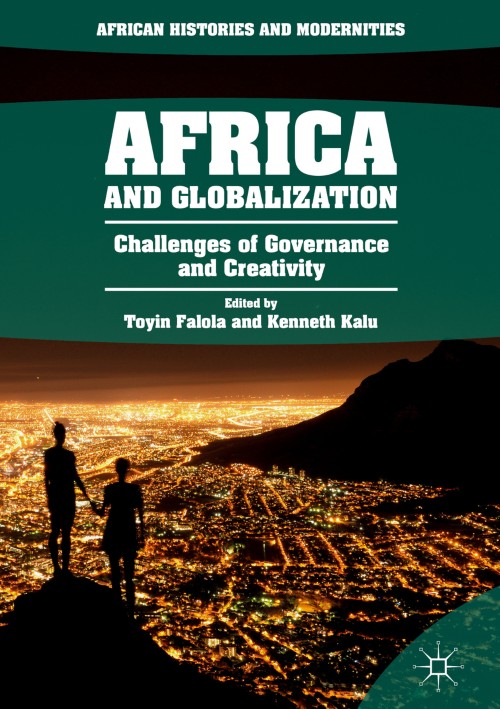
245 10|aAfrica and Globalization|h[electronic resource] :|bChallenges of Governance and Creativity /|cedited by Toyin Falola, Kenneth Kalu.
250 |a1st ed. 2018.
264 1|aCham :|bSpringer International Publishing :|bImprint: Palgrave Macmillan,|c2018.
300 |aXI, 258 p.|bonline resource.
336 |atext|btxt|2rdacontent
337 |acomputer|bc|2rdamedia
338 |aonline resource|bcr|2rdacarrier
347 |atext file|bPDF|2rda
490 1 |aAfrican Histories and Modernities,|x2634-5781
505 0 |a1. Introduction: Africa in a Globalized World -- I. Africa's Adaptation to Globalization -- 2. The Rediscovery of Africa -- 3. Globalization and the Creative Space in Africa: Implications for Governance and Development -- 4. Postcolonial Africa's Development Trajectories -- 5. Collective Social Action: Enlightenment Ethic and the Rise of Modern Individualism -- 6. Same Migrants, Two Business Models: Culture-centered and Non-traditional Businesses Established by Ethiopians and Eritreans in Washington D.C -- 7. Making Sense of South Africa's Soft Power: Projections, Prospects, and Possibilities -- II. Governance and Creativity -- 8. Developmental Strategies and Cultural Dynamics in Rural Nigeria -- 9. The Impossible Craft of Nation-Building in Postcolonial Cameroon -- 10. Creativity and New Technologies: Piracy, Politics, and the Business of Cultural Production in Nigeria -- 11. Igbo Community Policing and its Relevance for Contemporary Nigeria -- 12. "Come and Chop": Representations of the Parliamentarian in Ola Rotimi's If and Emeka Nwabueze's A Parliament of Vultures.
520 |aThis book considers the promises and challenges of globalization for Africa. Why have African states been perennially unable to diversify their economies and move beyond export of primary produce, even as Southeast Asia has made a tremendous leap into manufacturing? What institutional impediments are in play in African states? What reforms would mitigate the negative effects of globalization and distribute its benefits more equitably? Covering critical themes such as political leadership, security challenges, the creative sector, and community life, essays in this volume argue that the starting point for Africa’s meaningful engagement with the rest of the world must be to look inward, examine Africa’s institutions, and work towards reforms that promote inclusiveness and stability.
650 0|aAfrica|xHistory.
650 0|aEthnology|xAfrica.
650 0|aCulture.
650 0|aAfrica|xPolitics and government.
650 0|aEconomic development.
650 14|aAfrican History.
650 24|aAfrican Culture.
650 24|aAfrican Politics.
650 24|aDevelopment Studies.
700 1 |aFalola, Toyin.|eeditor.|4edt|4http://id.loc.gov/vocabulary/relators/edt
700 1 |aKalu, Kenneth.|eeditor.|4edt|4http://id.loc.gov/vocabulary/relators/edt
773 0 |tSpringer Nature eBook
776 08|iPrinted edition:|z9783319749044
776 08|iPrinted edition:|z9783319749068
776 08|iPrinted edition:|z9783030091019
830 0|aAfrican Histories and Modernities,|x2634-5781
856 40|uhttps://doi.org/10.1007/978-3-319-74905-1
912 |aZDB-2-HTY
912 |aZDB-2-SXH
950 |aHistory (SpringerNature-41172)
950 |aHistory (R0) (SpringerNature-43722)