LEADER 03117nam a22005175i 4500
001 608787
003 TR_AnAIT
005 20250627072133
007 cr nn 008mamaa
008 191114s2019 xxk| s |||| 0|eng d
020 |a9781137571915|9978-1-137-57191-5
024 7 |a10.1057/978-1-137-57191-5|2doi
041 |aeng
049 |aTürk Tarih Kurumu Kütüphanesi
050 4|aD900-2027
072 7|aHBJD|2bicssc
072 7|aHIS010000|2bisacsh
072 7|aNHD|2thema
082 04|a940|223
090 |aDK/1460
100 1 |aStibbe, Matthew.|eauthor.|4aut|4http://id.loc.gov/vocabulary/relators/aut
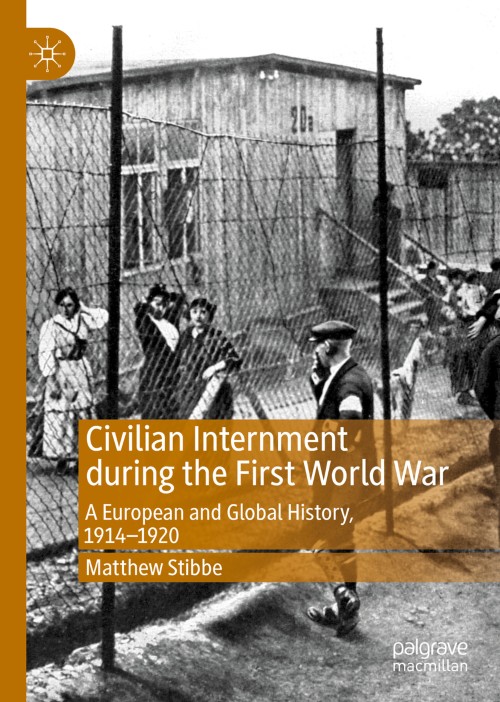
245 10|aCivilian Internment during the First World War|h[electronic resource] :|bA European and Global History, 1914—1920 /|cby Matthew Stibbe.
250 |a1st ed. 2019.
264 1|aLondon :|bPalgrave Macmillan UK :|bImprint: Palgrave Macmillan,|c2019.
300 |aXI, 335 p.|bonline resource.
336 |atext|btxt|2rdacontent
337 |acomputer|bc|2rdamedia
338 |aonline resource|bcr|2rdacarrier
347 |atext file|bPDF|2rda
505 0 |a1.Introduction -- 2. First World War Internment across the Globe -- 3. Internment and War Governance in the First World War -- 4. Imagining Internment: International Law, Social Order and National Community -- 5. Internment and International Activism: The Search for More Humane Alternatives -- 6. (Not) Ending Internment: The Years 1918-20 -- 7. Conclusion and Epilogue.
520 |aThis book is the first major study of civilian internment during the First World War as both a European and global phenomenon. Based on research spanning twenty-eight archives in seven countries, this study explores the connections and continuities, as well as ruptures, between different internment systems at the local, national, regional and imperial levels. Arguing that the years 1914-20 mark the essential turning point in the transnational and international history of the detention camp, this book demonstrates that wartime civilian captivity was inextricably bound up with questions of power, world order and inequalities based on class, race and gender. It also contends that engagement with internees led to new forms of international activism and generated new types of transnational knowledge in the spheres of medicine, law, citizenship and neutrality. Finally, an epilogue explains how and why First World War internment is crucial to understanding the world we live in today.
650 0|aEurope|xHistory.
650 0|aMilitary history.
650 0|aWorld history.
650 0|aSocial history.
650 14|aEuropean History.
650 24|aMilitary History.
650 24|aWorld History, Global and Transnational History.
650 24|aSocial History.
773 0 |tSpringer Nature eBook
776 08|iPrinted edition:|z9781137571908
776 08|iPrinted edition:|z9781349848164
776 08|iPrinted edition:|z9781349848171
856 40|uhttps://doi.org/10.1057/978-1-137-57191-5
912 |aZDB-2-HTY
912 |aZDB-2-SXH
950 |aHistory (SpringerNature-41172)
950 |aHistory (R0) (SpringerNature-43722)