

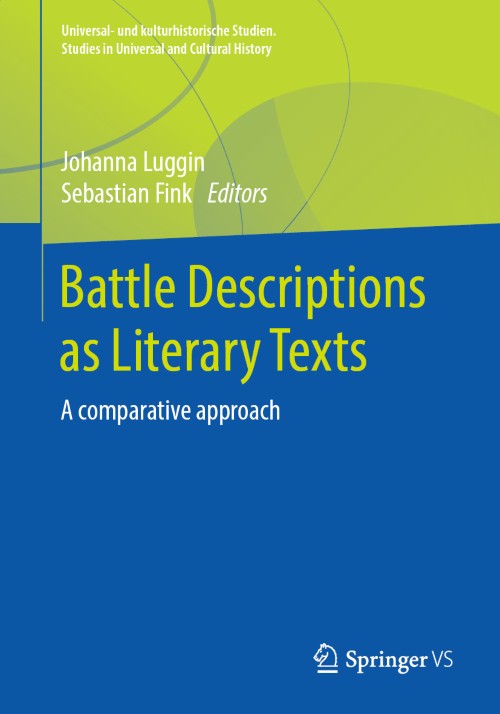
Battle Descriptions as Literary Texts [electronic resource] : A comparative approach / edited by Johanna Luggin, Sebastian Fink.
Erişim Adresi
ISBN
9783658278595
Dil Kodu
İngilizce
Yer Numarası
DK/1461
Basım Bildirimi
1st ed. 2020.
Yayın Bilgisi
Wiesbaden : Springer Fachmedien Wiesbaden : Imprint: Springer VS, 2020.
Fiziksel Niteleme
X, 372 p. 9 illus., 6 illus. in color. online resource.
Dizi
Universal- und kulturhistorische Studien. Studies in Universal and Cultural History, 2524-3799
İçindekiler Notu
Battle descriptions as literary text: an introduction -- Year Names as Source for Military Campaigns in the Third Millennium BC -- Much Ado about Nothing? Battle Descriptions in Ugaritic Texts -- Victor without Victory? The Lack of Battle Descriptions in the Achaeamenid Empire -- Battle Descriptions in the Hebrew Bible: An Overview with Special Attention to the Book of Joshua.-Plataea, 479 BC -- „Eine Schlacht wie keine andere“ – alles nur Literatur, oder was? Agesilaos II., Xenophon und der „Sieg“ Spartas in der Schlacht bei Koroneia (14. August, 394 v. Chr.), der vielleicht eher doch eine Niederlage war! -- Parody as a Sign of Generic Consciousness: Battle Descriptions in the Pseudo-Homeric Batrachomyomachia -- The Battle of Gaugamela. A Case Study and Some General Methodological Considerations -- Die „Thermopylenschlacht 2.0“ am Persischen Tor (330 v. Chr.) -- Battle Descriptions in Livy’s Ab Urbe Condita -- Conversus ad pacem … (Flor. 2.34.65 = 4.12.65) – Battle Descriptions in Florus Reconsidered -- The Impact of Violence as Heroization Technique in Basini’s Hesperis, Naldi’s Volaterrais and Filelfo’s Sphortias -- A Battle of Emperors? Contemporary Poetic and Prose Descriptions of Austerlitz (1805) -- The Impossibility of Deliberate Action in Tolstoy’s Descriptions of Battle in War and Peace -- Historical Distance and Literary Re-Presentation. Ancient Battles in German Classical Studies.
Özet, vb.
Battle descriptions are usually seen as the raw material of the military historian, who uses them to explain why generals won or lost a given battle. This volume does not aim to contribute to this discussion; it rather approaches battle descriptions as literary texts that interact with the expectations of a given audience. Therefore literary traditions in structure, vocabulary and topics of battle descriptions should be explored. The transgression of genre-borders – also literary and fictional texts are included – and a broad comparative approach, combining evidence from the third millennium BC up to the 20th century AD, makes cultural specifics and differences more easily perceivable. Contents With contributions by Marcos Such-Guttiérrez, Pavel Čech, Hilmar Klinkott, Wolfgang Oswald, Kai Ruffing, Oliver Stoll, Martin M. Bauer, Reinhold Bichler, Christian Mileta, Simon Lentzsch, Sven Günther, Dennis Pulina, JohannaLuggin, Sonjar Koroliov, Magdalena Gronau and Martin Gronau. The Editors Dr. Johanna Luggin is a post-doc researcher in the ERC-funded project “NOSCEMUS – Nova Scientia: Early Modern Science and Latin” in Innsbruck, Austria. Dr. Sebastian Fink is a postdoctoral researcher at the Academy of Finland Centre of Excellence “Changes in Sacred Texts and Traditions”.
Konu
World history.
World History, Global and Transnational History.
World History, Global and Transnational History.
Diğer Yazarlar
Eseri Alıntıla
Referansları kullanmadan önce gözden geçirmeniz ve varsa gerekli düzeltmeleri yapmanız önerilir.
Dijital Kaynak
MARC Görünümü
LEADER 04595nam a22004695i 4500
001 608788
003 TR_AnAIT
005 20250627072131
007 cr nn 008mamaa
008 200214s2020 gw | s |||| 0|eng d
020 |a9783658278595|9978-3-658-27859-5
024 7 |a10.1007/978-3-658-27859-5|2doi
041 |aeng
049 |aTürk Tarih Kurumu Kütüphanesi
050 4|aD17-24.5
072 7|aHBG|2bicssc
072 7|aHIS037000|2bisacsh
072 7|aNHB|2thema
082 04|a909|223
090 |aDK/1461
245 10|aBattle Descriptions as Literary Texts|h[electronic resource] :|bA comparative approach /|cedited by Johanna Luggin, Sebastian Fink.
250 |a1st ed. 2020.
264 1|aWiesbaden :|bSpringer Fachmedien Wiesbaden :|bImprint: Springer VS,|c2020.
300 |aX, 372 p. 9 illus., 6 illus. in color.|bonline resource.
336 |atext|btxt|2rdacontent
337 |acomputer|bc|2rdamedia
338 |aonline resource|bcr|2rdacarrier
347 |atext file|bPDF|2rda
490 1 |aUniversal- und kulturhistorische Studien. Studies in Universal and Cultural History,|x2524-3799
505 0 |aBattle descriptions as literary text: an introduction -- Year Names as Source for Military Campaigns in the Third Millennium BC -- Much Ado about Nothing? Battle Descriptions in Ugaritic Texts -- Victor without Victory? The Lack of Battle Descriptions in the Achaeamenid Empire -- Battle Descriptions in the Hebrew Bible: An Overview with Special Attention to the Book of Joshua.-Plataea, 479 BC -- „Eine Schlacht wie keine andere“ – alles nur Literatur, oder was? Agesilaos II., Xenophon und der „Sieg“ Spartas in der Schlacht bei Koroneia (14. August, 394 v. Chr.), der vielleicht eher doch eine Niederlage war! -- Parody as a Sign of Generic Consciousness: Battle Descriptions in the Pseudo-Homeric Batrachomyomachia -- The Battle of Gaugamela. A Case Study and Some General Methodological Considerations -- Die „Thermopylenschlacht 2.0“ am Persischen Tor (330 v. Chr.) -- Battle Descriptions in Livy’s Ab Urbe Condita -- Conversus ad pacem … (Flor. 2.34.65 = 4.12.65) – Battle Descriptions in Florus Reconsidered -- The Impact of Violence as Heroization Technique in Basini’s Hesperis, Naldi’s Volaterrais and Filelfo’s Sphortias -- A Battle of Emperors? Contemporary Poetic and Prose Descriptions of Austerlitz (1805) -- The Impossibility of Deliberate Action in Tolstoy’s Descriptions of Battle in War and Peace -- Historical Distance and Literary Re-Presentation. Ancient Battles in German Classical Studies.
520 |aBattle descriptions are usually seen as the raw material of the military historian, who uses them to explain why generals won or lost a given battle. This volume does not aim to contribute to this discussion; it rather approaches battle descriptions as literary texts that interact with the expectations of a given audience. Therefore literary traditions in structure, vocabulary and topics of battle descriptions should be explored. The transgression of genre-borders – also literary and fictional texts are included – and a broad comparative approach, combining evidence from the third millennium BC up to the 20th century AD, makes cultural specifics and differences more easily perceivable. Contents With contributions by Marcos Such-Guttiérrez, Pavel Čech, Hilmar Klinkott, Wolfgang Oswald, Kai Ruffing, Oliver Stoll, Martin M. Bauer, Reinhold Bichler, Christian Mileta, Simon Lentzsch, Sven Günther, Dennis Pulina, JohannaLuggin, Sonjar Koroliov, Magdalena Gronau and Martin Gronau. The Editors Dr. Johanna Luggin is a post-doc researcher in the ERC-funded project “NOSCEMUS – Nova Scientia: Early Modern Science and Latin” in Innsbruck, Austria. Dr. Sebastian Fink is a postdoctoral researcher at the Academy of Finland Centre of Excellence “Changes in Sacred Texts and Traditions”.
650 0|aWorld history.
650 14|aWorld History, Global and Transnational History.
700 1 |aLuggin, Johanna.|eeditor.|4edt|4http://id.loc.gov/vocabulary/relators/edt
700 1 |aFink, Sebastian.|eeditor.|4edt|4http://id.loc.gov/vocabulary/relators/edt
773 0 |tSpringer Nature eBook
776 08|iPrinted edition:|z9783658278588
776 08|iPrinted edition:|z9783658278601
830 0|aUniversal- und kulturhistorische Studien. Studies in Universal and Cultural History,|x2524-3799
856 40|uhttps://doi.org/10.1007/978-3-658-27859-5
912 |aZDB-2-HTY
912 |aZDB-2-SXH
950 |aHistory (SpringerNature-41172)
950 |aHistory (R0) (SpringerNature-43722)
001 608788
003 TR_AnAIT
005 20250627072131
007 cr nn 008mamaa
008 200214s2020 gw | s |||| 0|eng d
020 |a9783658278595|9978-3-658-27859-5
024 7 |a10.1007/978-3-658-27859-5|2doi
041 |aeng
049 |aTürk Tarih Kurumu Kütüphanesi
050 4|aD17-24.5
072 7|aHBG|2bicssc
072 7|aHIS037000|2bisacsh
072 7|aNHB|2thema
082 04|a909|223
090 |aDK/1461
245 10|aBattle Descriptions as Literary Texts|h[electronic resource] :|bA comparative approach /|cedited by Johanna Luggin, Sebastian Fink.
250 |a1st ed. 2020.
264 1|aWiesbaden :|bSpringer Fachmedien Wiesbaden :|bImprint: Springer VS,|c2020.
300 |aX, 372 p. 9 illus., 6 illus. in color.|bonline resource.
336 |atext|btxt|2rdacontent
337 |acomputer|bc|2rdamedia
338 |aonline resource|bcr|2rdacarrier
347 |atext file|bPDF|2rda
490 1 |aUniversal- und kulturhistorische Studien. Studies in Universal and Cultural History,|x2524-3799
505 0 |aBattle descriptions as literary text: an introduction -- Year Names as Source for Military Campaigns in the Third Millennium BC -- Much Ado about Nothing? Battle Descriptions in Ugaritic Texts -- Victor without Victory? The Lack of Battle Descriptions in the Achaeamenid Empire -- Battle Descriptions in the Hebrew Bible: An Overview with Special Attention to the Book of Joshua.-Plataea, 479 BC -- „Eine Schlacht wie keine andere“ – alles nur Literatur, oder was? Agesilaos II., Xenophon und der „Sieg“ Spartas in der Schlacht bei Koroneia (14. August, 394 v. Chr.), der vielleicht eher doch eine Niederlage war! -- Parody as a Sign of Generic Consciousness: Battle Descriptions in the Pseudo-Homeric Batrachomyomachia -- The Battle of Gaugamela. A Case Study and Some General Methodological Considerations -- Die „Thermopylenschlacht 2.0“ am Persischen Tor (330 v. Chr.) -- Battle Descriptions in Livy’s Ab Urbe Condita -- Conversus ad pacem … (Flor. 2.34.65 = 4.12.65) – Battle Descriptions in Florus Reconsidered -- The Impact of Violence as Heroization Technique in Basini’s Hesperis, Naldi’s Volaterrais and Filelfo’s Sphortias -- A Battle of Emperors? Contemporary Poetic and Prose Descriptions of Austerlitz (1805) -- The Impossibility of Deliberate Action in Tolstoy’s Descriptions of Battle in War and Peace -- Historical Distance and Literary Re-Presentation. Ancient Battles in German Classical Studies.
520 |aBattle descriptions are usually seen as the raw material of the military historian, who uses them to explain why generals won or lost a given battle. This volume does not aim to contribute to this discussion; it rather approaches battle descriptions as literary texts that interact with the expectations of a given audience. Therefore literary traditions in structure, vocabulary and topics of battle descriptions should be explored. The transgression of genre-borders – also literary and fictional texts are included – and a broad comparative approach, combining evidence from the third millennium BC up to the 20th century AD, makes cultural specifics and differences more easily perceivable. Contents With contributions by Marcos Such-Guttiérrez, Pavel Čech, Hilmar Klinkott, Wolfgang Oswald, Kai Ruffing, Oliver Stoll, Martin M. Bauer, Reinhold Bichler, Christian Mileta, Simon Lentzsch, Sven Günther, Dennis Pulina, JohannaLuggin, Sonjar Koroliov, Magdalena Gronau and Martin Gronau. The Editors Dr. Johanna Luggin is a post-doc researcher in the ERC-funded project “NOSCEMUS – Nova Scientia: Early Modern Science and Latin” in Innsbruck, Austria. Dr. Sebastian Fink is a postdoctoral researcher at the Academy of Finland Centre of Excellence “Changes in Sacred Texts and Traditions”.
650 0|aWorld history.
650 14|aWorld History, Global and Transnational History.
700 1 |aLuggin, Johanna.|eeditor.|4edt|4http://id.loc.gov/vocabulary/relators/edt
700 1 |aFink, Sebastian.|eeditor.|4edt|4http://id.loc.gov/vocabulary/relators/edt
773 0 |tSpringer Nature eBook
776 08|iPrinted edition:|z9783658278588
776 08|iPrinted edition:|z9783658278601
830 0|aUniversal- und kulturhistorische Studien. Studies in Universal and Cultural History,|x2524-3799
856 40|uhttps://doi.org/10.1007/978-3-658-27859-5
912 |aZDB-2-HTY
912 |aZDB-2-SXH
950 |aHistory (SpringerNature-41172)
950 |aHistory (R0) (SpringerNature-43722)
Materyaller
Depodan talep edilen materyal sadece kütüphane içerisinde kullanılmaktadır.
Materyal dışarıya ödünç verilmemektedir.
Materyal dışarıya ödünç verilmemektedir.
