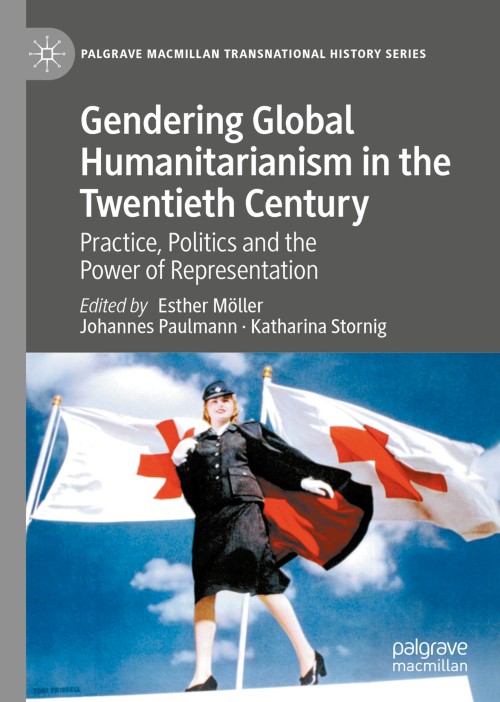
Gendering Global Humanitarianism in the Twentieth Century [electronic resource] : Practice, Politics and the Power of Representation / edited by Esther Möller, Johannes Paulmann, Katharina Stornig.
Erişim Adresi
ISBN
9783030446307
Dil Kodu
İngilizce
Yer Numarası
DK/1479
Basım Bildirimi
1st ed. 2020.
Yayın Bilgisi
Cham : Springer International Publishing : Imprint: Palgrave Macmillan, 2020.
Fiziksel Niteleme
XIII, 331 p. 5 illus. online resource.
Dizi
Palgrave Macmillan Transnational History Series, 2634-6281
İçindekiler Notu
1. Gendering Twentieth-Century Humanitarianism: An Introduction -- Part I: Masculinities and Femininities in Humanitarian Practice and Discourse -- 2. Humanitarian Masculinity: Desire, Character and Heroics, 1876–2018 -- 3. Protestant Missionaries, Armenian Refugees and Local Relief: Gendered Humanitarianism in Aleppo, 1920–1939 -- 4. Maternalism and Feminism in Medical Aid: The American Women’s Hospitals in the United States and in Greece, 1917–1941 -- Part II: Gender and the Politics of Humanitarianism -- 5. The Orphan Nation: Gendered Humanitarianism for Armenian Survivor Children in Istanbul, 1919–1922 -- 6. The Politics of Gender and Community: Non-Governmental Relief in Late Colonial and Early Postcolonial India -- 7. Humanitarian Service in the Name of Social Development: The Historic Origins of Women’s Welfare Associations in Saudi Arabia -- Part III: The Power of Gendered Representations -- 8. Perilous Beginnings: Infant Mortality,Public Health and the State in Egypt -- 9. Parenthood as Aid: “Fathers”, “Mothers” and International Child Welfare from the late 1940s to the 1970s -- 10. In/Visible Girls: “Girl Soldiers”, Gender and Humanitarianism in African Conflicts, c. 1955–2005 -- 11. Gender Histories of Humanitarianism: Concepts and Perspectives.
Özet, vb.
“This volume is interesting both because of its global focus, and its chronology up to the present, it covers a good century of changes. It will help define the field of gender studies of humanitarianism, and its relevance for understanding the history of nation-building, and a political history that goes beyond nations.” - Glenda Sluga, Professor of International History and ARC Kathleen Laureate Fellow at the University of Sydney, Australia This volume discusses the relationship between gender and humanitarian discourses and practices in the twentieth century. It analyses the ways in which constructions, norms and ideologies of gender both shaped and were shaped in global humanitarian contexts. The individual chapters present issues such as post-genocide relief and rehabilitation, humanitarian careers and subjectivities, medical assistance, community aid, child welfare and child soldiering. They give prominence to thebeneficiaries of aid and their use of humanitarian resources, organizations and structures by investigating the effects of humanitarian activities on gender relations in the respective societies. Approaching humanitarianism as a global phenomenon, the volume considers actors and theoretical positions from the global North and South (from Europe to the Middle East, Sub-Saharan Africa, South and South East Asia as well as North America). It combines state and non-state humanitarian initiatives and scrutinizes their gendered dimension on local, regional, national and global scales. Focusing on the time between the late nineteenth century and the post-Cold War era, the volume concentrates on a period that not only witnessed a major expansion of humanitarian action worldwide but also saw fundamental changes in gender relations and the gradual emergence of gender-sensitive policies in humanitarian organizations in many Western and non-Western settings. .
Konu
World history.
Sex.
Social history.
Medicine __ History.
World History, Global and Transnational History.
Gender Studies.
Social History.
History of Medicine.
Sex.
Social history.
Medicine __ History.
World History, Global and Transnational History.
Gender Studies.
Social History.
History of Medicine.
Diğer Yazarlar

Eseri Alıntıla
Referansları kullanmadan önce gözden geçirmeniz ve varsa gerekli düzeltmeleri yapmanız önerilir.
Dijital Kaynak
MARC Görünümü
LEADER 05367nam a22005655i 4500
001 608806
003 TR_AnAIT
005 20250627072058
007 cr nn 008mamaa
008 200824s2020 sz | s |||| 0|eng d
020 |a9783030446307|9978-3-030-44630-7
024 7 |a10.1007/978-3-030-44630-7|2doi
041 |aeng
049 |aTürk Tarih Kurumu Kütüphanesi
050 4|aD17-24.5
072 7|aHBG|2bicssc
072 7|aHIS037000|2bisacsh
072 7|aNHB|2thema
082 04|a909|223
090 |aDK/1479
245 10|aGendering Global Humanitarianism in the Twentieth Century|h[electronic resource] :|bPractice, Politics and the Power of Representation /|cedited by Esther Möller, Johannes Paulmann, Katharina Stornig.
250 |a1st ed. 2020.
264 1|aCham :|bSpringer International Publishing :|bImprint: Palgrave Macmillan,|c2020.
300 |aXIII, 331 p. 5 illus.|bonline resource.
336 |atext|btxt|2rdacontent
337 |acomputer|bc|2rdamedia
338 |aonline resource|bcr|2rdacarrier
347 |atext file|bPDF|2rda
490 1 |aPalgrave Macmillan Transnational History Series,|x2634-6281
505 0 |a1. Gendering Twentieth-Century Humanitarianism: An Introduction -- Part I: Masculinities and Femininities in Humanitarian Practice and Discourse -- 2. Humanitarian Masculinity: Desire, Character and Heroics, 1876–2018 -- 3. Protestant Missionaries, Armenian Refugees and Local Relief: Gendered Humanitarianism in Aleppo, 1920–1939 -- 4. Maternalism and Feminism in Medical Aid: The American Women’s Hospitals in the United States and in Greece, 1917–1941 -- Part II: Gender and the Politics of Humanitarianism -- 5. The Orphan Nation: Gendered Humanitarianism for Armenian Survivor Children in Istanbul, 1919–1922 -- 6. The Politics of Gender and Community: Non-Governmental Relief in Late Colonial and Early Postcolonial India -- 7. Humanitarian Service in the Name of Social Development: The Historic Origins of Women’s Welfare Associations in Saudi Arabia -- Part III: The Power of Gendered Representations -- 8. Perilous Beginnings: Infant Mortality,Public Health and the State in Egypt -- 9. Parenthood as Aid: “Fathers”, “Mothers” and International Child Welfare from the late 1940s to the 1970s -- 10. In/Visible Girls: “Girl Soldiers”, Gender and Humanitarianism in African Conflicts, c. 1955–2005 -- 11. Gender Histories of Humanitarianism: Concepts and Perspectives.
520 |a“This volume is interesting both because of its global focus, and its chronology up to the present, it covers a good century of changes. It will help define the field of gender studies of humanitarianism, and its relevance for understanding the history of nation-building, and a political history that goes beyond nations.” - Glenda Sluga, Professor of International History and ARC Kathleen Laureate Fellow at the University of Sydney, Australia This volume discusses the relationship between gender and humanitarian discourses and practices in the twentieth century. It analyses the ways in which constructions, norms and ideologies of gender both shaped and were shaped in global humanitarian contexts. The individual chapters present issues such as post-genocide relief and rehabilitation, humanitarian careers and subjectivities, medical assistance, community aid, child welfare and child soldiering. They give prominence to thebeneficiaries of aid and their use of humanitarian resources, organizations and structures by investigating the effects of humanitarian activities on gender relations in the respective societies. Approaching humanitarianism as a global phenomenon, the volume considers actors and theoretical positions from the global North and South (from Europe to the Middle East, Sub-Saharan Africa, South and South East Asia as well as North America). It combines state and non-state humanitarian initiatives and scrutinizes their gendered dimension on local, regional, national and global scales. Focusing on the time between the late nineteenth century and the post-Cold War era, the volume concentrates on a period that not only witnessed a major expansion of humanitarian action worldwide but also saw fundamental changes in gender relations and the gradual emergence of gender-sensitive policies in humanitarian organizations in many Western and non-Western settings. .
650 0|aWorld history.
650 0|aSex.
650 0|aSocial history.
650 0|aMedicine|xHistory.
650 14|aWorld History, Global and Transnational History.
650 24|aGender Studies.
650 24|aSocial History.
650 24|aHistory of Medicine.
700 1 |aMöller, Esther.|eeditor.|4edt|4http://id.loc.gov/vocabulary/relators/edt
700 1 |aPaulmann, Johannes.|eeditor.|4edt|4http://id.loc.gov/vocabulary/relators/edt
700 1 |aStornig, Katharina.|eeditor.|4edt|4http://id.loc.gov/vocabulary/relators/edt
773 0 |tSpringer Nature eBook
776 08|iPrinted edition:|z9783030446291
776 08|iPrinted edition:|z9783030446314
776 08|iPrinted edition:|z9783030446321
830 0|aPalgrave Macmillan Transnational History Series,|x2634-6281
856 40|uhttps://doi.org/10.1007/978-3-030-44630-7
912 |aZDB-2-HTY
912 |aZDB-2-SXH
950 |aHistory (SpringerNature-41172)
950 |aHistory (R0) (SpringerNature-43722)
001 608806
003 TR_AnAIT
005 20250627072058
007 cr nn 008mamaa
008 200824s2020 sz | s |||| 0|eng d
020 |a9783030446307|9978-3-030-44630-7
024 7 |a10.1007/978-3-030-44630-7|2doi
041 |aeng
049 |aTürk Tarih Kurumu Kütüphanesi
050 4|aD17-24.5
072 7|aHBG|2bicssc
072 7|aHIS037000|2bisacsh
072 7|aNHB|2thema
082 04|a909|223
090 |aDK/1479
245 10|aGendering Global Humanitarianism in the Twentieth Century|h[electronic resource] :|bPractice, Politics and the Power of Representation /|cedited by Esther Möller, Johannes Paulmann, Katharina Stornig.
250 |a1st ed. 2020.
264 1|aCham :|bSpringer International Publishing :|bImprint: Palgrave Macmillan,|c2020.
300 |aXIII, 331 p. 5 illus.|bonline resource.
336 |atext|btxt|2rdacontent
337 |acomputer|bc|2rdamedia
338 |aonline resource|bcr|2rdacarrier
347 |atext file|bPDF|2rda
490 1 |aPalgrave Macmillan Transnational History Series,|x2634-6281
505 0 |a1. Gendering Twentieth-Century Humanitarianism: An Introduction -- Part I: Masculinities and Femininities in Humanitarian Practice and Discourse -- 2. Humanitarian Masculinity: Desire, Character and Heroics, 1876–2018 -- 3. Protestant Missionaries, Armenian Refugees and Local Relief: Gendered Humanitarianism in Aleppo, 1920–1939 -- 4. Maternalism and Feminism in Medical Aid: The American Women’s Hospitals in the United States and in Greece, 1917–1941 -- Part II: Gender and the Politics of Humanitarianism -- 5. The Orphan Nation: Gendered Humanitarianism for Armenian Survivor Children in Istanbul, 1919–1922 -- 6. The Politics of Gender and Community: Non-Governmental Relief in Late Colonial and Early Postcolonial India -- 7. Humanitarian Service in the Name of Social Development: The Historic Origins of Women’s Welfare Associations in Saudi Arabia -- Part III: The Power of Gendered Representations -- 8. Perilous Beginnings: Infant Mortality,Public Health and the State in Egypt -- 9. Parenthood as Aid: “Fathers”, “Mothers” and International Child Welfare from the late 1940s to the 1970s -- 10. In/Visible Girls: “Girl Soldiers”, Gender and Humanitarianism in African Conflicts, c. 1955–2005 -- 11. Gender Histories of Humanitarianism: Concepts and Perspectives.
520 |a“This volume is interesting both because of its global focus, and its chronology up to the present, it covers a good century of changes. It will help define the field of gender studies of humanitarianism, and its relevance for understanding the history of nation-building, and a political history that goes beyond nations.” - Glenda Sluga, Professor of International History and ARC Kathleen Laureate Fellow at the University of Sydney, Australia This volume discusses the relationship between gender and humanitarian discourses and practices in the twentieth century. It analyses the ways in which constructions, norms and ideologies of gender both shaped and were shaped in global humanitarian contexts. The individual chapters present issues such as post-genocide relief and rehabilitation, humanitarian careers and subjectivities, medical assistance, community aid, child welfare and child soldiering. They give prominence to thebeneficiaries of aid and their use of humanitarian resources, organizations and structures by investigating the effects of humanitarian activities on gender relations in the respective societies. Approaching humanitarianism as a global phenomenon, the volume considers actors and theoretical positions from the global North and South (from Europe to the Middle East, Sub-Saharan Africa, South and South East Asia as well as North America). It combines state and non-state humanitarian initiatives and scrutinizes their gendered dimension on local, regional, national and global scales. Focusing on the time between the late nineteenth century and the post-Cold War era, the volume concentrates on a period that not only witnessed a major expansion of humanitarian action worldwide but also saw fundamental changes in gender relations and the gradual emergence of gender-sensitive policies in humanitarian organizations in many Western and non-Western settings. .
650 0|aWorld history.
650 0|aSex.
650 0|aSocial history.
650 0|aMedicine|xHistory.
650 14|aWorld History, Global and Transnational History.
650 24|aGender Studies.
650 24|aSocial History.
650 24|aHistory of Medicine.
700 1 |aMöller, Esther.|eeditor.|4edt|4http://id.loc.gov/vocabulary/relators/edt
700 1 |aPaulmann, Johannes.|eeditor.|4edt|4http://id.loc.gov/vocabulary/relators/edt
700 1 |aStornig, Katharina.|eeditor.|4edt|4http://id.loc.gov/vocabulary/relators/edt
773 0 |tSpringer Nature eBook
776 08|iPrinted edition:|z9783030446291
776 08|iPrinted edition:|z9783030446314
776 08|iPrinted edition:|z9783030446321
830 0|aPalgrave Macmillan Transnational History Series,|x2634-6281
856 40|uhttps://doi.org/10.1007/978-3-030-44630-7
912 |aZDB-2-HTY
912 |aZDB-2-SXH
950 |aHistory (SpringerNature-41172)
950 |aHistory (R0) (SpringerNature-43722)
Materyaller
Depodan talep edilen materyal sadece kütüphane içerisinde kullanılmaktadır.
Materyal dışarıya ödünç verilmemektedir.
